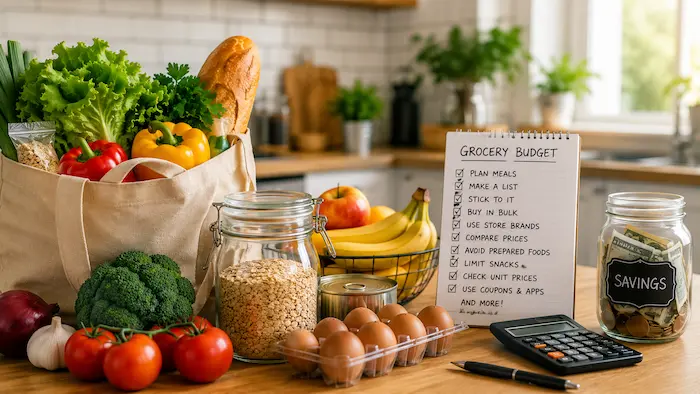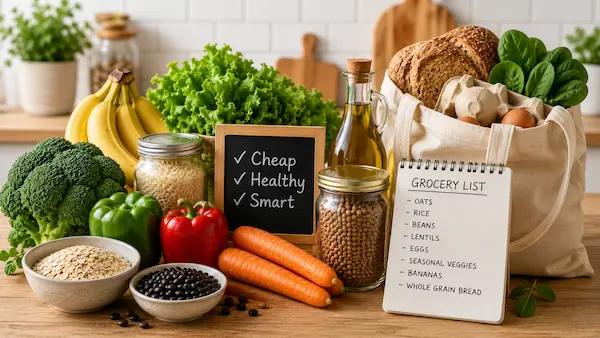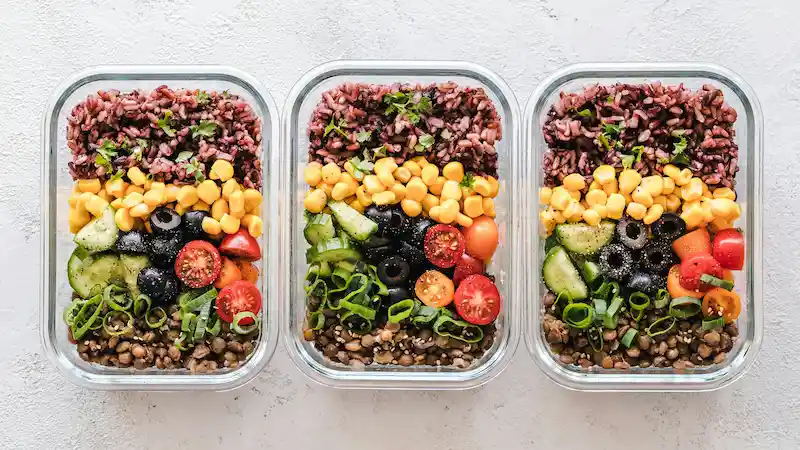
Feeding a family of four on a realistic budget is genuinely hard right now. Between rising grocery prices and the pressure to put something different on the table each night, it can feel like the options are either expensive or exhausting. This plan tries to be neither.
What you’ll find here is a complete seven-day budget friendly meal plan covering breakfast, lunch, and dinner for a household of two adults and two school-age children. Choosing between weekly and monthly meal planning can also help you find a routine that fits your household. Every recipe comes with realistic quantities and instructions. A consolidated grocery list ties everything together, and a transparent cost breakdown explains exactly where the numbers come from.
The estimated checkout total for the full week, based on Great Value and comparable store-brand prices at Walmart, is approximately $59.65 before tax. That works out to around $8.52 per day for the household, or roughly $0.55 per meal serving based on ingredients actually consumed.
The plan keeps costs manageable by reusing ingredients intentionally rather than randomly. Rice cooked for one dinner becomes the base of the next day’s lunch. A family pack of chicken thighs covers two separate dinners. Canned beans stretch across multiple meals without making the week feel monotonous. Less food goes in the trash, and fewer specialty items end up sitting unused in the pantry.
Your 7-Day Budget Friendly Meal Plan at a Glance
| Day | Breakfast | Lunch | Dinner |
| Day 1 | Oatmeal with banana | Egg sandwiches | Chicken and vegetable rice |
| Day 2 | Eggs and toast | Leftover chicken and vegetable rice | Bean burrito bowls |
| Day 3 | Oatmeal with banana | Leftover bean burrito bowls | Lentil vegetable soup |
| Day 4 | Eggs and toast | Leftover lentil soup | Tomato bean pasta |
| Day 5 | Oatmeal with banana | Leftover tomato bean pasta | Egg and vegetable fried rice |
| Day 6 | Eggs and toast | Leftover egg and vegetable fried rice | Baked potatoes with beans |
| Day 7 | Oatmeal with banana | Leftover baked potatoes and beans | Chicken and vegetable skillet |
Each dinner in this plan makes eight servings. Four are eaten that evening, and four go straight into the refrigerator for the following day’s lunch. This means you only cook dinner once per day and still have a complete lunch ready without any extra effort the next morning.
The two main proteins are a family pack of bone-in chicken thighs and eggs. Chicken shows up at the start and end of the week, keeping things from feeling repetitive. Eggs carry three breakfasts and a lunch, and they do the heavy lifting as the protein in the Friday fried rice dinner. Canned beans fill the gap across the plant-based meals in the middle of the week.
The Complete 7-Day Meal Plan
Day 1: Affordable Meals to Start the Week
Breakfast: Oatmeal with Banana
Yield: 4 servings. Prep: 5 minutes. Cook: 10 minutes.
Combine 2 cups of rolled oats with 4 cups of water in a medium saucepan. Bring to a boil over medium heat, then reduce to a simmer and stir occasionally for 5 minutes until thickened. Divide into four bowls. Top each with half a sliced banana and a pinch of cinnamon if you have it.
All 4 servings consumed at breakfast. No planned leftovers from this recipe.
Lunch: Egg Sandwiches
Yield: 4 servings. Prep: 5 minutes. Cook: 10 minutes.
Heat 1 teaspoon of canola oil in a non-stick skillet over medium heat. Crack 4 eggs into the pan, one at a time. Season with salt and pepper. Cook until the whites are set, flipping once if you prefer the yolk fully cooked (about 3-4 minutes total). Toast 8 slices of bread. Assemble each sandwich with 1 egg between 2 slices of bread. Serve immediately.
All 4 servings consumed at lunch. No planned leftovers.
Dinner: Chicken and Vegetable Rice
Yield: 8 servings. Prep: 15 minutes. Cook: 40 minutes.
Estimated consumed-ingredient cost: approximately $12.30. Cost per serving: approximately $1.54.
Ingredients:
- 3 lbs bone-in chicken thighs (from the family pack)
- 3 cups long-grain white rice (dry)
- 2 cups frozen mixed vegetables
- 1 medium yellow onion, diced
- 1 tablespoon minced garlic
- 3 bouillon cubes dissolved in 3 cups hot water (for 3 cups chicken broth)
- 3 cups plain water
- 1 tablespoon canola oil
- 1 teaspoon salt
- 1/2 teaspoon black pepper
Instructions: Heat the oil in a large pot over medium-high heat. Season the chicken thighs with salt and pepper, then brown them skin-side down for 4-5 minutes. Flip and cook another 3 minutes. Remove the chicken and set aside. In the same pot, cook the diced onion for 3-4 minutes until softened. Add the minced garlic and stir for 30 seconds. Add the rice and stir to coat. Pour in the broth and water (6 cups total), and nestle the chicken thighs back in. Bring to a boil, reduce heat to low, cover tightly, and cook for 20-22 minutes until the rice absorbs the liquid and the chicken is cooked through. Chicken should reach an internal temperature of 165°F. Remove the chicken, shred the meat from the bones, and stir it back into the rice along with the frozen mixed vegetables. Replace the lid and let the vegetables heat through for 5 minutes off the heat.
Leftover plan: 4 servings eaten at dinner. 4 servings transferred to an airtight container within 2 hours of cooking and refrigerated. Reheated for Day 2 lunch. Use within 3-4 days; the USDA cold food storage chart recommends this limit for cooked meat and poultry dishes.
Day 2: Make the Most of Planned Leftovers
Breakfast: Eggs and Toast
Yield: 4 servings. Prep: 5 minutes. Cook: 10 minutes.
Scramble 8 eggs in a lightly oiled skillet over medium heat, seasoning with salt and pepper. Toast 8 slices of bread. Serve 2 eggs per person alongside 2 slices of toast.
All 4 servings consumed at breakfast.
While you eat breakfast, move the refrigerated chicken rice to the counter to take the chill off slightly before reheating.
Lunch: Leftover Chicken and Vegetable Rice
Reheat the 4 reserved portions from Day 1 dinner. Stovetop method: add 2-3 tablespoons of water to the pot to prevent sticking, cover, and warm over medium-low heat for 8-10 minutes, stirring occasionally. Microwave method: cover loosely and heat for 2-3 minutes, stirring once halfway through. Verify the food is steaming hot throughout before serving, reaching 165°F.
Dinner: Bean Burrito Bowls
Yield: 8 servings. Prep: 10 minutes. Cook: 30 minutes.
Estimated consumed-ingredient cost: approximately $5.90. Cost per serving: approximately $0.74.
Note: Before starting dinner, cook 3 additional cups of dry rice and refrigerate it tonight for Day 5’s fried rice. Spread the cooked rice in a shallow baking sheet to cool within 1 hour, then transfer to an airtight container in the refrigerator. It will be ready to use in 3 days.
Ingredients for burrito bowls:
- 2 cans (15 oz each) black beans, drained and rinsed
- 2 cups long-grain white rice (dry)
- 2 cups frozen mixed vegetables
- 1 medium yellow onion, diced
- 1 tablespoon minced garlic
- 1 tablespoon canola oil
- 1 teaspoon cumin
- 1 teaspoon chili powder
- 1 teaspoon salt
Instructions: Cook the 2 cups of rice according to package directions. In a large skillet, heat the oil over medium heat. Cook the onion for 4-5 minutes until softened. Add the garlic, cumin, and chili powder, stir for 30 seconds. Add the drained black beans and frozen vegetables, stir to combine, and cook for 5-7 minutes until the vegetables are heated through and everything is well seasoned. Taste and adjust salt.
To serve, divide the cooked rice among bowls, then top with the bean and vegetable mixture.
Leftover plan: 4 servings eaten at dinner. 4 servings transferred to an airtight container within 2 hours and refrigerated for Day 3 lunch.
Day 3: Build an Inexpensive Meal Around Pantry Staples
Breakfast: Oatmeal with Banana
Repeat Day 1 breakfast. 2 cups rolled oats, 4 cups water, 2 bananas. All 4 servings consumed.
Lunch: Leftover Bean Burrito Bowls
Reheat the 4 reserved portions from Day 2 dinner. Add a tablespoon or two of water before reheating if the rice seems dry. Microwave on high for 2-3 minutes, stirring once, or warm in a skillet with a splash of water. Heat to 165°F throughout.
Dinner: Lentil Vegetable Soup
Yield: 8 servings. Prep: 15 minutes. Cook: 35 minutes.
Estimated consumed-ingredient cost: approximately $5.35. Cost per serving: approximately $0.67.
Ingredients:
- 1.5 cups dry green lentils, rinsed
- 3 medium carrots, diced
- 3 stalks celery, diced
- 1 large yellow onion, diced
- 1 tablespoon minced garlic
- 1 can (14.5 oz) petite diced tomatoes
- 5 bouillon cubes dissolved in 5 cups hot water (5 cups chicken broth)
- 1 cup additional water
- 2 tablespoons canola oil
- 1 teaspoon cumin
- 1 teaspoon salt
- 1/2 teaspoon black pepper
Instructions: Heat the oil in a large pot over medium heat. Cook the onion, carrots, and celery together for 6-8 minutes until softened. Add the garlic and cumin, stir for 1 minute. Add the rinsed lentils, canned tomatoes, broth, and the extra cup of water. Bring to a boil, then reduce to a simmer. Cook uncovered for 25-30 minutes until the lentils are fully tender. Taste and adjust salt. The soup will thicken as it sits.
Leftover plan: 4 servings eaten at dinner. 4 servings transferred to an airtight container within 2 hours and refrigerated for Day 4 lunch. According to the USDA cold food storage guidelines, cooked soups and stews keep safely for 3-4 days in the refrigerator.
Day 4: Reuse Ingredients Without Extra Shopping
Breakfast: Eggs and Toast
Repeat Day 2 breakfast. 8 eggs scrambled, 8 slices of toast. All 4 servings consumed.
Lunch: Leftover Lentil Soup
Reheat the 4 reserved soup portions. Stovetop method: warm in a pot over medium heat for 8-10 minutes, stirring occasionally. Microwave method: heat in a microwave-safe bowl for 2-3 minutes. Stir well and confirm it’s steaming hot throughout before serving (165°F).
Dinner: Tomato Bean Pasta
Yield: 8 servings. Prep: 10 minutes. Cook: 25 minutes.
Estimated consumed-ingredient cost: approximately $5.50. Cost per serving: approximately $0.69.
Before or after dinner, cook the 3 cups of reserved rice for Day 5. Spread it in a thin layer on a baking sheet or large plate to cool within 1 hour, then refrigerate in an airtight container overnight.
Ingredients:
- 1 lb penne pasta
- 2 cans (15 oz each) black beans, drained and rinsed
- 1 can (28 oz) crushed tomatoes
- 1 medium yellow onion, diced
- 1 tablespoon minced garlic
- 1 tablespoon canola oil
- 1 teaspoon Italian seasoning
- 1 teaspoon salt
- 1/2 teaspoon black pepper
Instructions: Bring a large pot of salted water to a boil and cook the pasta according to package directions. Drain and set aside. In a separate skillet, heat the oil over medium heat and cook the onion for 4-5 minutes. Add the garlic and Italian seasoning, stir for 30 seconds. Pour in the crushed tomatoes and stir to combine. Add the drained black beans. Simmer for 10 minutes, stirring occasionally, until the sauce thickens and the beans are heated through. Season with salt and pepper. Toss the pasta with the sauce.
Leftover plan: 4 servings eaten at dinner. 4 servings transferred to an airtight container within 2 hours and refrigerated for Day 5 lunch.
Day 5: Keep Midweek Meals Simple
Breakfast: Oatmeal with Banana
Repeat Day 1 breakfast. All 4 servings consumed.
Lunch: Leftover Tomato Bean Pasta
Reheat 4 reserved portions. Add a tablespoon or two of water before reheating to loosen the sauce. Microwave for 2-3 minutes, stirring once, or warm on the stovetop over medium-low heat. Heat to 165°F.
Dinner: Egg and Vegetable Fried Rice
Yield: 8 servings. Prep: 10 minutes. Cook: 15 minutes.
Estimated consumed-ingredient cost: approximately $5.20. Cost per serving: approximately $0.65.
Uses the cold rice pre-cooked and refrigerated on Day 4 evening.
Ingredients:
- 6 cups cooked, cold rice (from Day 4 prep)
- 6 eggs
- 2 cups frozen mixed vegetables
- 1/2 medium yellow onion, diced
- 1 tablespoon minced garlic
- 3 tablespoons soy sauce
- 2 tablespoons canola oil
- 1/2 teaspoon black pepper
Instructions: Heat 1 tablespoon of oil in a large skillet or wok over high heat. Add the diced onion and cook for 2-3 minutes. Add the frozen vegetables and garlic, stirring frequently for 3-4 minutes. Push everything to one side of the pan. Add the remaining tablespoon of oil to the empty side. Crack the eggs into the oil and scramble them gently until just set, then stir into the vegetables. Add the cold rice, breaking up any clumps. Stir everything together and cook for 3-4 minutes until the rice heats through and starts to crisp slightly. Drizzle with soy sauce, add black pepper, and toss to coat.
Leftover plan: 4 servings eaten at dinner. 4 servings transferred to an airtight container within 2 hours and refrigerated for Day 6 lunch.
Day 6: Prepare Filling Meals With Affordable Ingredients
Breakfast: Eggs and Toast
Repeat Day 2 breakfast. All 4 servings consumed.
Lunch: Leftover Egg and Vegetable Fried Rice
Reheat 4 reserved portions in a skillet over medium heat with a teaspoon of oil, stirring often, for 4-5 minutes. Or microwave for 2-3 minutes. Heat to 165°F.
Dinner: Baked Potatoes with Beans
Yield: 8 portions (enough for dinner and the Day 7 lunch). Prep: 10 minutes. Cook: 55-60 minutes.
Estimated consumed-ingredient cost: approximately $5.50. Cost per serving: approximately $0.69.
Ingredients:
- 8 medium russet potatoes (about 4 lbs from the 5 lb bag)
- 2 cans (15 oz each) black beans, drained and rinsed
- 1/2 medium yellow onion, diced
- 1 tablespoon minced garlic
- 1 tablespoon canola oil
- 1 teaspoon chili powder
- 1 teaspoon salt
- Optional: butter, sour cream (not included in the base grocery basket)
Instructions: Preheat the oven to 400°F. Scrub the potatoes, prick them several times with a fork, and place them directly on the oven rack. Bake for 50-60 minutes until a knife slides in easily. While the potatoes bake, heat the oil in a skillet over medium heat. Cook the onion for 4 minutes. Add the garlic and chili powder, stir for 30 seconds. Add the drained black beans, season with salt, and cook for 5-6 minutes until heated through and seasoned. Slice the baked potatoes open and top each with the bean mixture.
Leftover plan: 4 potatoes and half the bean topping eaten at dinner. 4 potatoes and remaining bean topping transferred to separate airtight containers within 2 hours and refrigerated for Day 7 lunch. Wrap each potato individually or store together; the bean topping stores separately.
Day 7: Use Remaining Ingredients Intentionally
Breakfast: Oatmeal with Banana
Repeat Day 1 breakfast. All 4 servings consumed.
Lunch: Leftover Baked Potatoes and Beans
Reheat the 4 refrigerated potatoes and the remaining bean topping. Microwave potatoes on high for 4-5 minutes (flip halfway through) or until hot throughout. Reheat beans in a small saucepan over medium heat or in the microwave for 2-3 minutes. Confirm food is steaming and reaches 165°F before serving. Serve as on Day 6.
Dinner: Chicken and Vegetable Skillet
Yield: 4 servings. Prep: 10 minutes. Cook: 30 minutes.
Estimated consumed-ingredient cost: approximately $7.50. Cost per serving: approximately $1.88.
Ingredients:
- Remaining bone-in chicken thighs from the family pack (approximately 2 lbs)
- 1 bag (12 oz) frozen mixed vegetables
- 1 can (14.5 oz) petite diced tomatoes
- 1 medium yellow onion, diced
- 1 tablespoon minced garlic
- 1 tablespoon canola oil
- 1 teaspoon Italian seasoning
- 1 teaspoon salt
- 1/2 teaspoon black pepper
Instructions: Heat the oil in a large oven-safe skillet over medium-high heat. Season chicken thighs with salt and pepper, then brown skin-side down for 4-5 minutes. Flip and cook another 3 minutes. Remove the chicken. In the same skillet, cook the onion for 3-4 minutes. Add the garlic and Italian seasoning, stir for 30 seconds. Add the diced tomatoes and frozen vegetables, stir to combine. Nestle the chicken back in. Cover the skillet, reduce heat to medium-low, and cook for 20-22 minutes until the chicken reaches 165°F. Serve directly from the skillet.
All 4 servings consumed at dinner. No planned leftovers from this recipe.
Grocery List for the Entire Week
Shop with this list and the meals are covered. Prices reflect Great Value (Walmart store brand) or comparable items priced at Walmart. All prices are estimates based on October 2026 research; your local store may differ.
Pantry items assumed to be on hand and excluded from the base total: salt, black pepper, cumin, chili powder, Italian seasoning, cinnamon (optional). If you need to purchase any of these, budget an additional $5-10 depending on what you already have.
Protein
| Item | Package | Qty | Est. Price | Amount Used | Remainder |
| Tyson All Natural Fresh Chicken Thighs (bone-in family pack) | ~5 lbs | 1 | $8.83 | ~5 lbs (both chicken dinners) | 0 |
| Great Value Eggs | 18-count × 2 | 2 | $4.34 | 34 eggs | ~2 eggs |
| Subtotal | $13.17 |
Grains, Bread, and Dry Staples
| Item | Package | Qty | Est. Price | Amount Used | Remainder |
| Great Value Long Grain Enriched Rice | 5 lb | 1 | $3.68 | ~3.5 lbs (8 cups dry) | ~1.5 lbs |
| Great Value Old-Fashioned Rolled Oats | 42 oz | 1 | $4.18 | ~24 oz (4 breakfasts) | ~18 oz |
| Bread (20 oz loaf) | 20 oz (~20 slices) | 2 | $3.44 | ~32 slices | ~8 slices |
| Great Value Penne Pasta | 1 lb | 1 | $0.98 | 1 lb | 0 |
| Great Value Green Lentils | 1 lb | 1 | $1.97 | ~10 oz | ~6 oz |
| Great Value Canola Oil | 48 oz | 1 | $3.76 | ~4 oz (cooking all week) | ~44 oz |
| Subtotal | $18.01 |
Fresh Produce
| Item | Package | Qty | Est. Price | Amount Used | Remainder |
| Bananas | per lb | 2 lbs | $1.00 | 2 lbs (~8 bananas) | 0 |
| Yellow Onions | 3 lb bag | 1 | $2.84 | ~2 lbs (~5-6 medium onions) | ~1 lb |
| Carrots, fresh whole | 1 lb | 1 | $0.98 | ~10 oz (3 carrots for soup) | ~6 oz |
| Russet Potatoes | 5 lb bag | 1 | $2.77 | ~4 lbs (8 potatoes) | ~1 lb |
| Fresh Celery | 1 bunch | 1 | $1.78 | 3 stalks (for soup) | ~5 stalks |
| Subtotal | $9.37 |
Canned, Frozen, and Packaged
| Item | Package | Qty | Est. Price | Amount Used | Remainder |
| Great Value Black Beans (canned) | 15 oz | 6 | $5.16 | 6 cans | 0 |
| Great Value Petite Diced Tomatoes | 14.5 oz | 2 | $1.92 | 2 cans | 0 |
| Great Value Crushed Tomatoes | 28 oz | 1 | $1.52 | 1 can | 0 |
| Great Value Frozen Mixed Vegetables | 12 oz | 4 | $3.92 | 4 bags | 0 |
| Goya Chicken Bouillon Cubes | 2.82 oz (~8 cubes) | 1 | $2.74 | 8 cubes | 0 |
| Subtotal | $15.26 |
Condiments and Flavorings
| Item | Package | Qty | Est. Price | Amount Used | Remainder |
| Great Value Less Sodium Soy Sauce | 15 fl oz | 1 | $1.68 | ~3 tablespoons | ~14 fl oz |
| Great Value Minced Garlic in Water | 8 oz jar | 1 | $2.16 | ~5 tablespoons | ~5.5 oz |
| Subtotal | $3.84 |
Estimated Weekly Checkout Total: $59.65
How Much Does This Budget Friendly Meal Plan Cost?
| Category | Estimated Checkout |
| Protein (chicken and eggs) | $13.17 |
| Grains, bread, and dry staples | $18.01 |
| Fresh produce | $9.37 |
| Canned, frozen, and packaged | $15.26 |
| Condiments and flavorings | $3.84 |
| Total | $59.65 |
Checkout cost is the amount you’d spend at the register for all the packages listed above. Several items produce more than the plan uses in a week. The rice (1.5 lbs remaining), oats (~18 oz), canola oil (~44 oz), soy sauce, minced garlic, carrots, celery, and onions all carry over into your pantry for future use.
Consumed-ingredient cost is the estimated value of the ingredients the recipes actually use, calculated by prorating each package price against the quantity consumed. That figure is approximately $46.46 for the week. The difference of about $13 represents groceries that remain in your pantry after the seven days.
Cost per day: The checkout total divided by seven days is approximately $8.52 per day for the household of four. Use these figures to help plan a realistic monthly grocery budget. Based on consumed ingredients, that figure is approximately $6.64 per day.
Cost per meal serving: Across 84 meal servings (3 meals per day, 7 days, 4 people), the consumed-ingredient cost works out to roughly $0.55 per serving.
For context, the USDA Thrifty Food Plan for a family of four (two adults aged 20-50 and two children aged 6-11) in June 2026 was $236.10 per week. See this guide to a grocery budget for a family of four for more household spending benchmarks. The Thrifty Food Plan is designed to meet nutritional requirements across a full range of foods and snacks, while this plan covers a targeted week of specific meals using intentional ingredient reuse. The two figures measure different things and shouldn’t be compared directly, but the USDA data provides a useful reference point for what households typically spend.
What the checkout estimate excludes: pantry spices (salt, pepper, cumin, chili powder, Italian seasoning), any optional toppings such as butter or sour cream for the baked potatoes, beverages, and sales tax. If you need to buy all the spices from scratch, plan to add roughly $5-10 to the total.
Pricing methodology: All prices are based on publicly listed regular (non-promotional) prices for Great Value and comparable store-brand items at Walmart, as reported in sources dated June through October 2026. The specific data points reflect Boston-area Walmart pricing (Tasting Table, June 2026), San Antonio Walmart pricing (KSAT, June 2026), and product listings on Walmart.com. Prices vary by region, store location, and date. The chicken thigh family pack ($8.83 avg at $1.77/lb) is priced as a standard family pack, not a promotional or clearance price.
How to Prepare the Meals and Store Leftovers Safely
Check your pantry before you shop. Pull out the salt, black pepper, cumin, chili powder, and Italian seasoning. If you’re missing any, add them to your shopping list. The same goes for canola oil if you’re running low.
Prep once, eat twice. Every dinner in this plan intentionally makes double portions. Before you sit down to eat, portion four servings into a clean airtight container and put it in the refrigerator. Don’t wait until after dinner when you’re tired and might forget.
Cook the rice for Day 5 on Day 4. While your tomato bean pasta simmers on Day 4, put 3 cups of rice on the stove. When it’s done, spread it in a thin layer on a baking sheet or large plate to cool within an hour, then refrigerate it in a covered container. Cold, day-old rice makes far better fried rice than freshly cooked warm rice.
Refrigerator temperature matters. Keep your refrigerator at 40°F or below. According to FoodSafety.gov’s Cold Food Storage Chart, cooked meat and poultry dishes stay safe for 3 to 4 days. Soups and stews last 3 to 4 days as well. Since every leftover in this plan is consumed the following day, you’re well within those limits.
Reheat to 165°F. Whether you’re using a microwave or a stovetop, leftovers should reach 165°F throughout before you serve them. Stir microwaved food halfway through and check that the center is steaming hot, not just warm on the edges.
Cool food before refrigerating, but don’t leave it out too long. The USDA advises refrigerating cooked food within 2 hours of cooking. Don’t put a large, sealed pot of hot soup directly into the refrigerator; it raises the internal temperature of the fridge and slows cooling. Instead, divide the food into smaller containers, which cool faster.
For the baked potatoes on Day 6: cool the four reserved potatoes uncovered on the counter, then wrap each one in foil or place them in a container once they reach room temperature. Store the bean topping separately. Reheat both the following day and serve together.
Handle raw chicken safely. Wash your hands before and after handling raw poultry. Use a separate cutting board for raw meat if possible. Cook chicken until it reaches an internal temperature of 165°F as measured by a food thermometer.
How to Keep Your Grocery Bill Under Control
Compare unit prices, not package prices. A larger can of tomatoes sometimes costs more per ounce than a smaller one. Check the shelf tag’s unit price before you reach for the biggest size.
Store brands do most of the work here. This plan relies heavily on Great Value products at Walmart because they consistently price below name brands for commodity items like canned beans, pasta, oats, and frozen vegetables. According to a June 2026 comparison of four major grocery chains, Walmart’s Great Value brand offered the lowest average prices across eggs, bread, and several other staples. If your closest store is a different chain, look for its equivalent store brand.
Frozen vegetables are genuinely practical for budget cooking. Frozen mixed vegetables in 12-ounce bags cost $0.98 each in this plan and don’t spoil between shopping trips. At Walmart, a 12-ounce bag of frozen mixed vegetables sold for $0.98, the same price as Aldi’s equivalent product. Fresh vegetables work well for soups and dishes that benefit from texture, but for stir-fries and rice dishes, frozen is a reasonable choice both financially and nutritionally.
Plan ingredient reuse before you shop, not after. This plan uses rice three times, black beans across four recipes, and a single family pack of chicken across two different dinners. For more ways to cut your grocery bill, focus on reducing waste and planning purchases. That reduces both the number of items you need to buy and the amount that ends up spoiling. Going in with a specific plan is more effective than trying to improvise with whatever’s in the fridge.
A family pack of bone-in chicken thighs is one of the more economical protein choices at the supermarket. Bone-in thighs from a family pack were $1.77/lb at Walmart, compared to $3.72/lb for boneless skinless chicken thighs. The bones add a bit of prep work but also add flavor when you cook the rice in the same pot.
Canned and dried legumes stretch a food budget further than almost anything else. At $0.86 per 15-oz can, black beans provide protein, fiber, and bulk across multiple meals in this plan. Dried lentils at $1.97/lb are even more economical per serving.
Unit price is more useful than package price for staples. The 5 lb bag of Great Value white rice at $3.68 works out to under 5 cents per ounce, which is roughly a third of the per-ounce cost of instant rice pouches. For a plan that uses rice multiple times, the larger bag earns its place.
Don’t assume bulk is always cheaper. Bulk pricing depends on the item, your storage capacity, and whether you’ll actually use it. For a one-week plan, most of the smaller packages here are correctly sized.
How to Adapt the Meal Plan to Your Household
For one or two people: Cut the dinner recipes roughly in half. For a household of two, halving the quantities still produces enough for dinner plus the following day’s lunch, which preserves the key efficiency of the plan. You’ll need fewer eggs, a smaller bag of potatoes, and two or three cans of beans instead of six. Note that some items like canola oil and the soy sauce bottle are fixed costs regardless of household size, so your per-person savings won’t scale perfectly.
For larger families: Most of these recipes scale reasonably well. Compare your spending with the average grocery budget by household size to set a realistic target. A family of six would add one-third more of each ingredient and extend cooking times slightly. A family of eight can simply double the dinners. The biggest practical challenge is pot and skillet size; you may need to cook the chicken rice or soup in two batches.
For vegetarian households: Drop the chicken from Days 1 and 7 and replace it with an additional can of white or pinto beans, or try this cheap vegetarian meal plan for more affordable options. The bean burrito bowls, lentil soup, tomato bean pasta, fried rice, and baked potatoes are already meatless. You can skip the chicken bouillon cubes and use water with a pinch of extra salt and cumin, or look for vegetable bouillon cubes (typically comparable in price).
For tighter budgets: Reduce the number of egg-based meals by replacing one egg breakfast with oatmeal. Cut back on fresh celery and carrots in the soup if they’re expensive in your area, and add more lentils instead. Swap the petite diced tomatoes in the skillet for a spoonful of crushed tomatoes from the can you already bought for the pasta. Every small substitution adds up.
For different regional prices or availability: If your grocery store prices differ significantly from those listed here, recalculate the total using your actual local prices before committing to the plan. Produce prices in particular vary considerably by region and season. The USDA Food-at-Home Monthly Area Prices dataset can give you a sense of how food costs compare across different parts of the country.
Note on dietary needs and allergies: This plan is a practical budget framework, not an individualized nutrition or medical plan. Check ingredient labels carefully if you or someone in your household has allergies, particularly to wheat (bread, pasta), soy (soy sauce), or other common allergens. Consult a registered dietitian if you need guidance tailored to a specific health condition or dietary restriction.
Make Your Next Grocery Trip More Intentional
This plan works best when you treat the grocery list as a specification, not a suggestion. Before you head to the store, check your pantry for the spice staples (cumin, chili powder, Italian seasoning, salt, and pepper) and cross off what you already have. Then compare the consolidated list against your local store’s current prices, since this plan is based on Walmart’s Great Value pricing and your area may differ.
The full week’s checkout runs approximately $59.65, with several ingredients carrying over into your pantry afterward. The meals themselves are straightforward, and because each dinner is designed to cover the next day’s lunch, you’re cooking fewer than ten distinct recipes for all 21 meals across the week.
Start by pulling up this grocery list before your next shopping trip. Compare prices, adjust quantities for your household size, and give the plan a try.
Frequently Asked Questions
Start with a short list of inexpensive base ingredients: dried or canned legumes, rice or pasta, eggs, and whatever protein is on sale. Plan every dinner to yield leftovers for the following day’s lunch. This reduces both the number of times you cook and the number of separate ingredients you need to buy. Buy in amounts that match your actual use rather than defaulting to the largest package available.