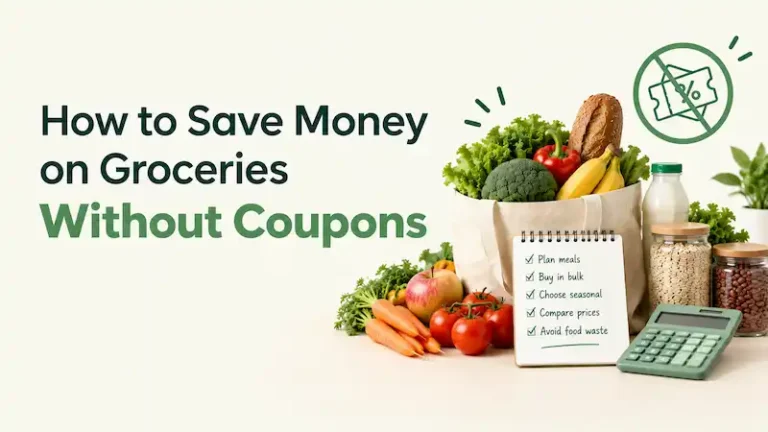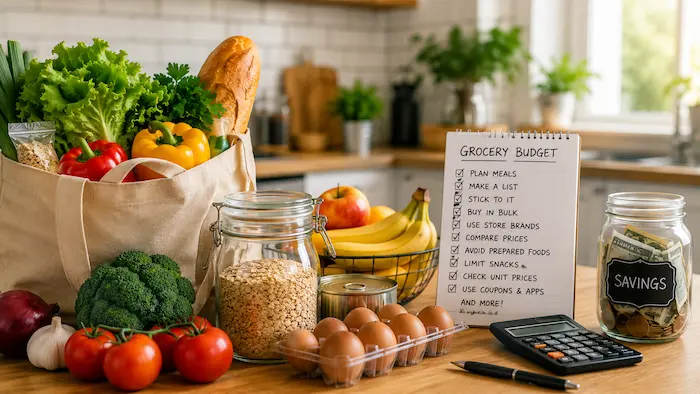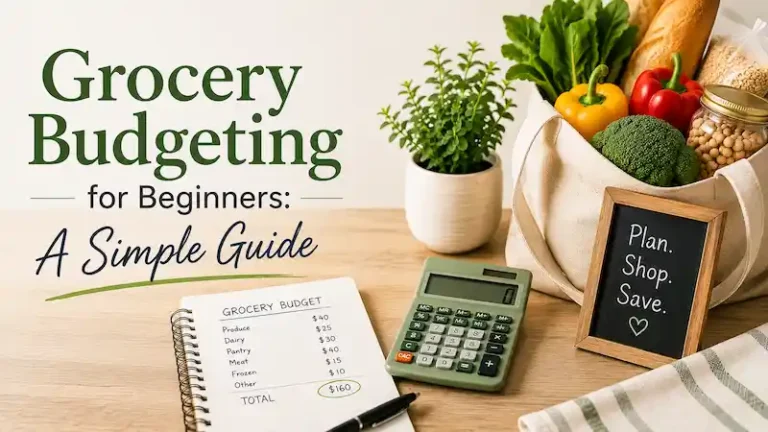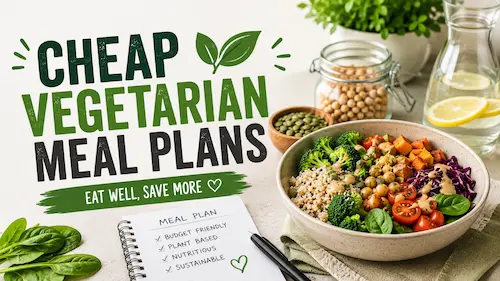
Eating well and staying on budget can feel like two goals pulling in opposite directions, especially when a single trip to the store seems to cost more every month. The good news is that a cheap and healthy grocery list is not about giving up nutrition, it is about shopping smarter within a small number of proven food categories. This guide breaks down exactly what to buy, how much it should cost, which stores are actually cheapest, and how to build a repeatable list whether you eat meat, eat plant-based, or feed a family of four.
Key Takeaways
- A single adult can eat healthy for roughly $36 to $49 a week using the categories in this guide, in line with the USDA’s official Thrifty Food Plan benchmark.
- Beans, lentils, eggs, and frozen vegetables deliver the most nutrition per dollar of any grocery category.
- Aldi is consistently the cheapest major grocery chain in independent basket-price comparisons, though Walmart and Lidl come close.
- Frozen produce is often equal to or more nutritious than fresh produce stored more than a few days.
- This list works for omnivore, vegetarian, and vegan households with only small substitutions.
If you want the full framework behind this approach, our pillar guide on how to budget groceries without sacrificing quality covers the strategy in depth. This article focuses on the list itself: what to put in your cart, which store to buy it at, and what it should cost.
How Much Should a Healthy Grocery List Actually Cost?
Before building a list, it helps to know what “cheap” actually means in dollars. The USDA publishes four official food plan benchmarks (Thrifty, Low-Cost, Moderate, and Liberal), updated monthly using the Consumer Price Index, that show how a healthy diet can be achieved at different cost levels. These differ mainly in variety and convenience, not nutritional adequacy, and the Thrifty plan is the same benchmark used to set maximum SNAP benefits.
According to Bureau of Labor Statistics Consumer Expenditure data, the average U.S. household spent about $6,053 a year on food at home, which works out to roughly $505 a month for an average-sized household, not a single frugal shopper. The USDA Economic Research Service reports that food-at-home prices rose 2.3 percent in 2025, a slower pace than the 20-year historical average of 2.6 percent a year, which means the worst of recent grocery inflation is easing even if prices remain elevated compared to 2020.
One detail most grocery guides skip: your actual cost depends on where you live. The USDA’s food plan data is adjusted separately for Alaska and Hawaii, where the same official food plan page notes that costs run meaningfully higher than the contiguous 48 states. If you live outside the continental U.S., add 15 to 25 percent to every figure in this guide as a starting estimate.
A frugal, healthy grocery list built around the categories below should land you comfortably at or below the Thrifty benchmark for your household size. For the exact monthly dollar target by age and family size, see our family of 4 grocery budget breakdown.
Which Grocery Store Is Actually Cheapest?
The list matters less if you’re shopping at the wrong store. Independent basket comparisons consistently point to the same winner.
AARP priced a 30-item basket of common groceries, from bananas to salmon, across three major chains. Aldi came out cheapest at $66.11, compared with $67.63 at Walmart and $83.62 at Target, a gap of over $17 between the cheapest and most expensive option for the identical basket.
That result lines up with a separate real-world comparison from Ramsey Solutions, which found Aldi was less expensive on 24 of 29 grocery items tested against Walmart, with the biggest advantages in produce, chicken, ground beef, and most pantry staples. Walmart edged out Aldi only on bacon, while eggs, milk, and pasta were tied.
Practical takeaway: if there’s an Aldi within reasonable driving distance, start there for produce, dairy, frozen goods, and pantry staples. Use Walmart or a traditional supermarket to fill in name-brand items or products Aldi doesn’t stock. Don’t assume the store you’ve always used is the cheapest option until you’ve actually compared.
The Core Principles Behind a Cheap and Healthy Grocery List
Every item on this list follows the same five rules.
- Buy nutrient-dense, not just low-calorie. Foods that pack protein, fiber, vitamins, and minerals per dollar spent do more nutritional work than empty-calorie convenience items.
- Compare unit price, not shelf price. The larger package is not always cheaper per ounce.
- Lean on frozen and canned staples. These reduce food waste and are often just as nutritious as fresh versions.
- Prioritize store brands. Private-label staples like Aldi’s or Walmart’s Great Value line are frequently the largest single source of savings on a grocery bill.
- Build meals around plants and legumes first, meat second. Protein from beans, lentils, and eggs costs a fraction of what meat costs per gram of protein.
For more tactics beyond food choices, see 25 tips that actually cut your grocery bill, which covers timing, coupon stacking, and store-specific strategies.
The Ultimate Cheap and Healthy Grocery List
Proteins
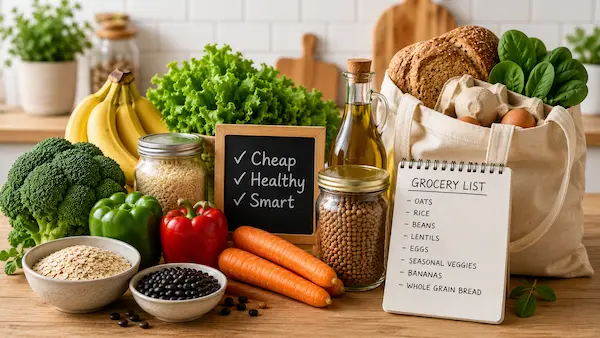
- Eggs
- Dried or canned black beans, pinto beans, and chickpeas
- Lentils (green, red, or brown)
- Canned tuna or salmon (packed in water)
- Chicken thighs or drumsticks (cheaper per pound than breasts)
- Natural peanut butter
- Plain Greek yogurt
- Tofu or edamame
Legumes deserve special attention. Beans and legumes are an inexpensive, heart-healthy food group that’s high in protein and a good source of fiber, iron, and potassium, according to nutrition data compiled by MyFoodData using USDA figures. MyPlate.gov, the USDA’s official nutrition guidance site, classifies beans, peas, and lentils as both a protein food and a vegetable, meaning they count double toward daily nutrition goals for pennies per serving.
Fruits and Vegetables
- Frozen mixed vegetables (broccoli, peas, corn, green beans)
- Frozen berries
- Bananas
- Carrots
- Cabbage
- Sweet potatoes
- Canned tomatoes (no salt added)
- Onions and garlic
- Seasonal produce, whatever is on sale locally
A common myth is that frozen produce is nutritionally inferior to fresh. It generally isn’t. Research summarized by GoodRx found that fresh vegetables stored for five days lost more nutritional value than frozen produce, and by day five the frozen version was actually more nutritious. That makes the frozen aisle one of the smartest places to stretch a tight budget without sacrificing quality.
Whole Grains and Starches
- Brown rice
- Rolled oats
- Whole wheat pasta
- Whole wheat or corn tortillas
- Potatoes
- Barley or quinoa when on sale
Dairy and Alternatives
- Milk or shelf-stable plant milk
- Block cheese (cheaper per ounce than shredded)
- Cottage cheese
- Plain yogurt
Pantry Staples
- Olive oil or vegetable oil
- Canned beans and lentils
- Low-sodium broth
- Canned pumpkin
- Spices and dried herbs
- Vinegar
- Salt, pepper, basic seasoning blends
Healthy Snacks
- Popcorn kernels
- Peanuts or sunflower seeds
- Apples
- Rice cakes
- Homemade trail mix from bulk-bin ingredients
Vegan and Vegetarian Cheap Grocery List
Nearly everything above already works for a plant-based budget with a few swaps. Skip the eggs, tuna, chicken, and Greek yogurt, and build meals around these instead:
- Dried lentils, black beans, chickpeas, and split peas (your primary protein)
- Tofu and tempeh
- Peanut butter and other nut or seed butters
- Nutritional yeast (adds a cheesy flavor and B12 to plant-based meals)
- Fortified plant milk
- Brown rice paired with any bean, which together forms a complete protein
- Frozen vegetables and fruit as your produce backbone
A comparison of lentils and beans by GoodRx found the two are nutritionally very similar, with lentils having a slight edge in protein per serving. Rotating between a few varieties of both keeps a vegan grocery list affordable without becoming repetitive.
Sample Weekly List With Cost Per Serving
Here is a realistic single-person weekly list, priced conservatively against national averages, with an approximate cost per serving so you can see exactly where your money goes.
| Category | Item | Weekly Cost | Approx. Cost/Serving |
| Protein | Eggs (dozen) | $3.50 | $0.29 |
| Protein | Dried lentils (1 lb) | $1.75 | $0.22 |
| Protein | Canned tuna (2 cans) | $3.00 | $1.50 |
| Produce | Frozen mixed vegetables (2 bags) | $4.50 | $0.75 |
| Produce | Bananas (bunch) | $1.80 | $0.30 |
| Produce | Carrots and onions | $3.00 | $0.50 |
| Grains | Brown rice (2 lb bag) | $2.80 | $0.18 |
| Grains | Rolled oats | $2.50 | $0.21 |
| Dairy | Milk (half gallon) | $2.50 | $0.31 |
| Dairy | Block cheese | $3.50 | $0.44 |
| Pantry | Oil, canned tomatoes, spices | $5.00 | varies |
| Snacks | Peanuts, popcorn, apples | $5.50 | $0.55 |
| Total | $39.35 |
This total sits comfortably under the national Thrifty plan benchmark for a single adult and leaves room to adjust by region.
Frugal Living Grocery Shopping Tips to Stretch Every Dollar
- Shop with a full stomach and a written list to reduce impulse buys.
- Plan meals around what is already on sale, not the other way around.
- Batch cook proteins and grains on a slow weekend to avoid weekday takeout.
- Rotate your pantry so nothing expires before it’s used.
- Check unit prices, since bulk sizes aren’t automatically the better deal.
- Compare your regular store against Aldi or Lidl at least once using the same shopping list to see your actual savings potential.
To turn this list into a real week of meals, see our step-by-step weekly meal planning guide.
Cheap and Healthy Grocery List for a Family of 4
Everything above scales up for larger households with a few adjustments. Buy proteins and grains in bulk formats, since per-unit cost drops significantly at higher volumes. Rotate two or three frozen vegetable blends instead of one to avoid meal fatigue across different palates. For exact monthly dollar targets by age group, see our practical monthly plan for a family of four.
Frequently Asked Questions
What is the cheapest way to eat healthy?
Build meals around dried or canned legumes, eggs, frozen vegetables, and whole grains. These categories deliver the most nutrition per dollar of any food group.
What groceries should I buy on a tight budget?
Eggs, dried beans and lentils, frozen produce, brown rice or oats, canned tomatoes, peanut butter, and store-brand dairy. These are shelf-stable, versatile, and consistently the lowest-cost nutrient sources at any grocery store.
Can you eat healthy on $50 a week?
Yes, for a single adult this is realistic and even leaves a small buffer, based on the sample list above.
Can you eat healthy on $25 a week?
It’s difficult but possible if you eat almost entirely from dried legumes, oats, frozen vegetables, and eggs, skip meat and dairy most days, and buy exclusively store brand. It requires more cooking from scratch and less variety than the $50 version.
Are frozen vegetables as healthy as fresh?
In many cases yes. Frozen vegetables are typically frozen at peak ripeness and can retain more nutrients than fresh produce that has sat in the refrigerator for several days.
What is the cheapest grocery store for healthy food?
Aldi consistently ranks as the cheapest major U.S. grocery chain in independent basket comparisons, with Walmart and Lidl close behind depending on category and region.
How much should 2 people spend on groceries per week?
On the USDA’s Thrifty plan, two adults should budget roughly $140 to $145 a week, or around $610 a month, though this varies by age, location, and household composition.
What is the cheapest healthy protein?
Dried lentils and dried beans are consistently the cheapest source of protein per gram, followed closely by eggs.
How can I eat healthy on a vegan budget?
Center meals on lentils, beans, tofu, and rice, using frozen vegetables and fruit as your produce base. The vegan list above works within the same $36 to $49 weekly range as the omnivore version.
Do I need to buy organic to eat healthy on a budget?
No. Conventional produce, grains, and proteins provide the same core nutrition as organic versions at a significantly lower cost, which matters more for a frugal grocery list than the organic label itself.
Final Thoughts
A cheap and healthy grocery list is less about extreme couponing and more about consistently choosing the same handful of nutrient-dense categories: legumes, eggs, frozen produce, whole grains, and simple pantry staples, purchased at the right store. Once this becomes a habit, healthy eating and frugal living stop competing and start working together.
For the complete strategy behind a sustainable food budget, start with our pillar guide, how to budget groceries without sacrificing quality.