A pantry can be full and still waste money.
The real value of a pantry is not how many cans, bags, jars, and boxes fit on the shelves. It is whether those foods regularly turn into meals.
That is the standard I would use when deciding what deserves pantry space. A useful staple should fit the way your household actually eats, work in more than one meal, be practical to store, and get used often enough that buying it makes financial sense.
That means an inexpensive food is not automatically a frugal purchase. A large bag of something nobody wants to eat is not a bargain. Neither is a specialty ingredient that costs only a few dollars but requires five more purchases to turn it into dinner.
The goal is a smaller, harder-working pantry built around repeat use.
Quick Answer: Which Pantry Staples Should You Buy First?
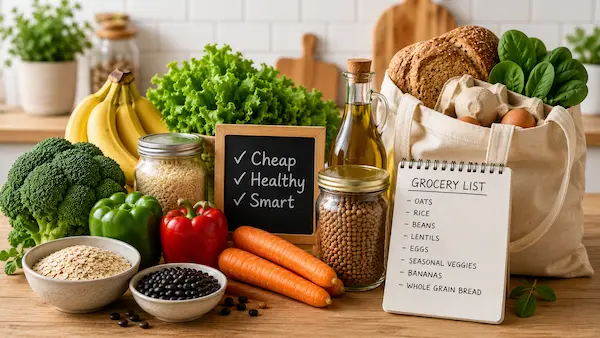
For many households, practical frugal pantry staples include:
- Rice or another grain you already cook
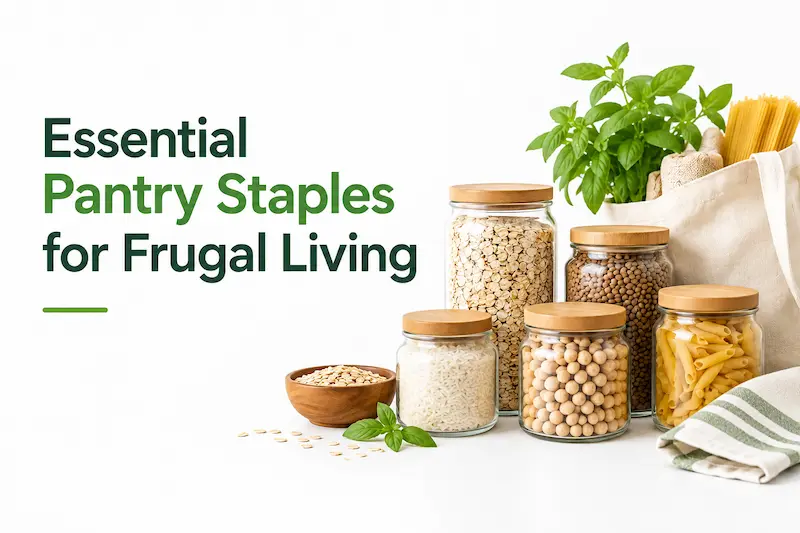
- Oats
- Pasta or noodles
- Beans
- Lentils or split peas
- Canned tomatoes
- A few canned foods you use regularly
- Cooking oil
- Salt
- Frequently used herbs, spices, and seasoning blends
That is a starting point, not a universal shopping list.
If your household rarely eats lentils, do not buy lentils because they appear on a budget-food list. If you cook tortillas, couscous, grits, noodles, or another staple far more often than rice, give your money and storage space to the food you actually use.
A frugal pantry should reflect your meals, not someone else’s checklist.
What Makes a Pantry Staple Worth Buying?
The Frugal Pantry Test
Before giving a food permanent pantry space, I would judge it on six practical questions.
1. Affordability: Does buying it make sense within the grocery budget?
2. Frequency of use: Does the household actually eat it?
3. Versatility: Can it do more than one useful job?
4. Storage practicality: Is there enough appropriate space to keep it?
5. Meal usefulness: Does it help turn other ingredients into actual meals?
6. Waste risk: Is the household likely to finish the quantity purchased?
This is the SustainCents Frugal Pantry Test, an editorial decision framework rather than an official government, nutrition, scientific, or industry standard.
The order matters too.
Do we use it? → Can we use it several ways? → Can we store it properly? → Does the price make sense? → Will we finish it?
If an item keeps passing those questions, it has earned a stronger case for regular pantry space.
The 30-Second Pantry Purchase Check
Standing in a grocery aisle, you do not need a spreadsheet.
Ask:
- Have we eaten this recently?
- Can I name at least two or three realistic meals that use it?
- Do I already own something that can perform the same job?
- Can I store the whole package properly?
- Does the larger package still make sense after considering the total price?
- Am I likely to use what I buy?
Several uncertain answers are a reason to slow down, even when the shelf tag says sale.
What the Frugal Pantry Test Looks Like in Practice
| Purchase | Why It Looks Frugal | Better Question | Practical Decision |
| Large bag of rice | Lower unit price | Do we cook rice often enough to finish and store this quantity? | Buy larger only when regular use justifies it |
| Specialty sauce | Low purchase price | Will it appear in several meals or only one recipe? | Skip if there is no realistic second use |
| Canned beans | Convenient but sometimes more expensive than dry | Does convenience make us more likely to use them? | Convenience may be worth paying for |
| Large container of oats | More food for the money | Does anyone regularly eat oats? | Good value only when demand exists |
| Multipack of canned food | Discounted per can | Do we normally use every variety in the pack? | Compare savings with the risk of leftovers |
The point is not to turn grocery shopping into an accounting exercise. It is to recognize that price is only one part of value.
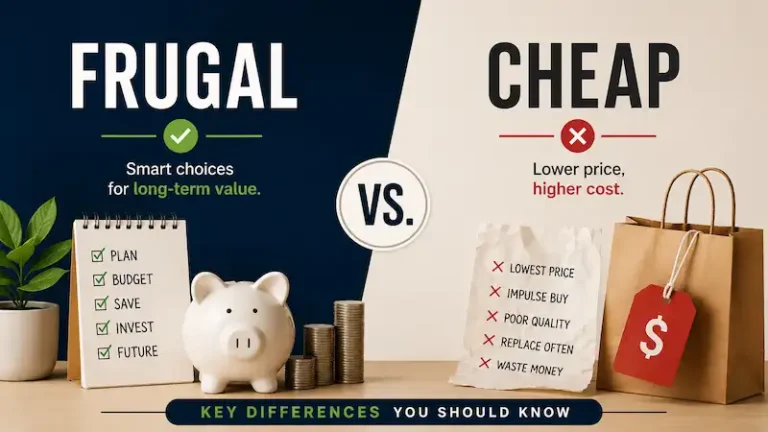
Cheap Is Not the Same as Frugal
Several different numbers can influence a grocery decision.
Purchase price is what you pay at checkout.
Unit price shows what a standard quantity costs and can make different brands or package sizes easier to compare.
Cost per use considers how often the product realistically contributes to a meal.
Waste is the part you paid for but did not use.
USDA’s Healthy Eating on a Budget guidance recommends comparing unit prices among similar products and planning purchases around what you need. It also notes that buying larger quantities can save money when the food stores well, while cautioning against overbuying food that will later be thrown away.
That distinction matters.
Unit price tells you which package costs less per unit. It does not tell you which package your household should buy.
Imagine that a larger package has the lower unit price but costs $5 more today. If you will use all of it, have room to store it, and can comfortably absorb the higher checkout price, the larger package may make sense.
If half of it sits untouched, the lower unit price did not produce real savings.
Essential Frugal Pantry Staples to Buy First
These categories earn consideration because they can play several roles in ordinary cooking. None is mandatory.
| Staple | Why It Can Earn Pantry Space | Example Uses | When It Makes Sense |
| Rice or another regularly used grain | Works as a base, side, or ingredient | Bowls, soups, one-pot meals, seasoned sides | You cook it repeatedly |
| Oats | Can move beyond breakfast | Oatmeal, baked goods, toppings, savory dishes | Your household actually eats oats |
| Pasta or noodles | Combines easily with vegetables, proteins, sauces, and leftovers | Pasta dishes, soups, salads, skillet meals | You keep using the varieties you buy |
| Beans | Flexible across many meal styles | Soups, stews, salads, spreads, rice dishes | Canned or dry fits your budget and routine |
| Lentils or split peas | Useful in soups, stews, sauces, and mixed dishes | Lentil soup, dal-style dishes, grain bowls | You know how you will use them |
| Canned tomatoes | Useful foundation for many cooked meals | Sauces, chili, soups, braises, bean dishes | Tomato-based meals appear regularly |
| Frequently used canned foods | Provide convenient backup ingredients | Beans, vegetables, fish, fruit, coconut milk | Each item already has a role in your cooking |
| Cooking oil | Supports many everyday cooking methods | Sautéing, roasting, dressings, baking | You choose a type and size you can use comfortably |
| Salt | Works across a broad range of cooking | Grains, beans, sauces, soups, baking | An everyday option meets your normal needs |
| Core herbs and seasonings | Help the same staples produce different meals | Soups, beans, grains, sauces, roasted foods | You build around seasonings you actually reach for |
Start with the grain you actually cook
Rice is often treated as a default budget staple, but the broader principle matters more than rice itself.
If your household cooks rice several times a week, it is an obvious candidate for regular pantry space. It can serve as a side, carry leftovers, bulk out a soup, or become the base of a one-pot dinner.
But another household may get more value from pasta, couscous, cornmeal, noodles, or a different grain.
There is no savings advantage in stocking the “right” frugal food if it is the wrong food for your kitchen.
Oats should do more than occupy breakfast space
Oats can work at breakfast, in baking, in toppings, and in some savory dishes. That gives them useful range.
Still, buying the large container because it looks economical makes sense only when someone is going to eat it.
That is a recurring pantry rule: the package that offers the most food is not necessarily the package that offers the most value.
Pasta and noodles work because they connect ingredients
Pasta earns pantry space less because of the pasta itself and more because of what it can pull together.
A little oil, canned tomatoes, beans, leftover vegetables, broth, cheese from the refrigerator, or a familiar sauce can turn it into a meal.
What usually does not help is collecting six shapes and varieties when the household consistently eats only one or two.
Beans: convenience counts
The canned-versus-dry bean debate is often oversimplified.
Dry beans may compare favorably on purchase price in some situations, but they require more planning and preparation. Canned beans are ready much faster.
If the convenience of canned beans means they regularly become lunch or dinner while dry beans remain untouched, convenience has practical economic value.
The right comparison is not simply which package costs less. It is which form fits the way you cook.
Lentils and split peas fill a slightly different role
Lentils and split peas work especially well in soups, stews, sauces, and one-pot dishes. Depending on the type, they can also require less advance planning than some dried beans.
There is no reason to buy several varieties immediately. One variety you understand and repeatedly use is more valuable than a colorful collection of half-used bags.
Canned tomatoes can connect a pantry
Canned tomatoes and tomato paste can turn beans, pasta, grains, vegetables, seasonings, and leftovers into something closer to a complete meal.
The trap is duplication.
Whole tomatoes, diced tomatoes, crushed tomatoes, tomato sauce, and tomato paste all behave differently in recipes. Keep the forms that match your cooking instead of buying every version because they all appear useful.
Keep canned foods with a job
A canned-food shelf can quietly become a holding area for good intentions.
Corn bought for a recipe you never made, beans nobody likes, coconut milk purchased during a sale, and canned fruit that keeps getting pushed to the back all represent grocery money.
A can earns pantry space when you already know what you do with it.
One useful cooking oil may be enough
Many kitchens do not need several bottles of specialty oil.
If one versatile oil covers most sautéing, roasting, dressings, or baking in your household, keeping the selection simple can reduce both spending and clutter.
Package size matters. Oils do not improve merely because you bought more of them.
Build a seasoning collection slowly
Seasonings are one of the easiest ways to make inexpensive basic ingredients feel less repetitive.
They are also easy to overbuy.
Start with the herbs, spices, and blends that already appear in your food. Add new ones when a recipe introduces an ingredient that you can see yourself using again.
That produces a useful seasoning drawer rather than a museum of one-recipe purchases.
Useful Pantry Additions for Households That Use Them
Some foods are excellent staples for one household and unnecessary for another.
Flour and baking ingredients
Flour, sugar, baking powder, baking soda, and related ingredients make sense when baking or flour-based cooking is part of your routine.
If you bake twice a year, you do not need to stock your kitchen like a bakery.
Peanut butter, nut butter, or similar shelf-stable foods
These can work for sandwiches, breakfasts, snacks, sauces, and baking.
They become useful staples when they fit dietary needs and get eaten consistently.
Vinegar
Vinegar can handle dressings, sauces, marinades, flavor adjustment, and some pickled preparations.
One frequently used variety can do more for a frugal pantry than several specialty bottles used occasionally.
Broth, stock, or concentrated alternatives
Broth and stock products can make soups, grains, sauces, and stews easier to assemble.
Compare not only price but also how much you can prepare, what happens after opening, and whether a concentrated form would let you make only the quantity you need.
Sauces and cuisine-specific ingredients
Soy sauce, curry paste, hot sauce, tahini, canned chiles, specialty condiments, and similar ingredients can absolutely qualify as staples.
The deciding factor is not whether they belong on a standard pantry list.
It is whether they belong in your food.
How Much of Each Pantry Staple Should You Keep?
There is no useful rule that says every household should keep five pounds of rice, six cans of tomatoes, or three boxes of pasta.
The right quantity depends on:
- Household size
- Consumption rate
- Shopping frequency
- Storage space
- Package size
- Cash flow
- Cooking habits
- Waste risk
A better rule is simple:
Keep enough for normal use until your next expected shopping opportunity. Add extra only when your consumption pattern justifies it.
Suppose you finish a box of pasta almost every week. Keeping another package on hand may be practical.
If the second bag of lentils has been sitting untouched since the last season, buying a third because it is on sale is not stocking up. It is increasing inventory.
Let replacement frequency tell you what your pantry needs.
How to Choose Pantry Staples on a Tight Budget
When money is limited, pantry shopping becomes less about building a collection and more about making each purchase useful. These choices also fit into a broader frugal mindset that focuses on intentional spending rather than simply buying the cheapest option.
Start with meals, not ingredients
Write down several meals your household already eats.
Then look for overlap.
If canned tomatoes appear in pasta sauce, soup, chili, and a rice dish, they have a clear job.
If an ingredient appears in one aspirational recipe you may or may not make, it has a weaker claim on limited grocery money.
Shop your pantry before the store
A quick inventory check can prevent unnecessary duplicates. It is also one of the simplest ways to save money on groceries without coupons.
Look behind the front row. Check open packages. See whether there is already a backup.
USDA budgeting guidance similarly recommends checking what you have, planning meals, and making a grocery list around what is actually needed.
Compare unit prices, then look at the whole purchase
The unit-price label is useful because it gives you a common basis for comparing similar products and package sizes. If you are setting a household spending target, see this guide to a grocery budget for a family of 4.
But make the decision in two steps:
Step 1: Which option costs less per unit?
Step 2: Which option makes sense for the household?
A 10-pound package can win the first question and lose the second.
Use cost per use as a reality check
Cost per use does not need to become complicated.
Consider a hypothetical example.
A $6 condiment used in 12 meals has a cost of about $0.50 per use.
A $3 specialty ingredient used once and then forgotten effectively cost $3 for that one use.
The $6 item had the higher checkout price but provided more useful household value.
Those numbers are only an illustration, not current grocery prices. The point is to think beyond the shelf price.
Treat bulk buying as a tradeoff
Before buying the larger size, ask:
- Is the unit price actually lower?
- Can I comfortably pay the higher total price today?
- Do I have appropriate storage?
- How quickly do we use this food?
- Is the extra quantity likely to become waste?
- Would spending more here leave less money for something we need sooner?
USDA notes that larger quantities of foods that store well can save money, while specifically cautioning shoppers not to overbuy foods that may be thrown out later.
Bulk buying works when the household can absorb both the quantity and the cost.
Compare store brands without assuming the result
Store brands are worth checking, but “store brand” does not automatically mean cheapest.
Compare the actual unit price, package size, product characteristics, and any current sale.
The goal is not brand loyalty in either direction. It is getting the product that makes sense for the amount you will use.
Substitute before adding another ingredient
Before purchasing something for one recipe, look at what you already own.
Could a grain, bean, sauce, herb, noodle, or seasoning already in the kitchen fill a similar role?
Not every substitution will work. But when one does, it prevents a recipe from creating another half-used package.
Watch for inexpensive ingredients that trigger expensive shopping
A $2 specialty ingredient can produce a $20 grocery detour when the recipe also requires several things you do not normally buy.
Look at the cost of the meal, not just the price of the ingredient that caught your attention.
How to Turn Pantry Staples Into Multiple Meals
A practical way to think about pantry meals is:
Base + Protein + Vegetable + Flavor
This is a flexible planning framework, not a nutritional formula. Fresh, frozen, and refrigerated foods can fill any of the roles alongside pantry ingredients.
The point is to see how one ingredient can move between meals.
Quick rice and bean dinner
Use rice or another grain as the base, beans as a protein component, vegetables you have available, and a familiar seasoning or sauce.
The next time you use those beans, they might go into soup instead.
Lentil and tomato soup
Combine lentils with canned tomatoes, seasonings, broth or water, and vegetables you have on hand.
Leftovers can become lunch instead of another separate meal purchase.
One-pot pasta with pantry add-ins
Pasta, canned tomatoes, beans, vegetables, and seasonings can become a one-pot dinner.
Change the seasonings and supporting ingredients and the same basic pantry categories produce a different meal.
Leftover grain makeover
Yesterday’s rice or grain does not have to return as the same side dish.
Combine it with leftover vegetables, beans or another protein, and a sauce or seasoning to give it another role.
Oats beyond plain oatmeal
Oats can become breakfast, baked goods, a topping, or another preparation your household already enjoys.
That is what versatility should look like in practice: not dozens of theoretical recipes, but several uses you would realistically make.
What Not to Buy Just Because It Is Cheap
Some of the easiest money to save at the grocery store is money you simply do not spend. That principle also connects with broader extreme frugal living tips, especially strategies focused on reducing waste and unnecessary purchases.
Think twice when:
- Nobody particularly likes the food.
- You can identify only one realistic use.
- The recipe requires several additional purchases.
- The package is much larger than your normal consumption.
- Storage will be inconvenient.
- You already have an unopened backup.
- You previously bought the same item and struggled to finish it.
- The discount itself is the main reason you want it.
A sale reduces the price of buying something.
It does not reduce the cost of wasting it.
How to Build a Frugal Pantry Without Overspending
You do not need to stock a complete pantry in one grocery trip.
In fact, building it gradually gives you better information about what deserves to stay.
1. Replace what you already use
Start with ingredients that repeatedly run out.
Those are your real staples.
2. Add versatile foods
When expanding, favor ingredients that support several familiar meals.
3. Build around your cooking
Your pantry should begin to look like a record of how your household eats.
That is more useful than making it look like an online pantry photograph.
4. Compare the right package sizes
Use unit price as information, then account for total cost and likely consumption.
5. Increase quantities only after use proves the need
If you repeatedly run out of something before the next shopping trip, keeping an extra may make sense.
If it lingers, reduce future purchases.
6. Review the shelves occasionally
The pantry will tell you where your purchasing assumptions were wrong.
Foods that disappear quickly deserve attention.
Foods that survive repeated cleanouts deserve a question: Why do we keep buying this?
If Your Pantry Is Nearly Empty
Starting from an almost empty pantry does not mean buying every staple at once.
Start with the meals you expect to cook.
Then:
- Identify ingredients used in more than one meal.
- Prioritize the cooking basics you reach for most.
- Buy manageable quantities.
- Avoid specialty purchases that serve only one meal when a practical alternative exists.
- Add new staples gradually.
- Let actual consumption determine what you replace.
A small pantry containing food you can turn into dinner is more useful than a large pantry built from somebody else’s essentials list.
How to Prevent Pantry Food From Becoming Waste
Shelf-stable food still needs management.
Check before shopping
A short pantry scan prevents duplicate purchases and reminds you what needs using.
Put older food where you can see it
When practical, move older packages toward the front and place newer replacements behind them.
Food that disappears from view is easier to forget.
Store dry goods appropriately
USDA advises storing canned goods in a cool, clean, dry place away from temperature extremes. It also recommends checking dry-food packaging for holes that could allow moisture or pests inside.
For product-specific storage information, FoodSafety.gov points consumers to the FoodKeeper resource, which provides storage guidance intended to help maintain food quality and reduce waste.
Buy according to consumption
If you use one can of an ingredient every two months, buying a case may simply convert cash into long-term inventory.
Your replacement rate is useful information.
Pay attention to it.
Understand what food dates mean
Do not treat every printed date on pantry food as an automatic safety deadline.
USDA explains that many food date labels relate primarily to quality rather than safety, with infant formula being an important exception.
That does not mean every old pantry product should automatically be eaten. Storage conditions, packaging, product condition, and food-specific guidance still matter.
Take damaged cans seriously, but be precise
USDA advises against using cans that are leaking, bulging, or badly dented. Heavily rusted cans should also be discarded because rust can create tiny holes in the container.
A pantry bargain is never worth ignoring a food-safety warning.
Common Frugal Pantry Mistakes
Buying what a pantry is “supposed” to contain
A pantry should be built from your meals outward.
Buying foods because they appear on every essentials list usually produces clutter before it produces savings.
Assuming the biggest package is the best value
A lower unit price is useful information, not a command.
Cash flow, storage, and consumption still matter.
Forgetting what you already own
Duplicates quietly absorb grocery money.
Checking inventory is one of the least exciting parts of pantry management and one of the most useful.
Buying too many one-recipe ingredients
Some specialty ingredients deserve pantry space because they appear repeatedly in a cuisine you cook.
Others spend a year waiting for the second recipe.
Know the difference before buying.
Confusing shelf-stable with permanent
Shelf-stable does not mean immune to declining quality, storage problems, damaged packaging, pests, moisture, or other issues.
Follow appropriate storage guidance for the particular food. USDA’s FoodKeeper resource can help with food-specific storage questions.
Ignoring preference
An ingredient can be versatile, inexpensive, and easy to store and still be a bad purchase if nobody wants to eat it.
Preference is not separate from frugality.
It is part of whether the food has value in your household.
Conclusion
A frugal pantry is not the largest pantry you can afford to fill.
It is the pantry that consistently helps you make food your household actually eats.
Start with ingredients you already use and build habits that support frugal living tips that save money every month. Give more space to foods that can do several jobs. Compare package sizes without letting unit price make the entire decision. Buy quantities that match your consumption, and pay attention to what repeatedly gets left behind.
Over time, your pantry should become easier to understand.
The foods you finish earn their place.
The foods you keep avoiding tell you what not to buy again.
That is a much more useful definition of a pantry staple than anything printed on a generic shopping list.
FAQs
There is no single best list for every household.
A practical starting point is to look at rice or another grain, oats, pasta, beans, lentils, canned tomatoes, cooking oil, salt, and a small set of seasonings, then remove anything your household rarely eats.
The foods that deserve regular pantry space are the ones you repeatedly turn into meals.