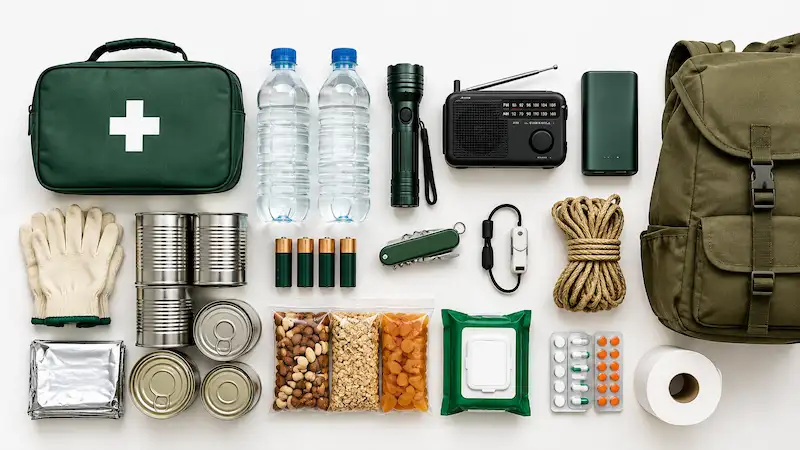
Quick answer: A functional power outage preparedness checklist covers water, shelf-stable food, a manual can opener, battery-powered lighting, a charged power bank, a radio, first-aid and medication supplies, and smoke/CO alarms. Buy only what’s missing. Generators and power stations are optional purchases that depend on your specific risk, not universal requirements.
When the lights flicker and the storm forecast keeps stacking up, the first real question is whether you need to buy anything at all. A useful power outage preparedness checklist starts with what you already own, not with a shopping cart. Some households are genuinely missing a few important supplies. Others already have most of what they need sitting in a closet or junk drawer. This guide walks through the essential items worth having, flags what you can safely use from home, points out what’s optional, and explains when it makes sense to wait on bigger purchases like a generator. None of it requires spending a few hundred dollars in a single afternoon, especially when making your home more sustainable on a budget.
Quick facts:
- Water: ~1 gallon per person, per day, for several days (Ready.gov)
- Fridge food safety window: 4 hours, doors closed
- Full freezer: 48 hours · Half-full freezer: 24 hours
- Generator clearance: minimum 20 feet from any window, door, or vent
- Average U.S. power loss: ~4 hours/year (CDC)
Power Outage Preparedness Checklist: Essential Supplies
Water and Nonperishable Food
Store roughly a gallon of water per person per day. Per the Ready.gov emergency kit guidance, aim for about a gallon of water per household member daily, enough to last several days once you account for both drinking and basic sanitation needs. That number is a baseline, not a ceiling. Households in hot climates, anyone pregnant, and families with young children or pets typically need more. Pair that water with a multi-day stock of shelf-stable food your household will actually eat, plus a manual can opener, since an electric one is useless without power.
Flashlights, Batteries, and Emergency Lighting
Battery-powered lighting beats candles every time. The CDC’s power sources guidance recommends having a dependable light source, whether that’s a flashlight, a headlamp, or a battery-powered lantern, along with a backup supply of standard AA and AAA batteries. Candles are not a safe substitute. CDC guidance on protecting yourself during a power outage is specific about choosing battery-powered flashlights and lanterns over candles, gas lanterns, or open flames, because open flames raise the risk of fire indoors.
Phone Charging and Emergency Communication
A charged power bank keeps your main source of alerts alive. CDC guidance also recommends keeping power banks, car chargers, and adapters for your everyday devices on hand, along with a hand-crank or battery-operated NOAA weather radio that includes a USB port for charging. A weather radio matters because cell networks can get congested or lose power of their own during widespread outages. Keep a short list of emergency contacts written down somewhere that doesn’t require a charged device to read.
First Aid, Medication, and Personal Essentials
Medication planning needs attention before an outage, not during one. CDC guidance notes discarding refrigerated medication once the power has been out for roughly a day, unless the label says otherwise, and using a life-sustaining medication that’s been at room temperature only as a stopgap until a fresh, properly stored supply is available. If anyone in your household depends on powered medical equipment, talk with your provider in advance about a backup power plan.
Food Safety and Household Protection
An appliance thermometer removes the guesswork. The CDC recommends keeping the refrigerator at or below 40°F and the freezer at or below 0°F, and freezing water containers or gel packs ahead of time. Working smoke alarms and carbon monoxide detectors that run on battery power or have a battery backup, plus a surge protector, address real risks that convenience gadgets don’t.
What Should You Buy First for a Power Outage?
Buy Missing Safety and Essential Supplies First
Close the real gaps before upgrading anything. Nationally, Americans lose power for roughly four hours total across an average year, though a severe storm can push an outage far beyond that. If you’re missing a working flashlight, a charged power bank, or a smoke alarm with a backup battery, those come first.
Use What You Already Have
Phone flashlights, car chargers, bottled water, and extra blankets all count. You don’t need emergency-branded versions of items you already own that already work.
Adjust Your Priorities to Your Household
Climate, outage frequency, medical needs, pets, and electricity costs should all shift what you buy first. Learn more about how to lower your electricity bill.
| Supply or need | Priority | Why it matters |
| Water and food | High | Needed for any outage lasting beyond a few hours |
| Flashlight or headlamp | High | Safer than candles and needed immediately |
| Power bank | High | Keeps communication and alerts available |
| Medication plan | High if applicable | Can become a health risk within a day |
| Generator | Household dependent | Relevant only for specific needs and conditions |
What to Buy and What to Skip for a Power Outage
Essential Supplies to Buy If You’re Missing Them
Water storage, a working flashlight, a battery-powered radio, and a first-aid kit come before anything else. They address real, immediate risks and carry no ongoing cost beyond occasional battery replacement.
Items You Can Use From Home or Delay Buying
Smartphone flashlights work for short outages. Coolers from camping trips double as food-safety equipment. Extra blankets, a cast-iron skillet, and an existing car charger all count. Specialty survival gadgets are usually optional unless they solve a need your existing items can’t.
When Expensive Backup Power Equipment Is Worth It
A generator or power station makes sense for frequent, multi-day outages or a genuine power-dependent medical or financial need; it makes less sense for rare, short outages. If you buy a generator, safe operation isn’t optional. CDC power outage safety guidance is direct about running a generator only outdoors, at least 20 feet from any window, door, or vent, never inside a home, basement, or garage, and pairing it with a battery-backed carbon monoxide detector inside the house.
| Item | Recommendation | When it makes sense |
| Flashlight | Buy now if missing | When you lack suitable emergency lighting |
| Power bank | Buy now if needed | When your current charging options are insufficient |
| Prepacked emergency kit | Compare contents first | When it fills genuine supply gaps without unnecessary duplication |
| Portable power station | Depends on household needs | When portable power solves a specific household problem |
| Generator | Depends on household needs | When the benefits justify the cost and safe operation is feasible |
| Specialty survival gadgets | Usually optional | When the item addresses a genuine, identified need |
How to Keep Your Outage Supplies Ready Without Overspending
Check and Maintain Your Supplies
Twice a year, check flashlight batteries, rotate stored water, and confirm your power bank still holds a charge. Replace expired first-aid items and keep supplies easy to reach.
Plan for Your Household’s Specific Risks
Reassess when circumstances change: a new baby, a pet, an aging parent moving in, or a move to a new climate. Know in advance where you’d go if your home becomes unsafe to stay in.
What to Do When the Power Goes Out
Protect Food and Preserve Phone Battery
Keep the doors shut. CDC food safety guidance after a disaster confirms food generally stays safe for about 4 hours in a closed refrigerator, 48 hours in a full freezer, and 24 hours in a freezer that’s only half full, as long as the doors stay shut the whole time. Use a thermometer to confirm food is still at or below 40°F, and when in doubt, throw it out.
Avoid Dangerous Backup-Power Practices
CDC guidance is unambiguous: never run a generator inside a home, basement, or garage, or less than 20 feet from any window, door, or vent, and the same applies to charcoal grills and camping stoves. If anyone shows signs of carbon monoxide poisoning, including headache, dizziness, or confusion, move them to fresh air and call 911.
Start With What You Need Most
The most useful thing you can do this week isn’t buying a generator. It’s opening a drawer, checking what you already own, and identifying the one or two genuine gaps in your setup. Close those gaps first. Bigger purchases can wait until you’ve confirmed they solve a problem your household actually has.
Frequently Asked Questions
Water, shelf-stable food, a manual can opener, a flashlight or headlamp with extra batteries, a charged power bank, a battery-powered radio, basic first-aid and medication supplies, and working smoke and carbon monoxide alarms.