Plastic sneaks into your cart in more places than you’d expect. It’s the bag at checkout, the produce bag for three lonely apples, the plastic clamshell around berries that don’t need one. Grocery shopping is one of the easiest places to cut plastic waste, simply because you touch it at every single step, from the parking lot to the pantry shelf.
This guide skips the obvious “just bring a tote bag” advice and gets into what actually moves the needle: how many times you really need to reuse a bag before it’s worth it, whether bulk bins are worth the hassle, and what’s actually allowed when you bring your own containers. For the bigger picture on cutting plastic everywhere else in your life, see our How to Reduce Plastic Use: The Ultimate Guide to Cutting Plastic Waste in Everyday Life.
Plastic-Free Grocery Shopping Checklist
If you only remember a few things before your next grocery trip, make it these:
- Bring reusable tote bags.
- Pack reusable produce bags for loose fruits and vegetables.
- Carry clean glass jars or stainless steel containers if you plan to shop from bulk bins or the deli.
- Choose loose produce instead of pre-packaged options whenever possible.
- Pick products in glass, metal, or paper packaging when comparable options are available.
- Buy larger sizes only if you’ll use them before they expire to reduce packaging waste.
- Keep an insulated cooler bag in your car for refrigerated and frozen foods.
- Leave your reusable bags in your car or by the front door so they’re ready for every shopping trip.
Quick takeaway: You don’t have to eliminate every piece of plastic at once. Consistently following even a few of these habits can significantly reduce the amount of single-use plastic that comes home with your groceries.
Why the Grocery Store Is Ground Zero for Plastic Waste
Grocery-related plastic isn’t a minor player in the litter problem. During the 2018 International Coastal Cleanup, every single item in the global top ten was a single-use plastic product, and that list included grocery bags and other plastic bags alongside food wrappers, bottle caps, and cups, according to NOAA’s Marine Debris Program.
The recycling side of the story isn’t much better. Based on the most recent detailed EPA data (2018, the latest full national breakdown available), Americans generated about 4.2 million tons of plastic bags, sacks, and wraps that year, recycled only around 420,000 tons of it, for a 10 percent recycling rate, per the EPA. That tracks with the country’s plastic recycling rate overall, which sat at just 8.7 percent in 2018 across all plastic types, according to EPA data. In plain terms: once a plastic bag or wrapper leaves the store, recycling is not a reliable safety net. Reducing it at the source is what actually works.
Takeaway: Most grocery plastic never gets recycled, so the goal isn’t “recycle better,” it’s “use less to begin with.”
Build a Plastic-Free Shopping Kit
You don’t need a cabinet full of gear. A small, consistent kit beats a big one you forget in the closet. For product-specific picks and price comparisons, check out The Best Reusable Alternatives to Single-Use Plastic That Save Money.
- 4 to 6 sturdy tote bags kept in your car, by the door, or in your work bag so you’re never caught without one
- 2 to 4 mesh or cotton produce bags for fruit, vegetables, and bread
- 2 to 3 glass jars or stainless containers for bulk bins, the deli counter, or the butcher
- An insulated cooler bag so frozen and refrigerated items stay safe in reusable containers on the drive home
- A cloth bakery bag for bread and rolls
The Truth About Reusable Bags
Here’s a question worth asking honestly: do reusable bags actually help, or is it just a feel-good habit? The answer depends entirely on the material and how many times you actually use it.
A 2020 report for the United Nations Environment Programme reviewed a decade of lifecycle assessments and found real thresholds. A cotton tote needs to be used 50 to 150 times before it beats a single-use plastic bag on climate impact, a thick woven polypropylene bag needs 10 to 20 uses, and a thinner reusable polyethylene bag needs 5 to 10 uses , per reporting from CNN. A separate, stricter 2018 Danish EPA analysis, comparing cotton to a plastic bag that gets a second life as a trash liner before incineration, put the cotton break-even point far higher, at roughly 7,100 uses, which shows how much the answer shifts depending on what you’re comparing it against.
| Bag Material | Uses Needed to Beat One Single-Use Plastic Bag (Climate Impact) |
| Thin reusable polyethylene | 5 to 10 |
| Woven polypropylene (“bag for life”) | 10 to 20 |
| Cotton tote | 50 to 150 (UNEP), up to ~7,100 in stricter comparisons |
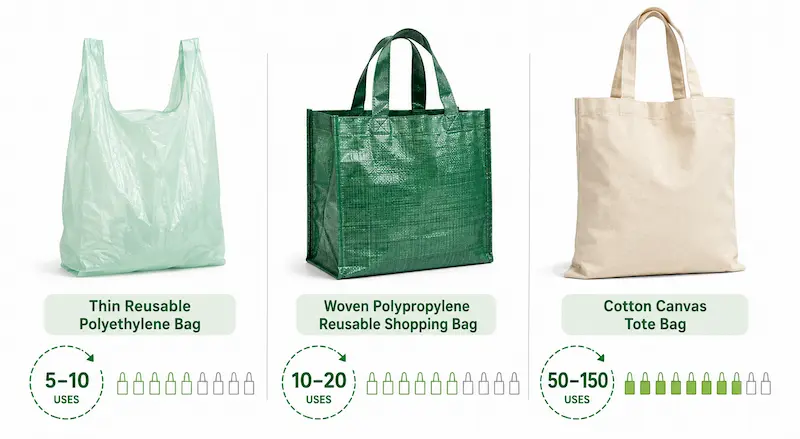
The practical lesson: skip buying a new “cute” tote every season, and instead keep using the same handful of bags for years. That’s where the real benefit shows up.
Takeaway: The bag itself doesn’t matter nearly as much as how long you keep using the same one.
Do Bag Bans Actually Change Behavior?
Yes, and the data on this is unusually solid. A University of Vermont study found plastic bag use dropped 91 percent in the five years after the state’s ban took effect, while paper bag use rose only about 6 percent, a change too small to be statistically significant , according to the Gund Institute for Environment at UVM. That means most people didn’t just switch from plastic to paper, they switched to reusables.
That pattern shows up nationally too. Bans across several U.S. states and cities have cut single-use plastic bag use by an estimated 6 billion bags total, working out to about 300 fewer bags per person each year once a ban takes effect , per the World Economic Forum.
As of early 2026, twelve states ban single-use plastic bags at checkout: California, Colorado, Connecticut, Delaware, Hawaii (through county ordinances), Maine, New Jersey, New York, Oregon, Rhode Island, Vermont, and Washington, with most charging a paper bag fee between 5 and 12 cents , according to Earth911. Worth verifying before you rely on it, since state and local bag laws (and their exact fees) change often. Check your state or city’s current ordinance before a shopping trip if you’re traveling.
Can You Bring Your Own Containers? Bulk Bins Explained
This is one of the most common questions people have, and for years the answer was murky. An updated federal food code guidance from the FDA now makes it easier for states to allow customers to refill and reuse their own containers in restaurants, bulk grocery aisles, deli counters, and at events, closing a gap that hadn’t been addressed since 2013 , according to Recycling Today. That’s why some stores that used to turn away shoppers with mason jars are loosening up.
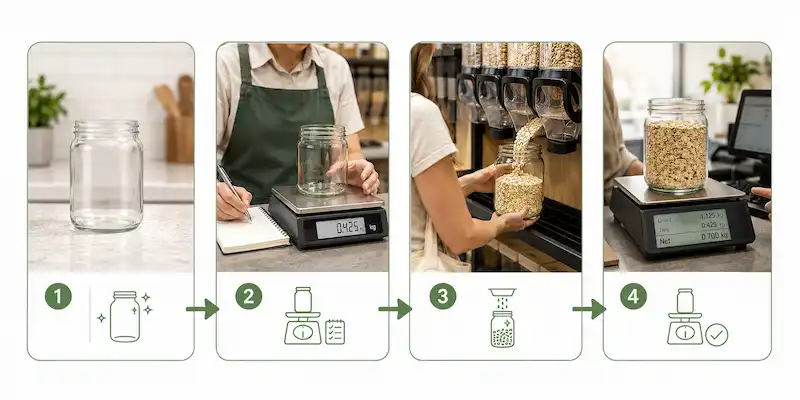
Even so, policy varies by store and state, so always ask before you fill. When you do bring containers, a few habits keep things smooth:
- Bring a clean container with no chips or cracks, appropriate for the food you’re buying
- Remove lids and straws before handing anything to staff
- Note or ask staff to record the tare weight (the empty container’s weight) before filling, so it’s subtracted at checkout
- Fill it yourself at self-serve bulk bins rather than asking an employee to do it
This is the same core guidance recommended for bulk bins and over-the-counter items like prepared foods, meats, and cheeses , per Oregon Metro’s customer guide to bringing reusable containers.
Takeaway: Bring your own containers with confidence, but confirm store policy first since it isn’t universal yet.
Produce, Deli, and Bakery: Skip the Extra Plastic
Quick Plastic-Free Swaps at the Grocery Store
| Instead of… | Try… | Why it helps |
| Single-use plastic shopping bags | Reusable tote bags | Reduces disposable bag waste and avoids bag fees in many areas. |
| Plastic produce bags | Mesh or cotton produce bags (or no bag for sturdy produce) | Cuts unnecessary plastic for fruits and vegetables. |
| Plastic clamshells of produce | Loose fruits and vegetables | Uses less packaging and often lets you buy only what you need. |
| Plastic deli containers | Your own clean reusable container (where permitted) or butcher paper | Reduces single-use packaging for meats, cheeses, and prepared foods. |
| Plastic water bottles | Refillable water bottle | Eliminates disposable bottles during shopping trips. |
| Plastic jars and tubs | Glass jars or metal cans when comparable products are available | These materials are widely recyclable in many communities and can often be reused at home. |
| Individually wrapped snacks | Larger packs or bulk-bin options | Lowers packaging waste per serving and can reduce cost. |
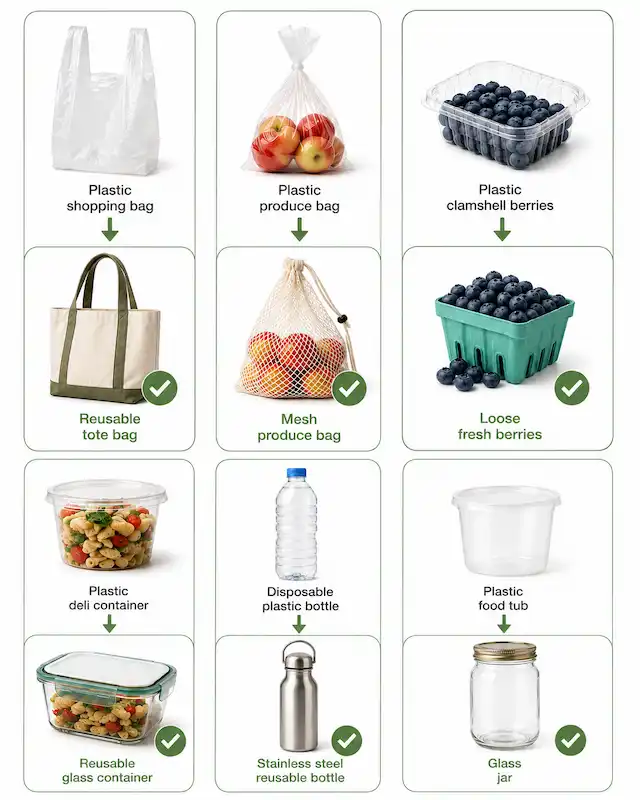
Quick tip: You don’t need to make every swap on your first trip. Start with one or two easy changes and build the habit over time.
This is where a lot of unnecessary plastic hides in plain sight.
- Most whole produce (apples, oranges, potatoes, avocados) doesn’t need a bag at all. It goes straight in your cart or reusable bag.
- For loose items like green beans, cherries, or grapes, a mesh or cotton produce bag works just as well as the plastic ones by the scale.
- At the deli and butcher counter, ask if they’ll wrap your order in your own container or in butcher paper instead of a plastic tub, especially now that FDA guidance supports it.
- For bread and bakery items, a reusable cloth bag keeps things fresh without the extra plastic sleeve.
Center Aisles and Packaged Goods
The middle of the store is trickier since a lot of packaging decisions are made by manufacturers, not you. Still, a few habits add up:
- Choose glass jars, metal cans, or paper cartons over plastic when the product is otherwise identical (pasta sauce, beans, oats).
- Buy the largest size you’ll actually use before it goes bad. One big jar of peanut butter has less packaging per ounce than three small ones.
- Look for concentrated or refill versions of household items like laundry detergent, which use less plastic per wash.
- For repurposing the containers and bags you already have at home, our guide 25 Easy Ways to Reduce Plastic Use at Home has practical follow-up ideas once groceries are unpacked.
At Checkout: Bag Fees, Habits, and Small Wins
By the time you reach the register, the habit either holds or falls apart. A few things help it stick:
- Keep bags in the car permanently, not just “when you remember them.” The car is the failure point for most people.
- If you forget your bags, it’s fine to buy a paper one instead of a new thick “reusable” plastic bag, since those thicker plastic totes are the ones most likely to end up unused in a drawer.
- If your state charges a bag fee, treat it as a nudge rather than a fine. It typically funds recycling or environmental programs at the state level.
Common Mistakes That Undercut Your Efforts
- Buying a new tote bag for every trip instead of reusing the same few for years. This resets the environmental payoff calculation back to zero.
- Forgetting bags in the car because they’re buried under other stuff. Keep them in one visible spot, like the trunk lid pocket or a door pouch.
- Assuming bulk bins are always allowed without checking. Some stores still restrict BYO containers by internal policy even where it’s legally permitted.
- Treating “compostable” bags as home-compostable. Most require industrial composting facilities and will just sit in a landfill otherwise.
Frequently Asked Questions
Can I bring my own containers to the grocery store?
In many states, yes, and it’s gotten easier since the FDA updated its food code guidance on reusable containers. Store policy still varies, so ask staff before filling a container at the bulk bins, deli, or butcher counter.
Do reusable bags actually help the environment?
Yes, but only if you reuse them enough times. A thin reusable bag needs roughly 5 to 10 uses, a woven polypropylene bag needs 10 to 20, and a cotton tote needs 50 to 150 (or more, by stricter measures) to beat a single-use plastic bag. Keeping the same few bags for years is what makes the difference.
Is bulk bin shopping cheaper than buying packaged groceries?
It can be, especially for items you use in small amounts like spices or specialty grains, since you’re not paying for packaging and can buy exactly the quantity you need. Prices vary by store and region, so it’s worth comparing per-ounce costs at your specific market.
What’s the easiest first step if I’m starting from zero?
Start with reusable tote bags and produce bags. They require no new store policies, no bulk section, and no learning curve. Once that’s a habit, layer in bulk bins and BYO containers.
Your Next Trip
You don’t need to overhaul your grocery routine overnight. Start with the tote bags and produce bags, since that’s the lowest-effort, highest-consistency change. Add bulk bins and your own containers once that feels automatic.
The point isn’t a perfect trip every time. It’s a routine that holds up on a busy Tuesday, not just when you’re feeling motivated.