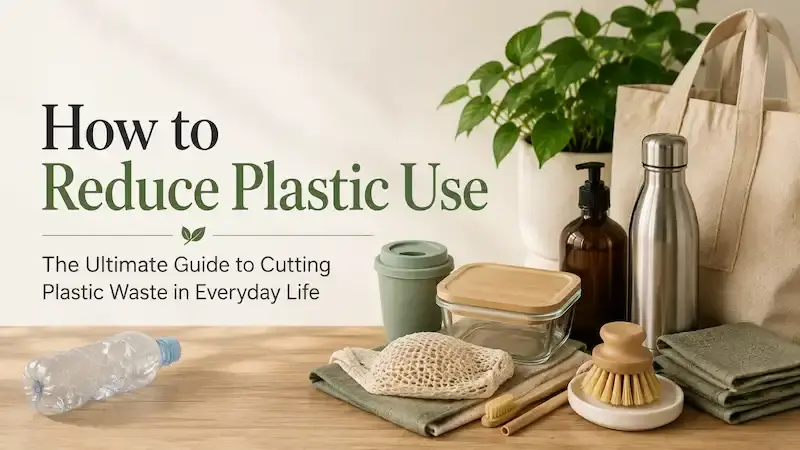
Plastic is in almost everything you touch today, from your toothbrush to your grocery bags. Learning how to reduce plastic use doesn’t mean overhauling your entire life overnight. It means understanding where plastic actually comes from in your routine, then replacing it strategically, starting with the items you use most.
This guide covers why plastic reduction matters, what the numbers really show about recycling, how to shop and stock your home differently, and where individual choices fit next to the bigger corporate picture.
Why Reducing Plastic Use Actually Matters
The scale of the problem is bigger than most people realize. Global plastic waste generation has grown more than sevenfold over the past four decades, and global plastics production reached roughly 415 million metric tons in 2023, more than double what it was at the start of the century.
Recycling hasn’t kept pace with production. A widely cited OECD Global Plastics Outlook analysis found that only about 9% of all plastic ever made has actually been recycled. In the United States specifically, the EPA’s own facts and figures data shows plastics consistently make up 12% to 13% of the municipal solid waste stream, and independent analysis using EPA and export data found the real U.S. plastic recycling rate had fallen to just 5% to 6% by 2021, down from a peak of 9.5% in 2014.
What doesn’t get recycled often ends up in waterways. According to the U.S. Department of the Interior, at least 8 million tons of plastic enter the ocean every year, making up roughly 80% of all marine debris from the surface down to the deep sea floor. Once it’s there, it doesn’t go away quickly. Depending on the type of plastic, items can take 20 to 500 years to break down, and even then they don’t fully disappear, they fragment into microplastics.
Those microplastics are increasingly showing up in the human body. A peer-reviewed 2025 review found that microplastics have been detected in human blood, placental tissue, and lung tissue. A separate systematic review of the human health evidence concluded that microplastic exposure is “suspected” to adversely affect reproductive, digestive, and respiratory health, with a possible link to colon and lung cancer, though the researchers were careful to note the human evidence base is still limited compared to animal studies.
Takeaway: You don’t need to eliminate plastic completely to make a real difference. The data shows the biggest, most persistent problem is single-use plastic, so that’s where reduction efforts pay off fastest.
How Long Common Plastic Items Actually Last
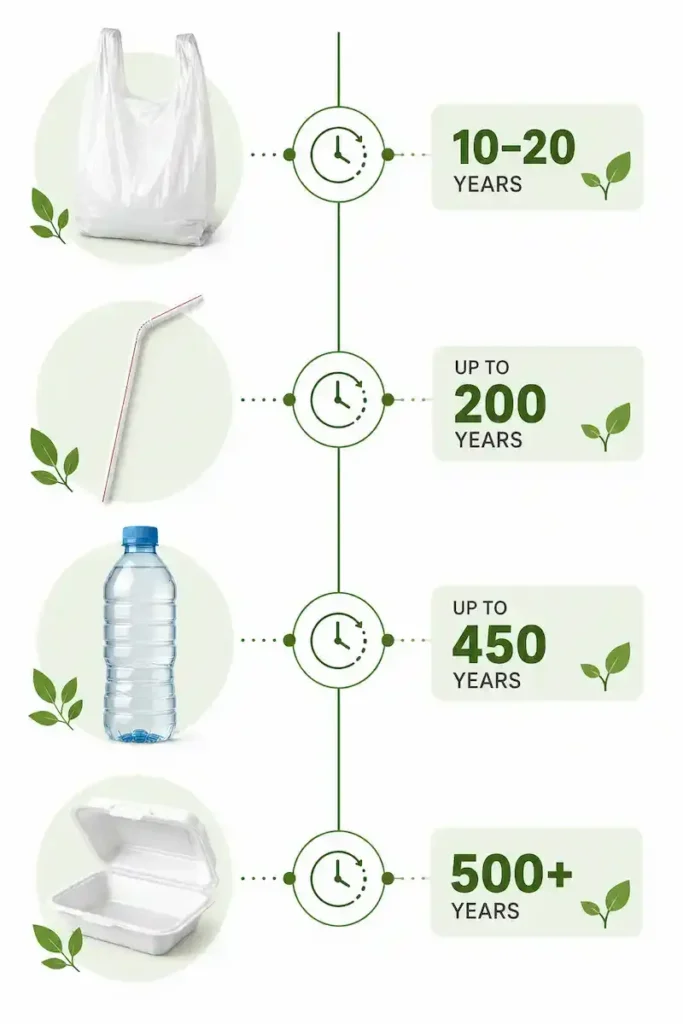
| Item | Estimated decomposition time |
| Plastic grocery bag | 10 to 20 years |
| Plastic straw | Up to 200 years |
| Plastic water bottle | Up to 450 years |
| Styrofoam container | 500+ years |
Source: WWF Australia’s plastic lifecycle research
What the Recycling Numbers on Plastic Actually Mean
Before you can reduce plastic effectively, it helps to understand why so little of it actually gets recycled in practice. Those numbers 1 through 7 stamped inside the triangle on plastic packaging aren’t a recycling guarantee, they’re a resin identification code created by the plastics industry to identify material type, not recyclability.
In practice, most curbside programs only reliably accept #1 (PET, used in bottles) and #2 (HDPE, used in jugs and detergent bottles). Plastics #3 through #6 are harder to recycle and often rejected locally, and #7, a catch-all category that includes everything from polycarbonate to some bioplastics, is rarely recyclable at all.
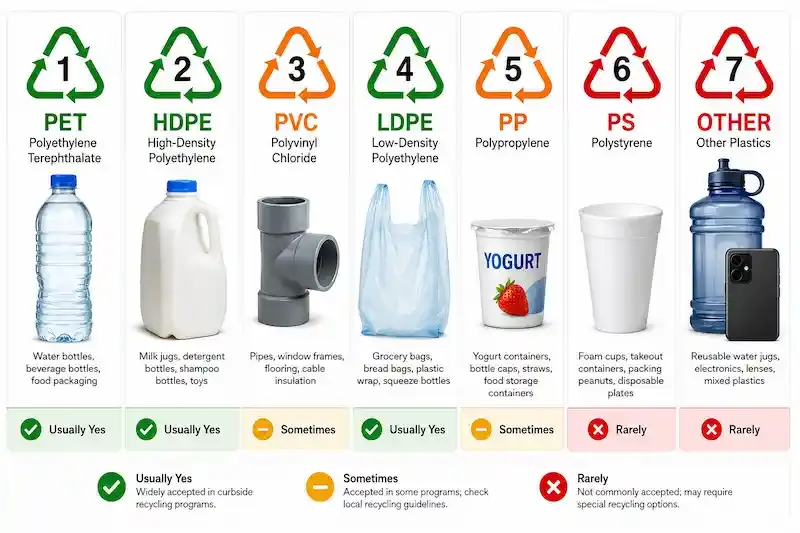
Quick reference:
| Code | Common name | Typical items | Widely recyclable? |
| #1 PET | Polyethylene terephthalate | Water and soda bottles | Usually yes |
| #2 HDPE | High-density polyethylene | Milk jugs, detergent bottles | Usually yes |
| #3 PVC | Polyvinyl chloride | Pipes, some bottles | Rarely |
| #4 LDPE | Low-density polyethylene | Squeeze bottles, bags | Sometimes |
| #5 PP | Polypropylene | Yogurt tubs, bottle caps | Sometimes |
| #6 PS | Polystyrene | Foam cups, takeout containers | Rarely |
| #7 Other | Mixed/bioplastics | Large water jugs, some electronics | Rarely |
The practical takeaway: check your specific local program rather than assuming the triangle symbol means an item belongs in your bin. When in doubt, reducing your use of #3, #6, and #7 plastics in the first place avoids the guesswork entirely.
Individual Action vs. Corporate Responsibility: Where You Actually Fit In
It’s worth addressing a fair criticism head-on: does swapping your grocery bags really matter when a handful of companies produce most of the plastic in circulation? The data on corporate plastic production is real. Break Free From Plastic’s 2023 global brand audit, which involved nearly 9,000 volunteers across 41 countries, found The Coca-Cola Company was the top branded plastic polluter for the sixth year running, with more collected plastic waste than the next two companies combined.
Environmental groups argue this shows the plastic crisis is fundamentally a production problem that individual consumers can’t shop their way out of, and that mandatory regulation on manufacturers matters more than personal habits. Industry and packaging groups generally counter that consumer demand drives packaging decisions, that recycling infrastructure investment (not production limits) is the more workable lever, and that voluntary corporate sustainability pledges are already shifting packaging design.
Both things can be true at once: corporate plastic production is the larger lever, and individual habits still matter, both because they reduce your own footprint and because consumer demand for less packaging is one of the signals that pushes companies to change. This guide focuses on what you can control directly, while pointing you toward advocacy resources if you want to push on the bigger lever too.
How to Reduce Plastic Use at Home
Home is the easiest place to start because you control the environment completely. The biggest wins come from replacing items you use every single day, not from a one-time deep clean of your cupboards.
Start with these high-impact areas:
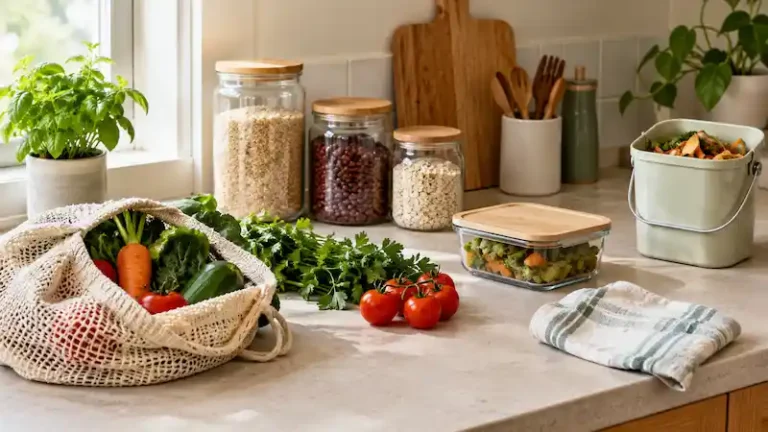
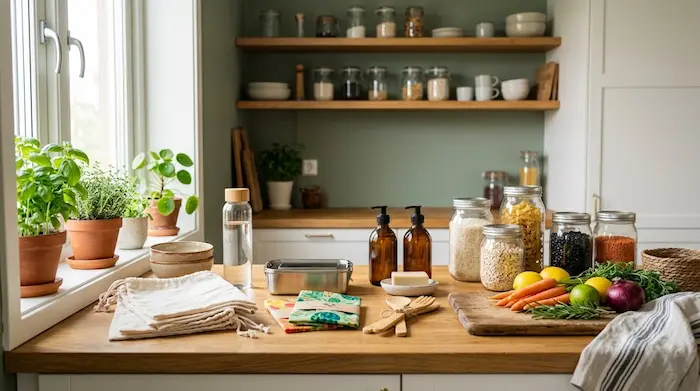
- Kitchen: Swap cling film for beeswax wraps or silicone lids, and replace plastic food storage with glass containers. Since #2, #4, and #5 plastics are generally considered safer for reuse, prioritize replacing older #3, #6, and #7 containers first.
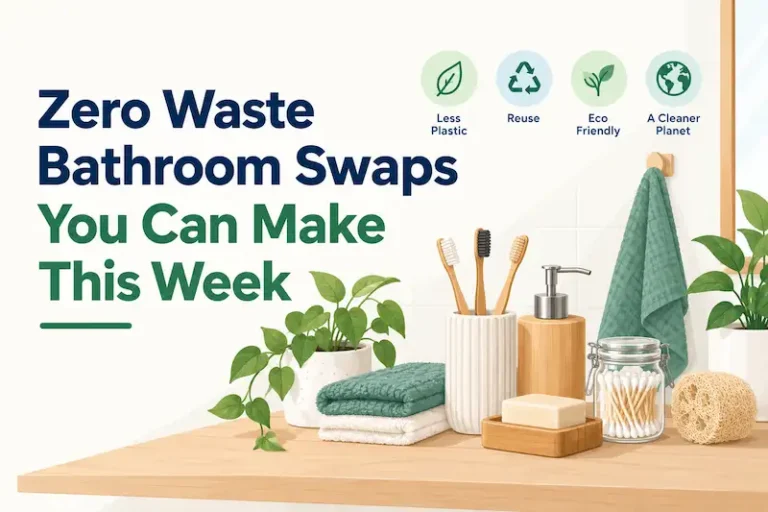
- Bathroom: Switch to bar soap and shampoo bars, a bamboo or metal-handled toothbrush, and a safety razor instead of disposable plastic ones.
- Cleaning: Buy concentrate refills instead of new plastic bottles every time, or switch to reusable cloths instead of plastic-backed wipes.
- Trash and storage: Line bins with paper bags where possible, and reuse jars and containers you already have instead of buying new plastic organizers.
For a full room-by-room breakdown with specific product ideas, see 25 Easy Ways to Reduce Plastic Use at Home.
Takeaway: Don’t throw out usable plastic items just to replace them with “eco” versions. Use what you have until it wears out, then replace it with a reusable alternative.
How to Reduce Plastic Use While Grocery Shopping
Grocery shopping is where plastic reduction gets a little more complicated, because packaging decisions are largely made by stores and manufacturers, not shoppers. Even so, policy is shifting fast. As of January 2026, twelve U.S. states have enacted statewide bans on single-use plastic bags, including California, Colorado, Connecticut, Delaware, Hawaii, Maine, New Jersey, New York, Oregon, Rhode Island, Vermont, and Washington.
California’s newest law closed a major loophole. SB 1053, which took effect January 1, 2026, eliminated the thicker “reusable” plastic bags that stores had been selling at checkout, a workaround that a 2023 Environment California report found had actually increased plastic bag waste by more than 80% since the original 2014 ban.
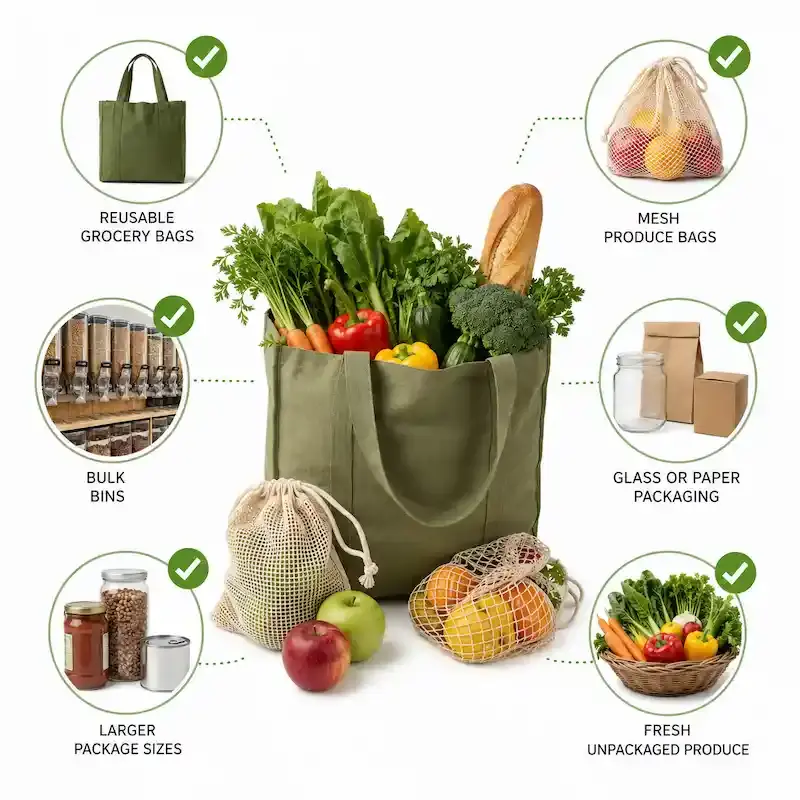
Grocery shopping checklist:
- Keep reusable bags in your car or by the front door so you never forget them
- Bring your own mesh produce bags for fruits and vegetables
- Choose the bulk bins for grains, nuts, and spices when your store has them
- Pick paper or glass packaging over plastic when the option exists
- Buy larger sizes instead of multiple small plastic-packaged portions
- Choose fresh over pre-cut produce, which is usually wrapped in extra plastic
For a deeper dive into store-by-store strategy, see How to Reduce Plastic Use While Grocery Shopping.
Best Reusable Alternatives to Single-Use Plastic
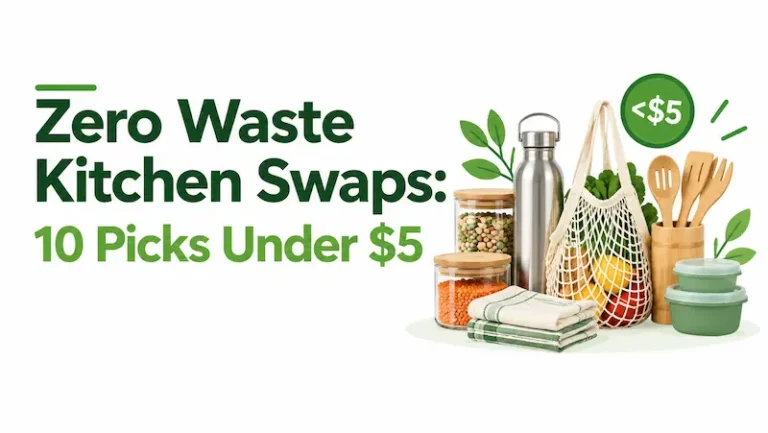
Reusable swaps pay for themselves faster than most people expect. Bottled water is the clearest example. Case Western Reserve University’s sustainability office notes that Americans spend around $5 a week on bottled water, or roughly $260 a year, meaning a single reusable bottle can pay for itself in about a week of consistent use.
| Single-use item | Reusable swap | Why it’s worth it |
| Bottled water | Insulated steel or glass bottle | Pays for itself in about a week |
| Plastic grocery bags | Canvas or woven tote bags | Holds more, lasts for years |
| Plastic sandwich bags | Silicone reusable pouches | Dishwasher safe, hundreds of uses |
| Plastic straws | Stainless steel or silicone straws | One-time buy, easy to clean |
| Plastic wrap | Beeswax wraps or silicone lids | Reusable for a year or more |
| Coffee pods | Reusable filter basket | Cuts both plastic and cost per cup |
For a full breakdown of products and pricing, see The Best Reusable Alternatives to Single-Use Plastic That Save Money.
How to Start a Plastic-Free Lifestyle on a Budget
A common myth is that reducing plastic use requires buying a whole new set of “sustainable” products. In reality, the cheapest way to reduce plastic is usually to buy less of everything, not to replace plastic items with pricier alternatives.
A few budget-friendly principles:
- Use what you own first. Finish existing plastic products before replacing them. Throwing away a usable item to buy a “greener” one creates more waste, not less.
- Buy secondhand for durable swaps. Glass jars, metal containers, and cloth bags are easy to find at thrift stores for a fraction of retail price.
- Prioritize by frequency of use. Replace daily-use items (water bottle, shopping bags, food storage) before rarely used ones.
- Make your own when it’s cheaper. Simple swaps like cloth napkins or DIY cleaning sprays in reused bottles cost less than store-bought “zero waste” products.
- Buy in bulk when you can. Larger packages usually mean less plastic per unit and a lower cost per ounce.
Common Mistakes When Trying to Reduce Plastic Use
- Buying too much too fast. A drawer full of unused reusable bags is still waste. Build your swap collection gradually, replacing items as they wear out.
- Chasing perfection. You will still end up with some plastic. The goal is meaningful reduction, not zero plastic overnight.
- Ignoring the biggest sources. Beverage bottles, bags, and food packaging make up the bulk of most people’s plastic footprint. Focus there before worrying about smaller items.
- Trusting the recycling triangle at face value. As covered above, the number inside the triangle indicates resin type, not guaranteed recyclability. Check your local program’s actual rules.
- Assuming “biodegradable” or “compostable” plastic breaks down on its own. Most compostable plastics require industrial composting facilities with specific heat conditions; tossed in a regular landfill, they often behave like traditional plastic.
- Overlooking bathroom and cleaning products. People fixate on kitchen and grocery swaps and forget that shampoo bottles, razors, and cleaning supplies are often just as replaceable.
Frequently Asked Questions
Why is it important to reduce plastic use?
Because so little plastic actually gets recycled in practice and it takes decades to centuries to break down, every piece avoided has a lasting effect on landfills, waterways, and potentially human health, based on emerging research into microplastic exposure.
What are the easiest ways to reduce plastic waste?
Start with the items you use daily: a reusable water bottle, reusable shopping bags, and food storage containers. These three swaps alone eliminate a large share of most households’ single-use plastic.
Is a plastic-free lifestyle expensive?
Not if you approach it gradually. Using what you already own, buying secondhand, and prioritizing high-use items keeps costs low. A reusable water bottle alone can save roughly $260 a year compared to buying bottled water.
Do the recycling numbers on plastic mean it’s recyclable?
No. The number inside the triangle is a resin identification code that tells you what type of plastic it is, not whether your local program accepts it. Codes #1 and #2 are the most widely recyclable; #3, #6, and #7 usually aren’t.
Does individual action actually matter if corporations produce most plastic?
Both matter. Brand audits consistently show a small number of companies account for a large share of plastic packaging waste, but individual habits still reduce your personal footprint and contribute to the consumer demand signals that push companies and policymakers to change.
What can I use instead of plastic bags?
Canvas totes, woven market bags, or mesh produce bags are the most common reusable swaps, and twelve U.S. states now require or encourage them at checkout as of 2026.
Final Thoughts: Where to Start Today
Reducing plastic use isn’t about a perfect, plastic-free household. It’s about identifying where plastic shows up most often in your life, whether that’s bottled water, grocery bags, or food storage, and replacing those specific habits first, while understanding realistically what does and doesn’t get recycled where you live.
Start small: pick one swap from this guide, use it consistently for a month, then add the next one.