Meal planning sounds simple until Sunday night hits and you’re staring at a blank week with a grocery budget you already blew by Wednesday. Learning how to meal plan properly fixes that problem at the source. Instead of deciding what’s for dinner every single night, you make five or six decisions once, build one grocery list from them, and shop with a number in your head instead of a hope and a prayer.
This guide walks through a practical system for planning a full week of meals and the grocery budget to match it, plus real cost benchmarks so you can tell if your own numbers are in a reasonable range. For the bigger picture on grocery budgeting overall, see our How to Budget Groceries: The Ultimate Guide to Saving Money on Food Without Sacrificing Quality.
What Meal Planning Actually Means (and Why It Pays Off)
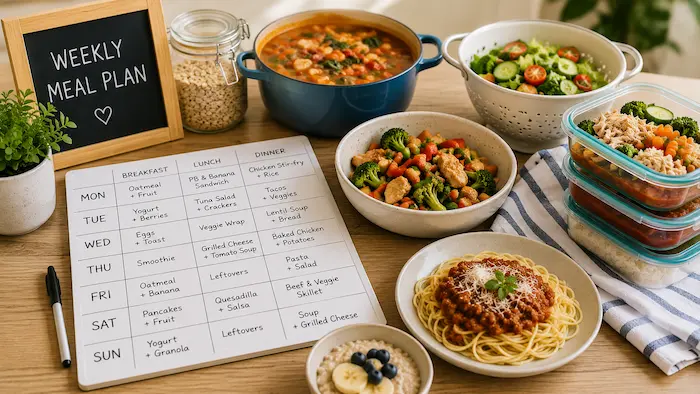
Meal planning is deciding in advance what you’ll eat over a set stretch of days, usually a week, then shopping for exactly those ingredients instead of wandering the aisles hoping for inspiration. The payoff isn’t just less stress at 5 p.m. It’s less money thrown in the trash.
Uneaten food is money you already spent and then discarded. According to USDA’s food loss and waste research, an estimated 30 to 40 percent of the entire U.S. food supply is never eaten. A separate joint USDA and EPA analysis puts a dollar figure on that for individual households: the average consumer loses roughly $728 a year to wasted food, which works out to about $14 a week, and closer to $56 a week once you scale that up to a household of four. A meal plan built around what you’ll actually cook, paired with a list built around what you already have, is one of the simplest ways to claw that money back.
How Much Should a Week of Groceries Actually Cost?
There’s no single right number, but there are real benchmarks worth checking yourself against. The Bureau of Labor Statistics reports that the average U.S. household spent $6,224 on food eaten at home in 2024, which comes out to roughly $120 a week. That’s an average across all household sizes, so a single person or a family of six will naturally land above or below it.
For a leaner benchmark, the USDA publishes four official food plans every month, from Thrifty up to Liberal. As of the most recent USDA food plan report, the Thrifty Food Plan, the same benchmark used to set SNAP benefits, puts a reference family of two adults and two children at about $235 a week for groceries, assuming every meal is cooked at home from scratch. That’s a tight but achievable target if you’re planning carefully. If you’re feeding a family specifically, our How to Budget Groceries for a Family of 4: A Practical Monthly Plan breaks the monthly math down further.
Use these figures as a starting range, then adjust for your own household size, location, and dietary needs. A weekly budget somewhere between the Thrifty benchmark and the national average is a reasonable place for most households to aim.
The 5-Step System for Weekly Meal Planning
Here’s the actual process, broken into five steps you can repeat every week in under 30 minutes once it becomes a habit.
Step 1: Check Your Calendar and Raid Your Pantry First
Before you think about a single recipe, look at the week ahead. Which nights are you actually home to cook? Which nights are already spoken for by a late meeting, a kid’s practice, or plans to eat out? Plan real meals only for the nights you’ll realistically cook.
Then open the fridge, freezer, and pantry and write down what’s already there and close to needing to be used. That half bag of spinach and the chicken thighs in the freezer should shape tonight’s menu, not get forgotten under a fresh grocery haul. This single habit is one of the fastest ways to cut into that food waste number from the last section.
Step 2: Pick a Realistic Number of Meals to Plan
You don’t need 21 planned meals. Most people only need to plan dinners, since breakfast and lunch tend to repeat from a short rotation of easy options. Pick five or six dinners for the week, and deliberately cook two of them in larger batches so leftovers cover a lunch or an extra dinner without any additional cooking or shopping.
Step 3: Build the Menu Around What’s Actually on Sale
Before locking in recipes, glance at your store’s weekly flyer or app. Building your menu around whatever protein and produce happen to be discounted that week is one of the single biggest levers for staying under budget, since prices on staples like chicken, ground beef, and seasonal produce can swing significantly from week to week. For a longer list of tactics like this one, see 25 Grocery Budget Tips That Actually Save Money.
Step 4: Write One Master Grocery List, Organized by Store Section
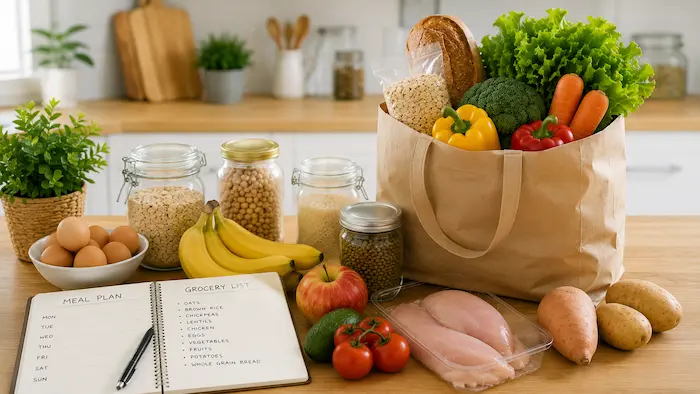
Once your meals are locked in, combine every ingredient from every recipe into a single list, then sort that list by the order you’ll walk through the store: produce, meat, dairy, pantry, frozen. Cross it against what you already noted in your pantry in step 1 so you’re not buying a second jar of cumin you already own. One organized list beats five separate scraps of paper and cuts down on the backtracking and impulse grabs that quietly inflate a bill.
Step 5: Set a Per-Trip Budget Cap and Track It As You Shop
Decide your dollar ceiling before you leave the house, using the benchmarks from earlier as a guide. Keep a running total on your phone’s calculator or your store’s app as you shop. Build in a small buffer above the strict Thrifty-level numbers, since those figures assume zero waste and every single meal cooked from scratch, which is a high bar for a normal week.
Sample One-Week Meal Plan and Budget Breakdown
Here’s an illustrative example for a household of two adults planning five home-cooked dinners, with leftovers covering two lunches.
| Day | Dinner | Approx. Cost |
| Monday | Sheet-pan chicken thighs with roasted vegetables | $12 |
| Tuesday | Bean and rice bowls (pantry staples) | $6 |
| Wednesday | Leftover chicken tacos | $4 |
| Thursday | Pasta with a simple tomato sauce and frozen vegetables | $8 |
| Friday | Egg fried rice using leftover rice | $5 |
| Weekend | Batch-cooked soup or chili (extra for lunches) | $10 |
| Total | ~$45 |
Costs will vary by region and by what’s on sale that week. Treat this as a template to adapt, not a fixed price.
A Quick Weekly Meal Planning Checklist
- Check the week’s calendar for busy nights before planning meals
- Do a quick pantry and freezer inventory
- Pick 5 to 6 dinners, not 21 individual meals
- Plan at least one batch-cook meal for built-in leftovers
- Check the store flyer before finalizing recipes
- Write one combined grocery list, sorted by store aisle
- Set a dollar budget before you shop
- Track your running total as you go
Common Meal Planning Mistakes That Blow the Budget
- Overplanning every meal of every day, which leads to abandoned recipes and wasted ingredients by Thursday
- Skipping the pantry check, which means buying duplicates of things you already own
- Shopping without a consolidated list, which invites backtracking and impulse buys
- Ignoring unit price, since the bigger package isn’t always cheaper per ounce
- Never repeating meals, which multiplies the number of unique ingredients you need to buy
For more ways to trim the list itself, our Cheap and Healthy Grocery List for Frugal Living covers budget-friendly staples worth building meals around.
Meal Planning FAQs
How much should I budget for groceries each week?
Somewhere between the USDA’s Thrifty Food Plan figure (about $235 a week for a family of four cooking every meal at home) and the national household average of roughly $120 a week is a reasonable starting range, adjusted for your own household size and location.
Does meal planning actually save money?
It tends to, mainly by cutting down on food waste and reducing last-minute takeout, both of which are common leaks in a grocery budget.
How do I start meal planning as a total beginner?
Start small. Plan just five dinners for one week, allow repeats, and don’t worry about breakfast or lunch until the dinner habit sticks.
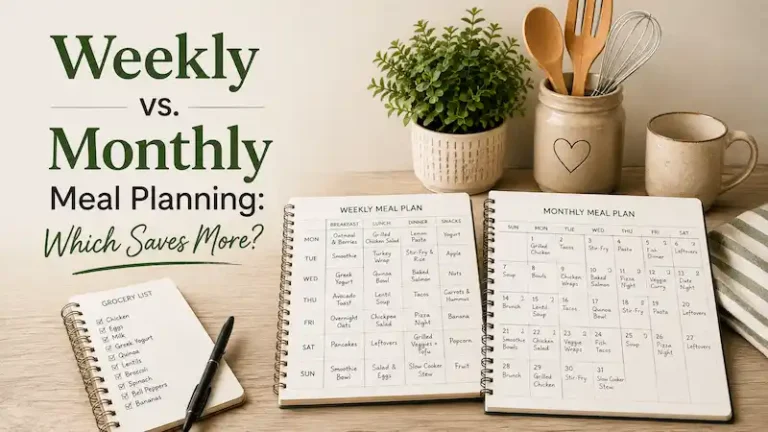
How far ahead should I meal plan?
One week at a time is easiest to manage and shop for. Once it’s a habit, freezer-friendly meals can let you stretch planning to two weeks.
What if my week gets thrown off after I’ve already shopped?
Move the most perishable planned meal earlier in the week, and freeze anything you won’t get to before it spoils.
Your Next Step
Meal planning isn’t about rigid perfection. It’s about making the food decisions once instead of seven times, and shopping with a number instead of a guess. Start with just this week: check your calendar, raid your pantry, pick five dinners, write one list, and set a budget before you walk in the store. For the full framework this article sits inside, head to How to Budget Groceries: The Ultimate Guide to Saving Money on Food Without Sacrificing Quality .