Going vegetarian to save money sounds great in theory. Then you get to the grocery store, see a $6 bag of “plant-based” fake chicken, and start to wonder if anyone actually saves anything. Here’s the truth: a cheap vegetarian meal plan only works when it’s built around the right foods. Skip the pre-packaged meat substitutes and lean into dried beans, lentils, rice, oats, and seasonal produce, and you end up with one of the least expensive ways to eat well that exists.
This guide walks through what a realistic weekly budget looks like, how to hit your protein, iron, and B12 needs without overthinking it, and gives you a sample 7-day plan you can adapt to your own kitchen. If you want the broader framework this plan fits into, our Cheap Meal Plans: The Ultimate Guide to Eating Well on a Budget covers strategy across every diet style, not just vegetarian.
How Much Does a Cheap Vegetarian Meal Plan Actually Cost?
The USDA publishes four benchmark grocery budgets each month through its Thrifty Food Plan, which outlines nutrient-dense foods that can support a healthy diet on a limited budget and serves as the basis for SNAP benefit calculations. On the lowest of the four tiers, a family of four following the Thrifty Food Plan should aim to spend just over $1,000 a month on groceries, according to 2026 USDA figures reported by Chowhound. That number assumes all meals are cooked at home, which is exactly the habit a vegetarian meal plan requires anyway.
Here’s the part that matters for this article: a vegetarian version of that same budget tends to land at the low end, not the high end, of what USDA modeling assumes. That’s because the plan’s cheapest calories and protein, beans, lentils, rice, and oats, are also the core of a vegetarian pantry. You’re not fighting the benchmark. You’re built for it.
Takeaway: Use the USDA Thrifty Food Plan as your ceiling, not your target. A vegetarian plan built on legumes and grains should come in under it most weeks.
Why Vegetarian Eating Is One of the Cheapest Ways to Eat Well
This isn’t a vague claim. The Vegetarian Resource Group ran a direct price comparison across two U.S. cities and found that dried beans cost between 10 and 20 cents per serving, compared to 80 cents to over $2 for a serving of animal meat, and 80 cents to $1.24 for a serving of processed veggie meat like plant-based burger patties. When they broke it down by protein content instead of serving size, dried pinto beans cost about 12 to 14 cents per 10 grams of protein, while ground beef ran 59 to 73 cents for the same amount, and processed plant-based burgers were even higher than beef.
That last point is worth sitting with. The expensive part of a vegetarian diet isn’t going vegetarian. It’s reaching for processed substitutes designed to imitate meat. Dried beans, lentils, and split peas beat both meat and fake meat on cost.
A separate peer-reviewed nutrient-cost analysis backs this up from another angle: beans and starchy vegetables like white potatoes were consistently cheaper per 100 calories than dark-green or deep-yellow vegetables, and fresh, frozen, and canned vegetables provided comparable nutritional value. That last part matters for a budget plan too. Frozen and canned produce aren’t a downgrade. They’re a legitimate cost-saving swap, not a nutritional compromise.
Cost Snapshot: Protein Sources Compared
| Protein Source | Approx. Cost per 10g Protein | Notes |
| Dried pinto beans | $0.12–$0.14 | Cheapest option; needs soak time |
| Dried lentils | $0.18–$0.22 | No soaking required, cooks fast |
| Canned black beans | $0.31–$0.46 | Convenient, slightly pricier than dried |
| Ground beef (73/27) | $0.59–$0.73 | Based on VRG’s 2023 pricing data |
| Plant-based burger patties | $1.07–$1.18 | Most expensive option in the comparison |
Source: Vegetarian Resource Group, 2024
Getting the Nutrition Right: Protein, Iron, and B12 on a Budget
A cheap plan is only worth following if it’s actually nutritionally sound. The Academy of Nutrition and Dietetics addressed this directly in its most recent position paper, stating that appropriately planned vegetarian and vegan diets can be nutritionally adequate for adults and may offer long-term benefits for cardiometabolic health. “Appropriately planned” is doing the work in that sentence, so let’s cover the three nutrients people worry about most.
Protein: You Don’t Need to “Combine” Anything
The old advice about pairing rice with beans at every single meal to form a “complete protein” is outdated. The American Society for Nutrition notes that protein complementation doesn’t have to happen at the same meal; your body maintains a pool of amino acids and can combine what it needs from foods eaten across the day. Eat a variety of grains, legumes, nuts, and seeds over the course of a week and you’ll meet your needs without meal-by-meal math.
Iron: The One Nutrient Worth Planning Around
Iron is the nutrient where vegetarians genuinely need to pay a bit more attention. Because non-heme iron (the type found in plant foods) is less easily absorbed than the heme iron in meat, the NIH’s Office of Dietary Supplements notes that the recommended iron intake for vegetarians is about 1.8 times higher than for people who eat meat. The fix is simple and free: pair iron-rich foods like beans, lentils, and fortified grains with a vitamin C source. NIH-affiliated research confirms that eating vitamin C-rich foods like citrus, bell peppers, or tomatoes alongside iron-rich plant foods measurably increases absorption. A squeeze of lime on your bean bowl isn’t just flavor. It’s function.
B12: The One You Can’t Get from Plants
This is the one nutrient that truly doesn’t exist in plant foods. The NIH’s consumer fact sheet is blunt about it: people who eat little or no animal foods might not get enough vitamin B12, because only animal foods naturally contain it. If your “vegetarian” plan includes eggs and dairy, you’re likely covered through those. If you’re leaning closer to vegan, look for B12-fortified cereals, nutritional yeast, or a basic supplement, all of which are inexpensive and don’t threaten the budget angle of this plan at all.
For a deeper look at balancing cost against nutrition across any diet style, see Cheap Healthy Meal Plans That Save Money Without Sacrificing Nutrition.
Takeaway: Protein takes care of itself if you eat a variety of plant foods over the week. Iron needs a vitamin C partner. B12 needs eggs, dairy, fortified food, or a cheap supplement if you’re eating fully plant-based.
A Sample 7-Day Cheap Vegetarian Meal Plan
This plan is built for one adult, leans on repeat ingredients to avoid waste, and keeps most dinners doing double duty as next-day lunch. Your actual total will shift with local prices, but staying in the $35 to $50 range for a full week is realistic if you’re shopping the pantry staples below.
| Day | Breakfast | Lunch | Dinner |
| Mon | Oatmeal with peanut butter and banana | Lentil soup with whole wheat bread | Black bean and rice bowl with salsa |
| Tue | Scrambled eggs on toast | Leftover lentil soup | Chickpea curry over rice |
| Wed | Greek yogurt with oats and frozen berries | Bean and cheese quesadilla | Pasta with marinara and white beans |
| Thu | Oatmeal with cinnamon and raisins | Leftover pasta | Vegetable fried rice with eggs |
| Fri | Peanut butter banana toast | Black bean tacos with cabbage slaw | Lentil and vegetable stew |
| Sat | Veggie scramble with leftover produce | Chickpea salad sandwich | Bean chili over rice |
| Sun | Oatmeal | Leftover chili | Stir-fried tofu or eggs with frozen vegetables |
Snacks throughout the week: roasted chickpeas, carrots with hummus, apple with peanut butter, or plain yogurt.
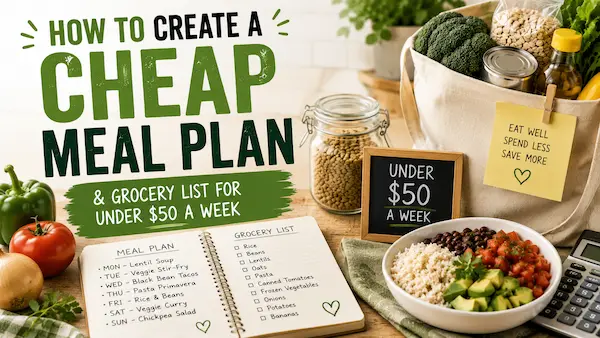
Notice the pattern: five core ingredients (beans, lentils, rice, oats, eggs) rotate through every meal in a different form. That’s not a lack of creativity. It’s the entire mechanism that keeps this cheap. For a full worked-out grocery list and cost breakdown built around this exact style of plan, check out How to Create a Cheap Meal Plan and Grocery List for Under $50 a Week.
Building Your Pantry: The Core Staples That Make This Work
Stock these once and most weeks only require topping up produce and dairy.
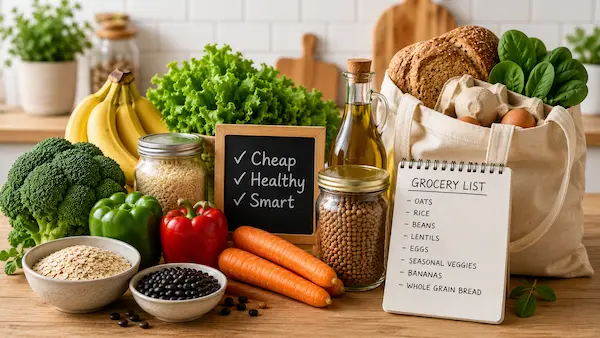
- Dried or canned beans (black, pinto, chickpeas)
- Dried lentils and split peas
- Rice, pasta, and rolled oats
- Eggs and a block of cheese
- Peanut butter
- Frozen mixed vegetables and frozen berries
- Canned tomatoes and tomato paste
- Onions, garlic, and a bag of carrots
- Plain yogurt
- A cheap vegetable oil and a few spices (cumin, chili powder, black pepper)
Smart Shopping and Meal Prep Strategies That Cut Costs Further
Buying cheap food is only half the equation. The other half is not throwing it away. USDA estimates that 30 to 40 percent of the food supply in the U.S. goes to waste, and the agency puts the cost of that waste for the average family of four at around $1,500 a year. A vegetarian pantry actually has an advantage here: dried beans, rice, oats, and lentils have long shelf lives and don’t spoil on the same clock fresh meat does.
A few habits that make a real difference:
- Cook a big pot of beans or lentils on Sunday and freeze half in portions.
- Buy produce that overlaps across multiple recipes (one bag of carrots covers soup, stir-fry, and snacking).
- Check your fridge before you shop, not after.
- Lean on frozen vegetables for anything you won’t use within a few days.
- Repurpose leftovers as lunch instead of cooking a separate midday meal.
For more ways to stretch a grocery budget across an entire week without repeating meals, our Cheap Healthy Meal Plans That Save Money Without Sacrificing Nutrition guide has additional strategies that apply whether or not you eat meat.
Adapting the Plan for Families
Everything above scales. Beans and rice are naturally inexpensive per serving, so a family of four doesn’t multiply cost the way a meat-based plan does; buying dried beans in bulk actually lowers the per-serving price further. Swap in kid-friendly formats like bean and cheese quesadillas, pasta with white beans blended into the sauce, or veggie fried rice with extra egg. If you’re planning for a full household rather than one person, 7 Cheap Weekly Meal Plans for Families on a Budget breaks down portioning and batch-cooking specifically for larger households.
The Sustainability Bonus: Why This Plan Is Good for the Planet Too
The frugal case for this plan stands on its own, but the sustainability angle isn’t just marketing. The most comprehensive meta-analysis of global food systems to date, led by researchers Poore and Nemecek and hosted by Our World in Data, found that producing a kilogram of beef generates roughly 60 kilograms of greenhouse gas emissions, compared to about 1 kilogram for peas. That’s not a small gap. It means the same swaps that save you money at checkout, beans and lentils instead of beef, are also the swaps with the biggest environmental payoff per meal.
Takeaway: The cheapest proteins in this plan and the lowest-emission proteins in the data are the same foods. That’s not a coincidence, it’s why beans have been a staple in frugal kitchens for generations.
Common Mistakes That Blow the Budget
- Buying meat substitutes as your default protein. Processed veggie burgers and fake meat crumbles cost more per gram of protein than actual ground beef, based on the VRG pricing data above. Save them for occasional use, not daily meals.
- Skipping dried beans because of soak time. Canned beans are fine in a pinch, but dried beans cost roughly half as much per serving and freeze well once cooked.
- Overbuying fresh produce that spoils before you use it. Frozen vegetables carry comparable nutrition and never go bad on your schedule.
- Not repeating ingredients across the week. Buying five different specialty items for five different recipes is expensive. Buying one bag of carrots for four different meals is not.
- Forgetting B12 if you’re eating close to vegan. It’s a five-dollar bottle of supplements or a box of fortified cereal, not a reason to abandon the plan.
Frequently Asked Questions
Is a vegetarian diet cheaper than eating meat?
It can be, but only if it’s built around whole foods like beans, lentils, rice, and oats rather than processed meat substitutes, which often cost more per gram of protein than the meat they’re replacing.
Do vegetarians need to combine proteins at every meal?
No. Nutrition organizations have moved away from that advice. Eating a variety of plant proteins across the day, not necessarily the same meal, gives your body what it needs to combine amino acids on its own.
How do vegetarians get enough iron and B12 on a cheap plan?
Pair iron-rich foods like lentils and beans with a vitamin C source (citrus, tomatoes, peppers) to improve absorption. For B12, rely on eggs, dairy, fortified cereal, or a low-cost supplement if you’re eating little to no animal products.
Can a cheap vegetarian meal plan work for weight loss?
Beans, lentils, and vegetables are naturally high in fiber and lower in calorie density than many meat-heavy meals, which can support satiety on fewer calories, though individual results depend on total intake and activity level.
What’s the cheapest vegetarian protein source?
Dried lentils and dried beans consistently come out cheapest per gram of protein in independent price comparisons, beating both meat and processed plant-based products.
Bringing It All Together
A cheap vegetarian meal plan isn’t about restriction. It’s about building meals around the handful of ingredients that have always been the most cost-effective foods on the planet: beans, lentils, rice, oats, and whatever produce is in season or in the freezer. Get your pantry stocked with the staples above, pick a few recipes you can rotate weekly, and pair iron-rich meals with a squeeze of citrus.
Next steps: pick two or three dinners from the sample plan to try this week, build your grocery list around ingredients that repeat across multiple meals, and check your fridge before you shop so nothing goes to waste. If you want the full framework this plan sits inside, start with our Cheap Meal Plans: The Ultimate Guide to Eating Well on a Budget.