Grocery prices climb every year, and it’s easy to assume eating well means spending more. That’s only partly true. With the right structure, a cheap healthy meal plan can meet real nutrition standards while keeping your weekly grocery bill under control. This guide covers what actually makes a meal plan both cheap and healthy, which foods carry the most nutritional weight for the least money, and how to put it together without a spreadsheet obsession. For the broader strategy behind budget cooking, see our Cheap Meal Plans: The Ultimate Guide to Eating Well on a Budget.
Is Eating Healthy Really More Expensive?
Somewhat, but not by as much as most people assume. Harvard research on diet costs comparing healthy and unhealthy diet patterns across dozens of studies found that the healthiest diets cost about $1.50 more per person per day than the least healthy ones, once foods like fruit, vegetables, fish, and nuts entered the picture. Over a year, that works out to roughly $550 for one person, or about $2,200 for a family of four.
That gap is real, but it’s small enough to close with planning. The $1.50 figure reflects average grocery-store prices across a wide range of diets, not a meal plan deliberately built around cheap, nutrient-dense staples like beans, eggs, oats, and frozen vegetables. Structure your plan around those foods specifically, and the gap narrows considerably.
Takeaway: Healthy eating carries a modest cost premium on average, but a deliberately built cheap healthy meal plan can close most of that gap.
What Counts as “Healthy” in a Meal Plan Right Now
USDA and HHS update the federal dietary framework every five years, and the current edition changed things in a way that actually helps budget cooking. The 2025-2030 Dietary Guidelines lead with protein and produce, and they explicitly list frozen, dried, and canned vegetables and fruit as good options rather than compromises. That matters here because frozen and canned produce is usually the cheapest, most shelf-stable way to hit your daily vegetable and fruit targets.
The same guidance names beans, peas, lentils, legumes, nuts, seeds, and soy as core protein sources alongside eggs, poultry, and other animal proteins. In practice, that means a cheap healthy meal plan doesn’t need to center on expensive cuts of meat to check the protein box.
The Cheapest Healthy Foods to Build a Meal Plan Around
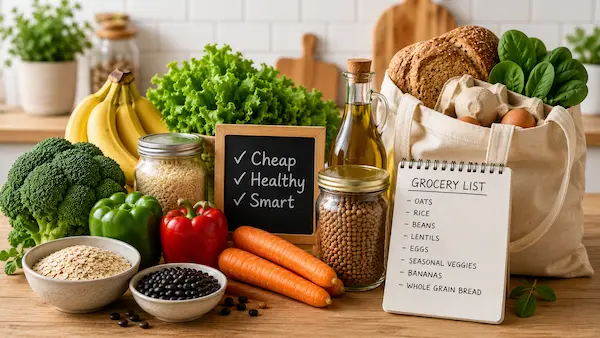
A handful of foods do most of the heavy lifting in any cheap healthy meal plan. They’re shelf-stable or freezer-friendly, nutrient-dense, and flexible enough to show up at breakfast, lunch, and dinner without getting repetitive.
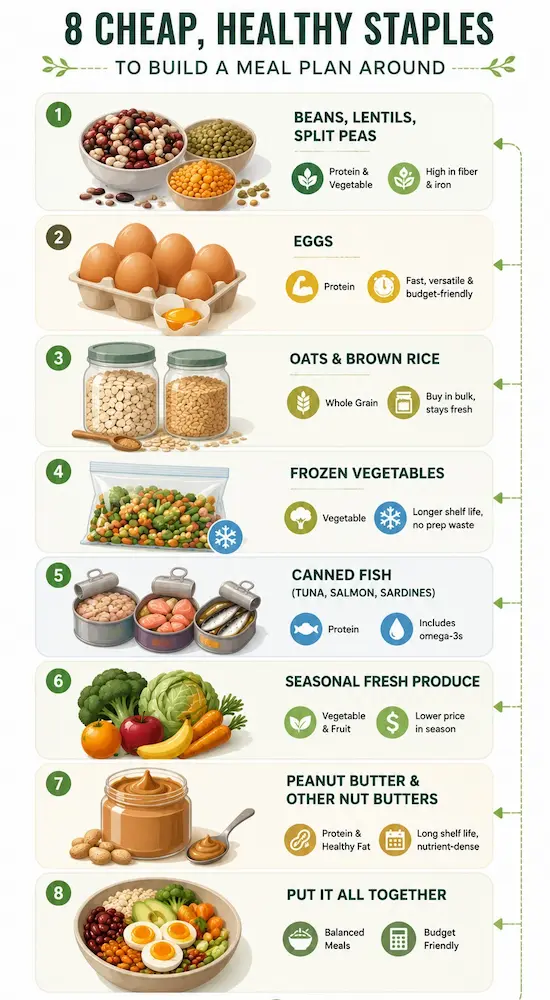
| Food | Food Group | Why It’s a Budget Pick |
| Beans, lentils, split peas | Protein and vegetable | Long shelf life, high in fiber and iron, counts toward two food groups |
| Eggs | Protein | Fast to cook, versatile, one of the cheapest complete proteins available |
| Oats and brown rice | Whole grain | Buy in bulk and stay fresh for months in a sealed container |
| Frozen vegetables | Vegetable | Comparable nutrition to fresh, longer usable life, no prep waste |
| Canned fish (tuna, salmon, sardines) | Protein | Shelf-stable, no refrigeration needed, includes omega-3s |
| Seasonal fresh produce | Vegetable and fruit | Lower price per pound when bought in season |
| Peanut butter and other nut butters | Protein and healthy fat | Long shelf life, dense in nutrients per dollar |
University of Florida Extension research on beans, peas, and lentils found they deliver about 7 grams of fiber per half-cup serving, along with meaningful amounts of folate, iron, and potassium, which is a lot of nutritional return for one of the cheapest items in any grocery store.
If most of your plan leans on plant proteins like these, our Cheap Vegetarian Meal Plans for Frugal and Sustainable Living guide has a full week of recipes built specifically around that approach.
Fresh vs. Frozen: Does It Actually Matter?
Not as much as packaging makes it seem. A two-year nutrient comparison study measuring vitamin C, provitamin A, and folate across fresh, “fresh-stored,” and frozen produce found no meaningful nutrient loss in frozen vegetables and fruit. In some comparisons, frozen produce actually came out ahead of fresh produce that had spent several days in the refrigerator. Frozen produce is typically flash-frozen at peak ripeness, while fresh produce can spend days in transit and storage before it reaches your plate, losing some nutrient content along the way. For a budget meal plan, that makes frozen vegetables a genuinely smart substitution, not a downgrade.
How Much Should a Cheap Healthy Meal Plan Cost?
The USDA publishes a monthly benchmark called the USDA Thrifty Food Plan, which defines the cost of a nutritionally adequate diet made entirely of foods prepared at home. It’s the same benchmark used to calculate maximum SNAP benefits, and it’s updated every month using the Consumer Price Index to track food-price inflation, so the exact dollar figure shifts slightly month to month.
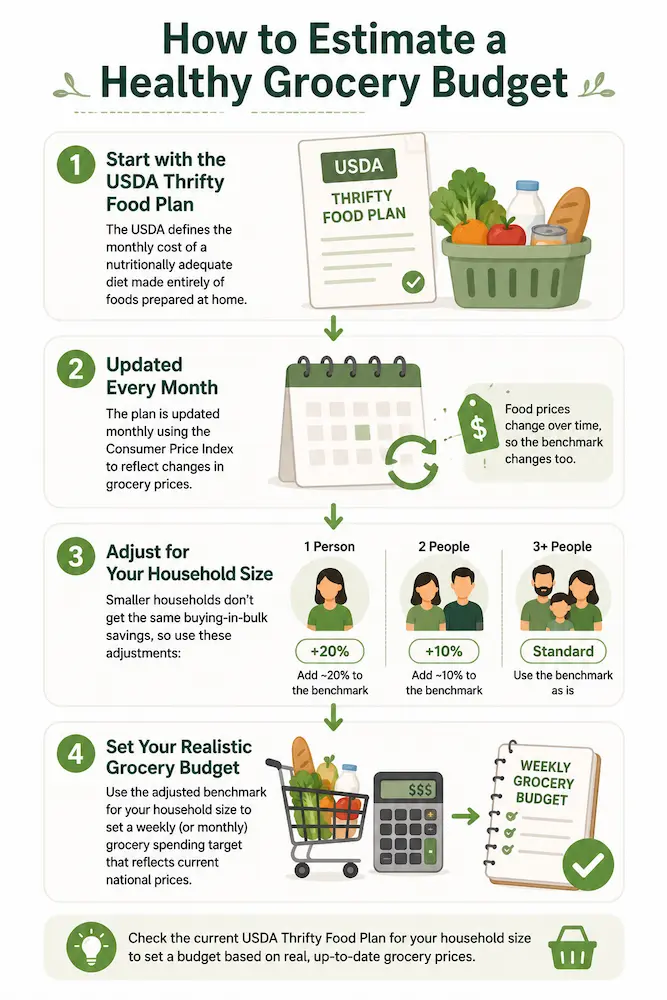
USDA also publishes household-size adjustments: add roughly 20 percent for a one-person household and 10 percent for a two-person household, since smaller households don’t get the same buying-in-bulk efficiency as larger ones. Checking the current published figure for your household size is the most reliable way to set a realistic weekly target, since it reflects current national grocery prices rather than a number that goes stale sitting in an article.
If your target is on the leaner end of that range, our How to Create a Cheap Meal Plan and Grocery List for Under $50 a Week guide breaks down exactly what that grocery list looks like.
A Sample 3-Day Cheap Healthy Meal Plan
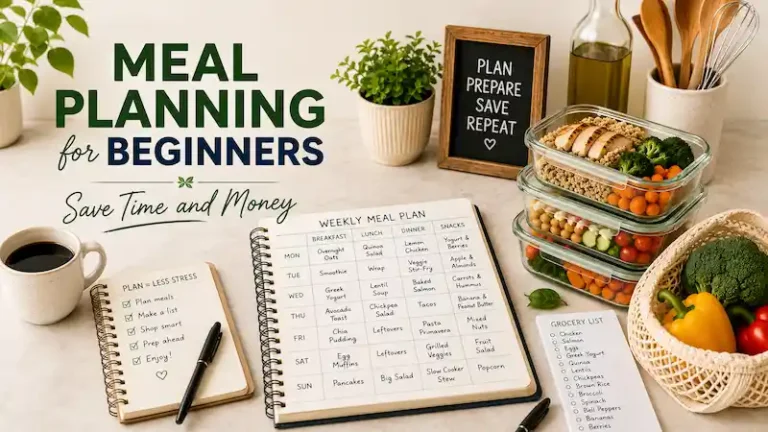
Here’s a short example showing how the building blocks above come together. Ingredients repeat on purpose, since overlap is what keeps both cost and food waste down.
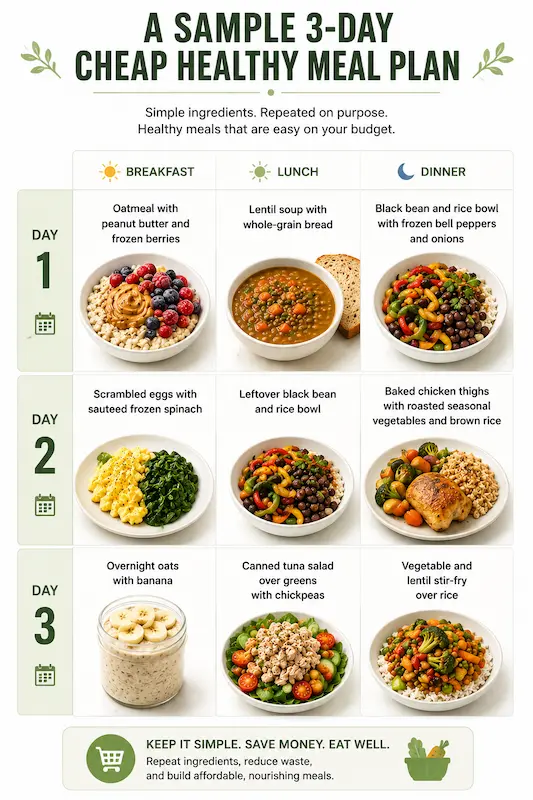
Day 1
- Breakfast: Oatmeal with peanut butter and frozen berries
- Lunch: Lentil soup with whole-grain bread
- Dinner: Black bean and rice bowl with frozen bell peppers and onions
Day 2
- Breakfast: Scrambled eggs with sauteed frozen spinach
- Lunch: Leftover black bean and rice bowl
- Dinner: Baked chicken thighs with roasted seasonal vegetables and brown rice
Day 3
- Breakfast: Overnight oats with banana
- Lunch: Canned tuna salad over greens with chickpeas
- Dinner: Vegetable and lentil stir-fry over rice
For a full seven-day version sized for a household, our 7 Cheap Weekly Meal Plans for Families on a Budget guide expands this same approach across a whole week with a matching grocery list.
7 Ways to Stretch Your Grocery Budget Without Cutting Nutrition
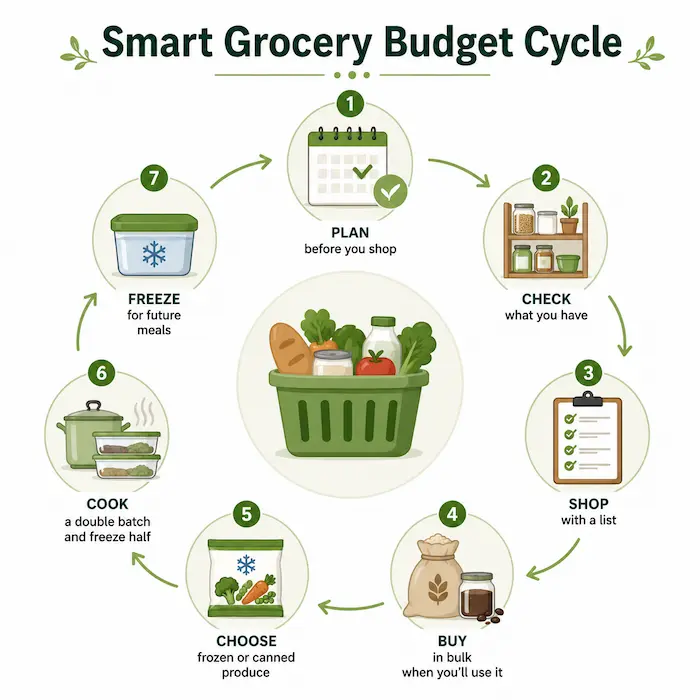
- Plan before you shop. Mayo Clinic’s meal-planning framework, built on USDA’s plan-purchase-prepare model, is designed to cut both waste and impulse spending before you ever walk into a store.
- Buy proteins and grains in bulk when you’ll actually use them. Rice, oats, dried beans, and frozen proteins hold up well in bulk as long as you have storage space.
- Build meals around one anchor protein per week. Repeating a protein across two or three dinners cuts both cost and decision fatigue.
- Default to frozen or canned produce for anything out of season. It’s shelf-stable, often cheaper per serving, and nutritionally comparable to fresh.
- Cook a double batch and freeze half. One cooking session turns into two or three meals.
- Shop with a list and stick to it. Unplanned trips and impulse items are one of the fastest ways a grocery budget slips.
- Use what’s already in your kitchen before buying more. A quick inventory of your fridge and pantry before you shop prevents duplicate purchases.
Food waste is a bigger budget leak than most people realize. USDA food loss data shows that 30 to 40 percent of the food supply in the United States goes uneaten, and the average family of four loses about $1,500 a year to food that’s bought and never eaten. Meal planning that accounts for what’s already in your kitchen is one of the most direct ways to close that gap.
Common Mistakes That Quietly Blow a Cheap Healthy Meal Plan Budget
- Buying pre-cut, pre-washed, or single-serving versions of foods you could prep yourself
- Skipping a grocery list and shopping based on whatever looks good that day
- Letting fresh produce sit too long before it gets used
- Treating “on sale” as a reason to buy something you weren’t planning to cook
- Building every meal around a different protein instead of reusing one across the week
- Ignoring the freezer as a tool, both for buying ahead and for saving leftovers
Final Thoughts
A cheap healthy meal plan isn’t about eating less or settling for bland food. It’s about choosing ingredients that do more nutritional work per dollar, like beans, eggs, oats, and frozen vegetables, and organizing your week so less of what you buy ends up in the trash. Start with one or two of the strategies above, whether that’s batch cooking or simply shopping with a list, and build from there. For the complete framework this article is part of, revisit our Cheap Meal Plans: The Ultimate Guide to Eating Well on a Budget.