Most household waste traces back to one recurring habit: the weekly grocery shop. Produce bags, clamshell containers, shrink-wrapped vegetables, single-serving snack packs. Before long, your recycling bin is full, your trash bag is heavy, and you spent a reasonable amount of money on food that somehow still ran out.
Zero waste grocery shopping is not about living inside a documentary or fitting a year’s worth of trash into a mason jar. It is about making smarter choices over time that reduce what you throw away, cost you less on balance, and become genuinely automatic rather than exhausting.
This guide is built room by room because that is how your household actually works. What you buy for your kitchen is entirely different from what you buy for your bathroom or laundry room. Fixing your produce aisle habits matters much less if you are still bringing home six heavily packaged cleaning products every month. Those rooms are usually where the real waste is hiding.
Work through each section, identify where your actual waste comes from, and use this as your working plan.
What Zero Waste Grocery Shopping Actually Means
The phrase gets used loosely, so it helps to ground it in something concrete.
The Zero Waste International Alliance defines zero waste as diverting at least 90 percent of discarded materials from landfills, incinerators, and the environment. That standard was written for municipalities and businesses, but it translates to a useful household target: the goal is not perfection, it is meaningful, consistent reduction over time.
For grocery shopping, waste falls into three categories. Knowing which matters most changes where you put your energy.
The Three Types of Grocery Waste (and Which to Tackle First)
Packaging waste is the most visible category: plastic bags, clamshell containers, trays, foil wrappers, and plastic lids. This is what most zero waste guides focus on, and for good reason.
Food waste is often the larger problem. According to the U.S. Environmental Protection Agency, food is the single largest category of material sent to U.S. landfills. The USDA Economic Research Service estimates that 30 to 40 percent of the U.S. food supply ends up wasted. Every head of lettuce that goes slimy before Tuesday, every jar of pasta sauce that molds in the back of the fridge, every half-eaten avocado you forgot about: food waste. It costs real money and carries a larger environmental footprint than most packaging choices.
Single-use disposables round out the picture: paper napkins, paper coffee cups, plastic cutlery, straws.
Tackle food waste first. Then packaging. Single-use disposables last. Most guides reverse this order entirely and send readers chasing the least impactful category.
Before You Leave the House
Zero waste grocery shopping begins at home. These four steps build the foundation for everything that follows.
Do a Five-Minute Waste Audit
Before you change a single product, look through your trash and recycling from the last week. What packaging shows up most often? For most households, the consistent offenders are pre-washed salad bags, plastic produce bags, clamshell berry containers, and single-use water or drink bottles.
That list tells you where your waste is actually coming from and where to focus first. Skipping this step means making random product changes that may not address your real problem at all.
Meal Plan to Eliminate Food Waste Before It Starts
Planning three to five dinners before you shop costs nothing and produces a measurable reduction in food waste almost immediately. When you buy with a specific plan, ingredients get used. When you shop without one, you buy optimistically and throw out realistically.
Write your list by meal, then break it into ingredients. If a recipe calls for half a bunch of parsley, plan a second recipe that uses the rest before the week is out. Check what you already have at home before adding anything to the list. This single habit reduces grocery-related waste more than any reusable bag purchase ever will.
Your Complete Zero Waste Shopping Kit
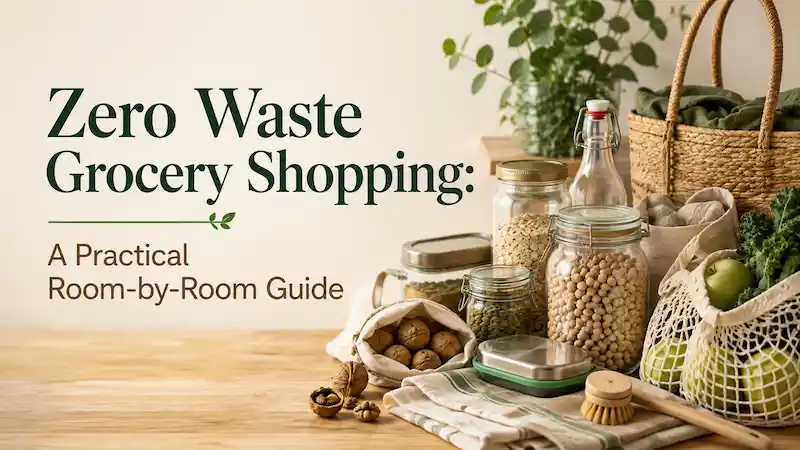
Everything in this table can be assembled from items you likely already own or from low-cost sources before your first zero waste shop. Nothing here requires specialty store access.
| Item | What It Replaces | Where to Get It |
| 2 to 3 reusable tote bags | Single-use plastic checkout bags | Already own, thrift stores, farmers markets |
| Mesh or cotton produce bags (3 to 5) | Plastic produce bags | Online, natural food stores, farmers markets |
| Glass jars in various sizes, with lids | Packaging from bulk bin items | Repurpose pasta sauce and jam jars for free |
| Cloth bread bag or pillowcase | Plastic bakery bags | Sew from an old pillowcase, or buy online |
| Stainless or glass container with leakproof lid | Plastic deli packaging | Any leakproof container you own works |
| Masking tape and permanent marker | Nothing, just needed for tare weights | Already own |
One practical note on tare weight: most stores with bulk sections will weigh your empty containers at no charge before you fill them. In practice, the smoothest system is writing the tare weight on a strip of masking tape on each jar lid before you leave home, then handing the jars to a staff member at the start of your shop. It takes about 90 seconds and removes every friction point at checkout. After three or four times, it becomes completely automatic.
Common Mistakes That Derail Zero Waste Shoppers in the First Month
These six mistakes appear with near-universal consistency. Knowing them in advance makes the difference between building a lasting habit and abandoning everything by week three.
Leaving your kit at home. The most universal barrier. Keep a spare set of bags and at least one jar in your car, bag, or right next to the front door. You will forget your kit occasionally. A backup stops that from becoming a reason to give up.
Buying zero waste products before you run out of existing ones. If you have six plastic toothbrushes already sitting under the bathroom sink, buying a bamboo one today is not zero waste. Use what you have. Apply this across everything. Your current products need to run out first.
Starting with the hardest swaps. Plastic-free meat, package-free cheese, and bulk bin spices are genuinely tricky at many stores. Starting there leads to frustration and abandonment. Start with loose produce and one bulk bin staple. Build the habit on the easiest swaps first, then expand.
Choosing inconvenient stores over practical ones. If the best zero waste store near you is 45 minutes away, you will stop going within two months. A once-a-month trip to a co-op supplemented by a weekly conventional supermarket trip is a more sustainable long-term approach than a perfect shop you stop making. Consistency matters more than purity.
Abandoning the practice after one imperfect purchase. You will sometimes grab a plastic bag in a rush, buy something in packaging you did not notice until you got home, or find that loose produce was not available that week. This is normal. One imperfect purchase does not undo three months of progress. Zero waste is a reduction practice, not a test to pass or fail.
Buying bulk items you have never cooked with before. Bulk bins make unfamiliar ingredients look appealing. Black quinoa, spelt flour, and dried mung beans are excellent, but if they sit in a jar for nine months untouched, you have created food waste while trying to reduce it. Buy bulk for what you already cook regularly, then expand gradually as your repertoire grows.
Room by Room: The Kitchen
Produce Section
This is the fastest, easiest place to cut plastic immediately, and it requires no specialty shopping whatsoever.
Most produce does not need a bag at all. Apples, oranges, avocados, sweet potatoes, onions, heads of lettuce, broccoli, bell peppers, and bananas go directly into your tote bag or cart with nothing else required.
For smaller loose items, a mesh produce bag handles mushrooms, cherry tomatoes, green beans, snap peas, and anything similar. They wash easily, weigh almost nothing, and checkout scales read through them without issue.
When loose and packaged versions of the same item sit next to each other on the shelf, choose loose. This holds even when the packaged version is cheaper per unit, because buying only what you need for the week from loose produce tends to reduce food waste enough to offset the per-unit price difference. You are not locked into a pre-determined quantity.
For organic produce specifically, the Environmental Working Group’s Shopper’s Guide to Pesticides in Produce identifies the items where pesticide residue is consistently highest (their Dirty Dozen list), making organic worth prioritizing, and the items where it is consistently lowest (their Clean Fifteen), where conventional loose produce is a sound and affordable choice. This guide helps direct your organic budget where it actually matters.
Bulk Bins and Dry Goods
Bulk buying eliminates packaging for the products that form the backbone of your pantry, and it does so while saving money. Oats, rice, lentils, dried chickpeas, black beans, pasta, flour, sugar, baking soda, nuts, seeds, granola, dried fruit, and coffee are all widely available at bulk sections in natural food stores and co-ops.
Bring clean, dry glass jars. Hand them to a staff member to record the tare weight, or use the in-store scale if available. Fill the jars, take the PLU sticker from the bin label, and you are done. Checkout works the same as any other item.
What makes a bulk section worth trusting on a regular basis:
- Bins with tight-fitting lids, which indicate good stock rotation and maintain freshness
- Clearly labeled PLU codes on every single bin
- Visible freshness (nuts should not look oily or dull; dried fruit should not be hard or crystallized; grains should not smell musty)
- Evidence of regular restocking, especially at co-ops where turnover is typically higher than at chain supermarket bulk sections
Thinking through bulk buying as part of a larger kitchen system pays dividends beyond packaging reduction alone. The complete zero waste kitchen guide covers storage systems, pantry organization, and how to build a kitchen setup that makes all of this easier to maintain long term.
Deli, Meat, and Fish Counters
Bring a clean container with a leakproof lid and ask. That is genuinely all the complexity here.
At most deli counters, staff will place sliced meat, cheese, or prepared foods directly into your container. The most reliable approach is to hand the container over before making any request. Let them weigh it first, note the tare weight, then ask for your item. Staff relax immediately when they see you have a clean container and a clear, organized system. The request stops feeling unusual and becomes routine within a few visits to the same counter.
Independent butchers and fishmongers accommodate this consistently and without hesitation. Policies at chain supermarkets vary by location and sometimes by which staff member happens to be working that day. It is always worth asking once at every store you use regularly. Many stores that initially seem inflexible become very cooperative when the request is made clearly and politely.
For cheese specifically: ask the counter to cut a fresh piece and place it in your container rather than choosing from the pre-cut packaged display. The quality is noticeably better, and you get exactly the amount you need.
The Bakery Section
In-store bakery staff will almost always place bread in a paper bag or directly into a cloth bag you provide. If the bakery has a self-serve section with tongs, a simple cloth produce bag handles rolls, baguettes, and pastries without any negotiation required.
Bread from the in-store bakery tends to have a shorter ingredient list than packaged sliced bread. It also tends to taste noticeably better, which is not a zero waste benefit exactly, but is a useful bonus.
Center Aisles: Where to Compromise Strategically
You will not avoid all packaging in the center aisles of a mainstream grocery store, and pretending otherwise leads to frustration. The goal here is not elimination but strategic prioritization.
Use this decision sequence for any packaged product you pick up:
Step 1: Does a package-free version exist at this store or nearby? If yes, choose it instead.
Step 2: Does a glass-packaged version exist? Glass is endlessly recyclable and reusable at home for food storage. Prefer it over plastic where the product quality is comparable.
Step 3: Does a cardboard or paper-packaged version exist? Cardboard has significantly higher real-world recycling rates than most plastics. Prefer it over plastic.
Step 4: Does only plastic packaging exist? Buy the largest available size you will realistically use in full. Less packaging per unit of product, and you extend the time before you need to purchase again.
Step 5: Do you actually use this product regularly? If you reach for it rarely, consider whether you need to buy it at all right now.
Glass-packaged alternatives genuinely exist for olive oil, soy sauce, maple syrup, nut butters, pasta sauces, vinegars, jams, and most condiments. However, most bottled salad dressings, ketchup, and squeeze condiments are primarily available in plastic at mainstream stores. For those, buy the largest size, use every bit of it, and put your energy elsewhere.
One clarification on recyclability claims that matters here: a label saying “recyclable” does not mean your local facility actually processes that material. The EPA’s plastics data shows that overall plastics recycling rates in the U.S. remain low, largely due to contamination, infrastructure gaps, and the limited markets for mixed plastic types. The chasing-arrows symbol is not a guarantee. This is a reason to prioritize reducing packaging consumption over depending on recycling as a solution.
Room by Room: The Bathroom
This is where most zero waste shopping guides offer two paragraphs and a shrug. That approach dramatically underestimates how much plastic waste originates in the bathroom. The average person uses eight to twelve personal care products daily, most of them packaged in plastic. The kitchen may be where you eat, but the bathroom is often where more of your household’s ongoing plastic waste actually comes from.
Shampoo and Conditioner
Shampoo bars replace the plastic bottle entirely. A well-made bar typically lasts two to three times as long as an equivalent volume of liquid shampoo, making it cost-competitive once you account for longevity.
One thing most guides skip entirely: there is a transition period. When switching from liquid shampoo to a bar, hair often feels heavy, waxy, or dull for one to three weeks while your scalp adjusts its sebum production and residue from previous products clears. This is temporary and completely normal. It is also the exact point at which most people give up and switch back, assuming the bar simply does not work for them. If you know the transition period is coming, you can push through it. Washing every other day and co-washing (using only conditioner bar on alternate washes) helps during this adjustment.
What to look for in a shampoo bar:
- Sulfate-free formulations are gentler and work for most hair types
- Look for a pH between 4.5 and 5.5 if the brand lists it, which is appropriate for scalp and hair health
- Bars from co-ops, zero waste shops, and farmers markets tend to have better ingredient lists than mainstream options
- For fine hair, avoid bars heavy in coconut oil derivatives, which can weigh fine hair down
Conditioner bars work well for most hair types. Silicone-free formulations are better for fine hair; richer versions with shea butter or cocoa butter suit coarse or curly hair.
Body Wash and Bar Soap
Bar soap for the body comes in cardboard or paper packaging at most grocery stores. It is the most straightforward bathroom swap available, typically costs less per wash than bottled body wash, and for a household buying body wash regularly, eliminates one to two plastic bottles per person per month.
If you have sensitive skin, look for fragrance-free options. Most stores carry at least one unscented bar soap option.
Deodorant
Deodorant is a consistent plastic offender in most bathrooms and gets almost no coverage in zero waste grocery guides. Three main package-free formats exist:
Paste in a glass jar: Applied with a finger or small spatula. Most formulations use baking soda and coconut oil or shea butter as primary ingredients. Highly effective for most people. Note that baking soda-heavy formulations can irritate sensitive skin over time. Look for “baking soda free” options if you notice redness or irritation.
Cardboard push-up tube: Applies exactly like a conventional stick deodorant. Zero plastic from production to disposal. Increasingly available in natural food stores and some mainstream supermarkets.
DIY from bulk bin ingredients: A simple mixture of coconut oil, baking soda, and arrowroot powder (all available from bulk bins) can be made at home for very little cost and produces zero packaging. It requires a bit of experimentation to find the right ratio for your body chemistry, but once dialed in, it works reliably.
Natural deodorants work differently from antiperspirants. They address odor rather than preventing perspiration, which is a healthy and natural process. There is typically a two to four week adjustment period. The same rule applies as with shampoo bars: know the adjustment period is coming, and you will not abandon the product prematurely.
Shaving
Safety razors deserve far more attention in zero waste conversations than they typically receive.
A quality safety razor costs $20 to $40 upfront. The recyclable metal blades cost approximately $0.10 to $0.30 per blade, with each blade lasting three to ten shaves depending on use and hair type. The math over a year undercuts the cost of disposable cartridge razors significantly, and the long-term packaging reduction is essentially total.
| Product | Upfront Cost | Per-Shave Cost (approx.) | Annual Packaging |
| Plastic disposable razors | $3 to $8 per pack | $0.15 to $0.40 | Multiple plastic blister packs |
| Cartridge razor and refills | $10 to $15 plus $20 to $30 per refill pack | $0.50 to $1.00+ | Plastic cartridges, plastic packaging |
| Safety razor and metal blades | $20 to $40 once, then blade packs | $0.05 to $0.10 | One metal handle for years, small cardboard blade packs |
Safety razors work for face, legs, underarms, and any other shaving purpose. The technique is slightly different from cartridge razors (less pressure, a shallower angle), but most people adapt within a week of regular use.
Dental Care
Bamboo toothbrushes are now available at many conventional supermarkets, not just specialty stores. They perform identically to plastic toothbrushes and go into compost when worn out. Remove the nylon bristles first and put those in the trash, as most composting facilities do not accept nylon.
For toothpaste, tablets in glass jars or paper packaging are the zero waste option. Bite the tablet, chew briefly, brush normally. They are less common at mainstream supermarkets but found consistently at natural food stores and co-ops. Floss in glass dispensers with refillable spools is available at zero waste shops and online, replacing the plastic floss dispenser that cannot be recycled.
Menstrual Products
Menstrual cups, reusable cloth pads, and period underwear replace a consistent, recurring source of packaging waste. Once purchased, these products last for years. A menstrual cup, for example, can last up to ten years with proper care, eliminating years of monthly disposable purchases. These are not typically available at grocery stores, but they belong in any complete zero waste bathroom conversation because switching eliminates an entire ongoing category of waste.
Bathroom Swaps at a Glance
| Product | Conventional Format | Zero Waste Alternative | Packaging Eliminated Per Year |
| Shampoo | Plastic bottle | Shampoo bar in paper or tin | 4 to 6 plastic bottles |
| Conditioner | Plastic bottle | Conditioner bar | 4 to 6 plastic bottles |
| Body wash | Plastic bottle | Bar soap in cardboard | 12 to 24 plastic bottles |
| Deodorant | Plastic stick or spray can | Paste in glass jar or cardboard push-up | 4 to 6 plastic units |
| Razor | Disposable plastic or cartridge pack | Safety razor with metal blades | Dozens of plastic units |
| Toothbrush | Plastic | Bamboo | 4 plastic handles |
| Toothpaste | Plastic tube | Tablets in glass or paper | 4 to 6 plastic tubes |
| Cotton rounds | Plastic bag of disposables | Reusable rounds in mesh bag | 365+ disposables |
| Menstrual products | Monthly box | Menstrual cup or reusable pads | 12+ boxes |
Room by Room: Cleaning and Laundry
Dish Soap and Surface Cleaners
Bar dish soap in cardboard packaging handles hand-washing dishes effectively and lasts longer than liquid soap in most households. Concentrated dish soap, where one small bottle diluted in water replaces multiple full-size bottles, is available at natural food stores and zero waste shops.
For surface cleaning, distilled white vinegar diluted with water handles routine kitchen and bathroom surfaces without any plastic packaging. It is available in large glass bottles at most grocery stores for very little money. One note on its limitations: avoid using it on natural stone like marble or granite, where acid can cause etching.
Where you need EPA-certified formulations, the EPA Safer Choice program lists cleaning products that meet strict safety and environmental standards. This list is worth bookmarking because it cuts through the greenwashing that affects many products marketed as “eco” or “natural.”
Laundry Products
Laundry detergent produces some of the most persistent plastic waste in the average household. Three better alternatives are available at varying levels of accessibility:
Laundry detergent strips or sheets are the standout option. Highly concentrated, they dissolve completely in both standard and HE machines, and come packaged in small cardboard envelopes. They weigh almost nothing (useful if you ever travel), leave no residue, and an increasing number of mainstream grocery stores now carry them. If you switch to nothing else in this entire section, switch to these.
Laundry powder in cardboard boxes is available at almost every mainstream supermarket right now, no specialty shopping required. Not the most exciting swap, but immediately accessible. Check the ingredient list for fewer synthetic fragrances and optical brighteners.
Wool dryer balls replace single-use dryer sheets for hundreds of loads. Three to four balls in the dryer reduce drying time, soften fabric naturally, and eliminate static without fragrance or single-use waste. They last for years. Available at most farmers markets, natural food stores, and co-ops.
Packaging-Free Cleaning Alternatives at a Glance
| Cleaning Product | Conventional Option | Zero Waste Alternative |
| Dish soap | Plastic pump bottle | Bar soap in cardboard, or concentrate |
| Surface cleaner | Plastic spray bottle | Diluted white vinegar in a reused glass spray bottle |
| Laundry detergent | Large plastic jug | Laundry strips in cardboard, or powder in a cardboard box |
| Dryer sheets | Plastic-wrapped disposable box | Wool dryer balls |
| Scrubbing sponge | Plastic-wrapped synthetic sponge | Compostable cellulose sponge or natural loofah |
| Cleaning wipes | Plastic tub of single-use wipes | Reusable cloths cut from old cotton t-shirts |
Storing Zero Waste Groceries at Home
Getting zero waste groceries home is step one. Keeping them in good condition is step two. All the effort you put into buying loose produce and bulk bin staples is undone if food spoils before you use it.
Building a Glass Jar System
Repurposed pasta sauce jars, jam jars, and pickle jars are free, airtight, and ideal for bulk bin storage. Build your collection gradually from your own recycling stream rather than buying new glass containers. Label them with masking tape and a marker. Use wide-mouth jars for items you scoop (nuts, seeds, grains) and narrow-mouth jars for items you pour (vinegars, oils, dried herbs).
Most households can cover their entire bulk pantry storage with repurposed jars within two to three months of normal cooking. There is no need to spend money on dedicated glass storage containers when you are generating free ones from existing purchases.
Produce Storage Without Plastic
Different produce genuinely needs different storage conditions. Keeping everything in the same place in the same way is one of the main reasons produce spoils faster than it should.
Leafy greens: Wash, spin or gently pat dry, wrap in a damp cotton cloth or cloth produce bag, and store in the refrigerator crisper drawer. Properly stored this way, most leafy greens last five to seven days rather than two to three.
Fresh herbs: Trim the stems at an angle and store upright in a glass of water in the refrigerator, covered loosely with a cotton bag. Parsley and cilantro last one to two weeks this way. Basil is the exception: it prefers room temperature away from direct sunlight, treated like a small bunch of cut flowers on the countertop.
Root vegetables and alliums: Onions, garlic, shallots, potatoes, and sweet potatoes prefer cool, dark, and dry conditions. A breathable paper bag in a cupboard drawer or a ventilated basket in a cool corner works well. Do not refrigerate potatoes or onions; cold temperatures convert potato starch to sugar and make onions soft.
Berries: Do not wash until immediately before eating. Store in a single layer on a cloth or in an open container in the refrigerator, not sealed in an airtight container that traps moisture.
Stone fruit and tropical fruit: Ripen avocados, peaches, mangoes, and bananas at room temperature, then refrigerate to slow further ripening. This extends usable life by several days.
What to Do When Something Spoils
Even with good systems, things spoil occasionally. A practical response matters more than guilt.
Wilting vegetables: Limp carrots, soft celery, and wilting leeks can go directly into a pot with water, a bay leaf, and whatever herb scraps you have for vegetable stock. Freeze it in mason jars and use it as your cooking base. Nothing wasted.
Overripe fruit: Freeze it immediately. Overripe bananas go directly into the freezer for smoothies and banana bread. Overripe berries freeze well when laid out in a single layer first, then transferred to a jar. Soft stone fruit freezes well too.
Genuinely spoiled food: Compost it. If you do not have a home compost system, look for community composting programs through your local municipality. Many cities now offer curbside compost pickup or neighborhood drop-off sites.
The working hierarchy is: eat first, preserve second (freeze or ferment), compost third, trash last.
Where to Shop for Zero Waste Groceries
Farmers Markets
Farmers markets are the most zero waste-friendly grocery environment available in most regions. Produce comes without packaging by default, vendors are accustomed to customers bringing their own bags and containers, and supply chains are as short as they get.
The seasonal nature of farmers market produce works in your favor too. You buy only what is genuinely fresh and available, which tends to mean better taste and less waste. To find markets near you, the USDA Local Food Directories provide a searchable national database.
Food Co-ops: How They Work and How to Find One
Food co-ops are member-owned grocery stores, and they consistently provide the best retail environment for zero waste grocery shopping. Understanding how they work helps you decide whether membership makes sense for your household.
Most co-ops charge a one-time or annual membership fee, often ranging from $20 to $200 depending on the co-op and membership tier. Members receive dividends, discounts, or preferential pricing in return. Worker co-ops sometimes allow members to contribute a set number of volunteer hours per month in exchange for deeper discounts. You can usually shop at a co-op without being a member, but the economics of membership tend to work out favorably for regular shoppers.
What makes co-ops distinctly better for zero waste shopping than most alternatives:
- Bulk sections that are typically larger, better labeled, and more frequently restocked than chain store equivalents
- Staff who are already familiar with BYOC requests and actively supportive of them
- Refill stations for cleaning products and personal care items at many locations
- Stronger producer relationships and more transparent sourcing
- A general institutional culture that supports exactly what you are trying to do
Food buying clubs are a related option worth knowing about. These are groups of people who pool orders from wholesale distributors to buy in large quantities, then distribute among members into their own containers. Buying clubs have zero packaging at the delivery level and offer substantial cost savings. They require coordination but have a strong community element.
The National Cooperative Grocers directory covers over 145 food co-ops across the United States. It is the fastest way to find what exists near you.
Regular Supermarkets: Which Chains Are Worth Your Time
You can absolutely do meaningful zero waste grocery shopping at a conventional supermarket. Knowing which chains are worth prioritizing makes the effort more efficient.
Whole Foods Market: Typically has the largest bulk sections of any mainstream chain, deli counters that generally accommodate container requests with minimal friction, and a reasonable range of package-free personal care options in the natural body care aisle. The higher price point makes it less practical for weekly full shops, but very effective for targeted bulk and deli purchases.
Sprouts Farmers Market: Good bulk sections in most locations, produce presented largely loose rather than pre-packaged, and natural food brands well-represented throughout. A strong everyday option for zero waste shopping at mainstream prices.
Trader Joe’s: Limited zero waste options. Produce is extensively pre-packaged, which is a well-documented criticism of the chain. Minimal bulk options. Best used for specific packaged items where you have already identified the best available format, not as a primary zero waste shopping destination.
Kroger family stores (King Soopers, Fred Meyer, Fry’s, Harris Teeter): Variable by location. Some stores have reasonable bulk sections. Generally better than Trader Joe’s for zero waste but less consistent than Whole Foods or Sprouts. Worth scoping your specific location.
Aldi: Limited zero waste options in most U.S. locations. Strong value for packaged goods but minimal loose produce sections or bulk bins. Works best as a secondary shop for pantry staples where packaging is unavoidable.
The honest guidance: shop at whatever store actually fits your life, and focus your zero waste effort on the categories your store supports. A consistent Sprouts shopper who goes weekly will achieve more packaging reduction than someone who drives across town to a co-op once a month and settles for anything the rest of the time.
How to Find Zero Waste Shopping Options Near You
- Bulk bin stores: Search “bulk bin grocery store near me” along with your city name for current options
- Co-op locator: National Cooperative Grocers at ncg.coop
- Farmers market directory: USDA Local Food Directories at ams.usda.gov
- Refill stations: Search “zero waste refill store” plus your city; these have expanded significantly in mid-size and large cities
Zero Waste Grocery Shopping on a Budget: Real Numbers
The assumption that shopping this way is more expensive is understandable, and partially accurate. The complete picture is more nuanced and more favorable.
Where You Save Money Immediately
Bulk bin staples consistently cost less per unit than their packaged equivalents at most stores that carry them. The table below reflects approximate typical price ranges at natural food stores and co-ops with active bulk sections. Actual prices vary by region, store, and market conditions. Compare prices at your own store before assuming either direction, and note that some specialty items cost more in bulk at certain retailers.
| Product | Packaged (approx. per lb) | Bulk Bin (approx. per lb) | Typical Range of Savings |
| Rolled oats | $1.80 to $2.80 | $1.00 to $1.50 | 30 to 50% |
| Brown rice | $1.80 to $3.00 | $0.90 to $1.40 | 35 to 55% |
| Green or red lentils | $2.50 to $4.00 | $1.20 to $1.80 | 40 to 55% |
| Raw almonds | $10.99 to $14.99 | $6.99 to $10.00 | 30 to 50% |
| All-purpose flour | $1.00 to $1.60 | $0.70 to $1.00 | 25 to 40% |
| Granola | $4.00 to $7.00 | $2.50 to $4.50 | 30 to 45% |
These are approximate representative ranges for illustration. Compare at your local store.
The single most dramatic savings from bulk sections come from spices. Buying a tablespoon of a spice from a bulk bin costs a small fraction of what a sealed glass jar of the same spice costs at retail. If a recipe calls for a teaspoon of ground cardamom and you only need that amount once, you pay for exactly what you use rather than for a full jar that will sit on your shelf for two years.
Reducing food waste saves real money that is harder to quantify but very real. Household food waste represents a direct financial loss on every grocery receipt. Meal planning and proper storage recapture that spending directly.
Where Upfront Costs Are Real
Quality reusable bags and containers require an initial investment. Specialty personal care products like shampoo bars, safety razors, and bamboo toothbrushes cost more upfront than their cheapest disposable counterparts. These costs are real and worth acknowledging honestly.
The practical framework for deciding what to buy: if a reusable item will replace at least ten single-use purchases in its lifetime, the upfront cost almost always pays for itself within six to twelve months. Safety razors pay for themselves in blade savings within a few months of regular use. Quality reusable bags last five to ten years with basic care. Glass jars repurposed from existing purchases cost nothing.
Your Zero Waste Grocery List
Use this as a starting template for your first zero waste shop. Adapt it to what your household actually cooks. Nothing here is aspirational; these are realistic categories for a typical week.
Produce (Straight Into Your Tote, No Bag)
- Whole fruit: apples, oranges, bananas, or whatever is in season
- Avocados
- Sweet potatoes or regular potatoes
- Onions and garlic
- Broccoli or cauliflower as whole heads
- Bell peppers
- Any whole vegetable that holds its own without a bag
In a Mesh or Cotton Produce Bag
- Cherry tomatoes
- Green beans or snap peas
- Mushrooms
- Loose salad greens (in a bag, not a clam shell)
From the Bulk Bins (In Glass Jars)
- Rolled oats
- Brown rice or white rice
- Red or green lentils
- Dried chickpeas or black beans
- Pasta (if your store carries it in bulk)
- One nut variety (almonds, walnuts, or cashews)
- Seeds for snacking or cooking (pumpkin or sunflower)
- Granola or muesli
From the Deli Counter (In Your Container)
- Sliced cheese or a wedge cut fresh
- Sliced deli meat if you eat it
From the In-Store Bakery (In Your Cloth Bag)
- Sourdough loaf, baguette, or whole grain loaf
- Rolls for the week
From Center Aisles (Best Available Format)
- Tomato or pasta sauce in a glass jar
- Olive oil in a glass bottle
- Soy sauce or tamari in a glass bottle
- Canned beans as a backup to bulk (cans are preferable to plastic pouches)
- Nut butter in a glass jar
- Vinegar in a glass bottle
Cleaning and Personal Care (Largest Size or Best Format)
- Laundry strips or powder in cardboard
- White vinegar in a glass bottle
- Bar dish soap in cardboard wrap
- One personal care swap you are ready to try this month
Shopping by Season
Zero waste grocery shopping looks genuinely different across seasons, and adjusting your approach seasonally is part of making the habit sustainable long term, not just manageable in July.
Spring
Farmers markets begin returning in most regions. Early greens, radishes, asparagus, and fresh herbs become available loose and local. This is the best time to rebuild your connection with seasonal loose produce after winter and to re-establish your farmers market habit.
If you have outdoor space or a windowsill, spring is the right time to start growing a few herbs. A small pot of basil, parsley, or chives eliminates the recurring purchase of tiny plastic-potted supermarket herbs entirely. Seeds from a garden center, soil from a hardware store, and a few weeks of growth covers your herb needs from spring through fall.
Summer
Peak season for zero waste produce. Loose stone fruit, berries, summer squash, corn, tomatoes, and cucumbers are widely available at farmers markets and supermarket produce sections without packaging. Buy abundantly when prices are lowest and learn one basic preservation technique: freezing berries, roasting and freezing tomatoes, or making a small batch of jam. Preserving summer surplus extends it through months when zero waste produce options narrow significantly.
Fall
The transition season. Use it to stock your bulk bin pantry (lentils, chickpeas, rice, oats) while fall produce is at peak availability (winter squash, apples, root vegetables, cabbage). This is the season to build your winter reserves and to pick up or revisit one preservation skill, whether that is fermentation, water bath canning, or simple freezing.
Winter
The hardest zero waste season, particularly for fresh produce. Farmers markets shrink or close in most regions, and loose produce variety narrows significantly.
What works well in winter:
- Bulk bin dry goods become the backbone of your cooking
- Root vegetables, citrus, hearty greens like kale, chard, and cabbage, and alliums are available loose in most supermarkets year-round
- Frozen produce sold in large bags is nutritionally comparable to fresh and often available with significantly less packaging per volume than fresh out-of-season produce
- A well-stocked bulk bin pantry built in fall pays off most during winter
Adjust your expectations for produce variety in winter rather than holding yourself to a summer standard and feeling like you are failing. Seasonality is part of the practice, not a flaw in it.
Apps and Tools That Help
Several digital tools support zero waste grocery shopping in practical ways, addressing the food waste side of the equation in particular.
Too Good To Go connects users with restaurants and grocery stores selling surplus food near closing time at significantly reduced prices. The food would otherwise be thrown out. This app directly addresses food waste, which, as the introduction established, has a larger environmental impact than most individual packaging choices.
Flashfood partners with grocery stores to sell food near its best-before date at a meaningful discount. Where available, it is one of the most practical tools for combining budget-conscious grocery shopping with food waste reduction.
USDA Local Food Directories (ams.usda.gov) provides a searchable database of farmers markets, food hubs, and on-farm markets by location, regularly updated.
Buycott lets you scan product barcodes to see company ownership structures, ethical certifications, and environmental policies. Useful in the center aisles when comparing two similar products and wanting to understand what you are actually buying beyond the label claims.
App availability and features vary by region and change over time. Verify current versions and coverage in your area through the App Store or Google Play before relying on any of these for regular use.
Your First Week: A Simple Starting Plan
The most consistent mistake is trying to change everything at once. Here is a structured first week that builds habits without burning out.
Day 1: Run the waste audit. Look through your trash and recycling from the past week. Write down your three most common packaging types. This is your actual priority list.
Day 2: Write your weekly meal plan. Plan three to five dinners, check what you already have at home, and build your shopping list from the meals rather than from a generic template.
Day 3: Assemble your zero waste kit. You likely already have glass jars and at least one tote bag. Find or order mesh produce bags if you do not have them.
First shop: Focus only on the produce section and one bulk bin item. Skip the plastic produce bags, bring your mesh bag for smaller items, and bring one jar for something you cook regularly, like oats or brown rice. Do not try to overhaul your entire cart on the first trip.
Week 2: Add one bathroom or cleaning swap. A bar of soap, laundry strips, or a shampoo bar are the lowest-friction starting points.
End of month 1: Produce, bulk pantry staples, and one personal care category should be mostly zero waste by now. That is real, measurable progress by any honest standard.
If you are starting from the very beginning and want the full context for a zero waste lifestyle beyond the grocery store, the complete beginner’s guide to zero waste living is the natural starting point before this one.
Conclusion
Zero waste grocery shopping is a practice, not a status you achieve once and maintain effortlessly forever.
The room-by-room approach works because it makes the problem manageable. Instead of asking “how do I make all my groceries zero waste,” you ask “what is the one swap I want to make in the kitchen this month?”
Start with produce. Add bulk bins when you find a store that carries them. Work through the bathroom and cleaning categories over the following months. Build a food storage system that keeps your groceries usable longer and reduces what you throw out. Adjust for seasons. Know that winter will be harder than summer and plan for it accordingly rather than being surprised by it.
The bar is not zero. The bar is better, and then better again.
Every loose apple you pick up instead of a bagged one, every bulk bin jar you fill, every deli counter request that works, those habits practiced consistently over months and years create a genuinely different relationship with what you buy and what you contribute to landfill. That is the actual goal.