
If your paycheck disappears before your next one arrives, you’re far from alone. Roughly two-thirds of U.S. consumers were still living paycheck to paycheck in early 2026, according to the PYMNTS and LendingClub Paycheck-to-Paycheck Report, and that number has barely budged in two years.
The good news: you don’t need a big raise to start building a cushion. You need a plan that fits the paycheck you actually have. This guide walks through 15 concrete strategies you can start this week. For the full strategic picture, including how to think about income, debt, and savings together, see our complete guide on how to save money fast on a low income.
Why It’s So Hard to Save When Every Dollar Is Already Spoken For
Before the strategies, it helps to understand the math you’re up against. When the Federal Reserve asked adults whether they could cover a surprise $400 expense using cash or its equivalent, 63% said yes, which means roughly a third of adults could not, according to the Federal Reserve’s 2025 Report on the Economic Well-Being of U.S. Households.
That gap often gets filled with credit cards, and that’s expensive. The average credit card interest rate reached 21.15% as of May 2026, based on Federal Reserve data compiled by Experian. Once debt enters the picture, saving gets even harder, because more of each paycheck goes to interest instead of your own future.
None of this means saving is impossible. It means the plan has to be realistic about where you’re starting from.
15 Ways to Save Money When You’re Living Paycheck to Paycheck
1. Track Every Dollar for One Month First
You can’t fix a leak you can’t see. Before you touch your spending, write down everything that comes in and goes out for 30 days, including the small stuff like coffee, app subscriptions, and cash withdrawals. Use your banking app’s categorization feature or a simple notes app. Most people find at least one or two expenses they’d completely forgotten about.
2. Use a Bare-Bones Budget That Fits Your Actual Paycheck
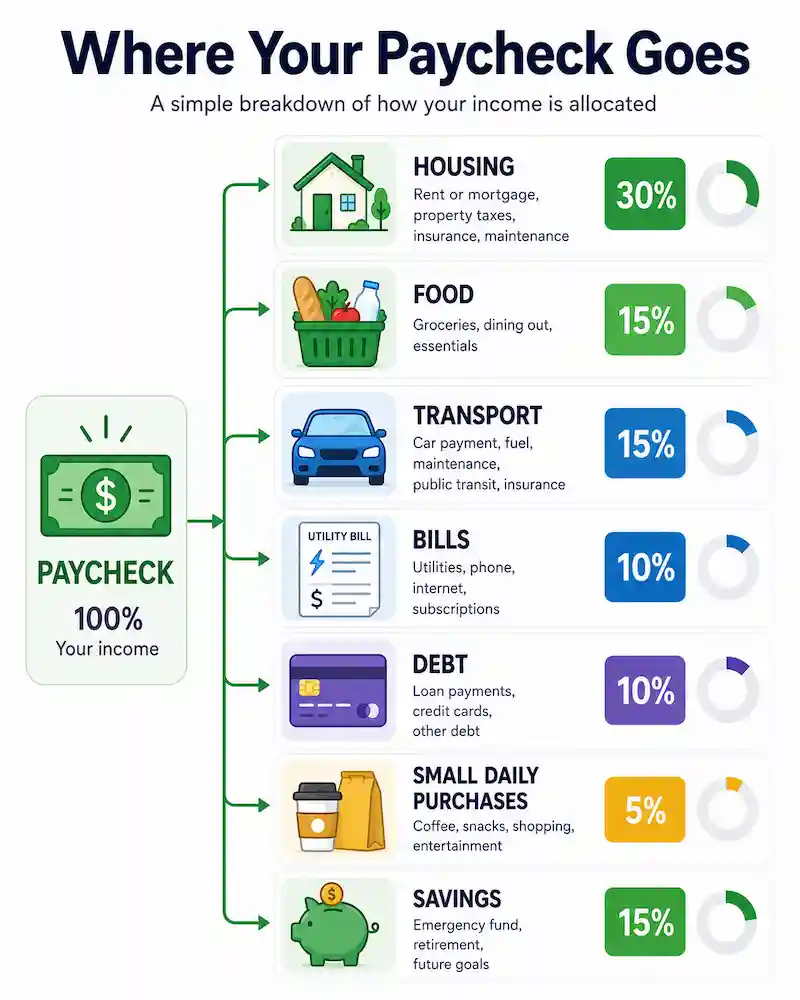
The 50/30/20 rule divides income into needs, wants, and savings, a framework the Consumer Financial Protection Bureau uses in its own financial education materials. It was popularized by Senator Elizabeth Warren in her book All Your Worth, according to SwitchWize’s breakdown of the rule.
If 20% for savings feels impossible right now, that’s fine. Flip it to something like 70/25/5 and raise the savings percentage as your situation improves. The structure matters more than hitting the exact numbers on day one.
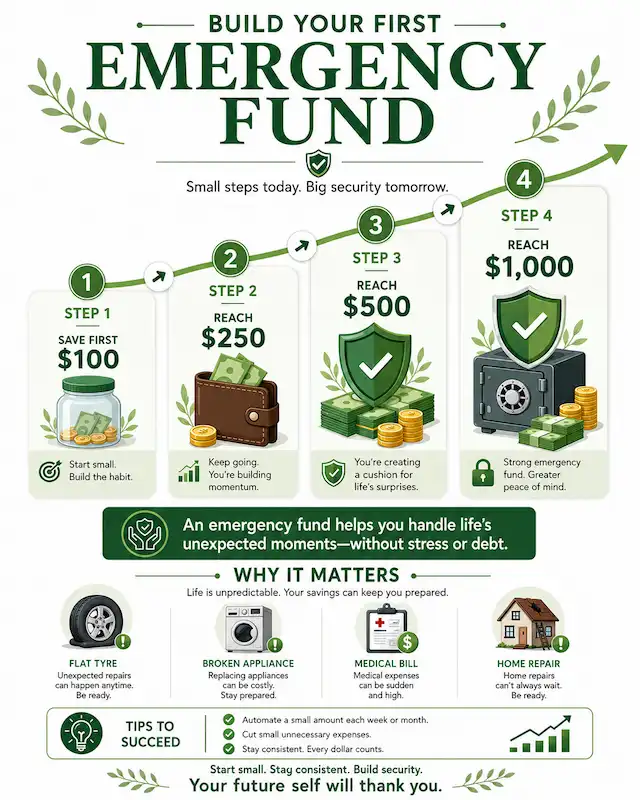
3. Build a Small Starter Emergency Fund Before Anything Else
Even $500 to $1,000 changes how a bad week feels. Only 55% of households had saved enough to cover three months of expenses as of the 2024 Federal Reserve survey, and 30% couldn’t cover three months by any means, according to the Federal Reserve Bank of St. Louis. A starter fund is your first line of defense against needing a credit card for a flat tire or a broken fridge. For a full step-by-step plan, see how to build an emergency fund on a low income, even starting from $0.
4. Automate a Tiny Transfer on Payday
Set up a $10 or $20 automatic transfer to savings the day your paycheck lands, before you have a chance to spend it. Regular automated transfers have been shown to increase both the amount people save and how often they hit their savings goals, by 1.5 to 3.5 times compared with manual saving, according to research cited by BECU. Small and automatic beats large and manual almost every time.
Quick takeaway: Strategies 1 through 4 are your foundation. Get these in place first, then move on to trimming expenses.
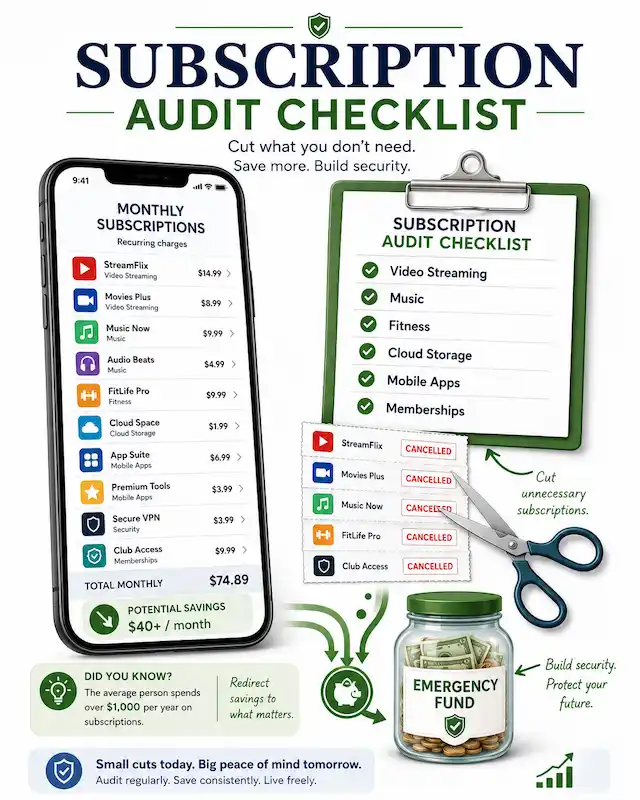
5. Audit Your Subscriptions This Weekend
Subscriptions are easy to forget and easy to let slide. The average household with unused subscriptions is now paying about $26.79 a month for services it rarely or never uses, up sharply from the year before, according to a Self Financial survey. Pull up your bank statement, list every recurring charge, and cancel anything you haven’t used in the last 60 days.
6. Call Your Providers and Ask for a Lower Rate
Phone, internet, and insurance companies often have retention discounts they don’t advertise. Call and ask directly, “Is there a lower plan or a loyalty discount available?” This single phone call, repeated once or twice a year, can free up real money with zero lifestyle change.
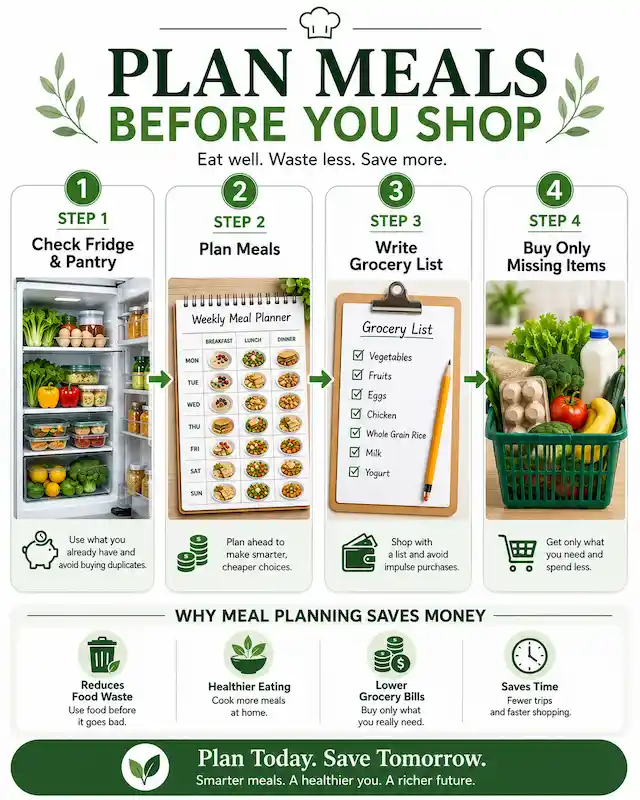
7. Plan Meals Around What’s Already in Your Kitchen
Meal planning doesn’t have to mean elaborate recipes. Before you shop, check your fridge and pantry, build a few meals around what’s already there, and only buy what fills the gaps. This alone can cut a grocery bill significantly. For more ways to stretch every dollar at home, see frugal living tips for low-income households.
8. Give Yourself a 24-Hour Cooling-Off Rule for Wants
For any non-essential purchase over a set amount you choose, like $30, wait 24 hours before buying. Add it to a running “wish list” instead of buying on impulse. Most of the time, the urge fades. When it doesn’t, you can plan for it instead of reacting to it.
9. Stop Buying the Small Stuff That Adds Up
Some purchases quietly drain a budget without ever feeling like a big decision, bottled water, single-use kitchen gadgets, brand-name basics that have a cheaper equivalent. Our companion list of 50 things to stop buying to save money on a low income breaks down exactly where this hidden spending tends to hide.
10. Put High-Interest Debt on a Payoff Plan
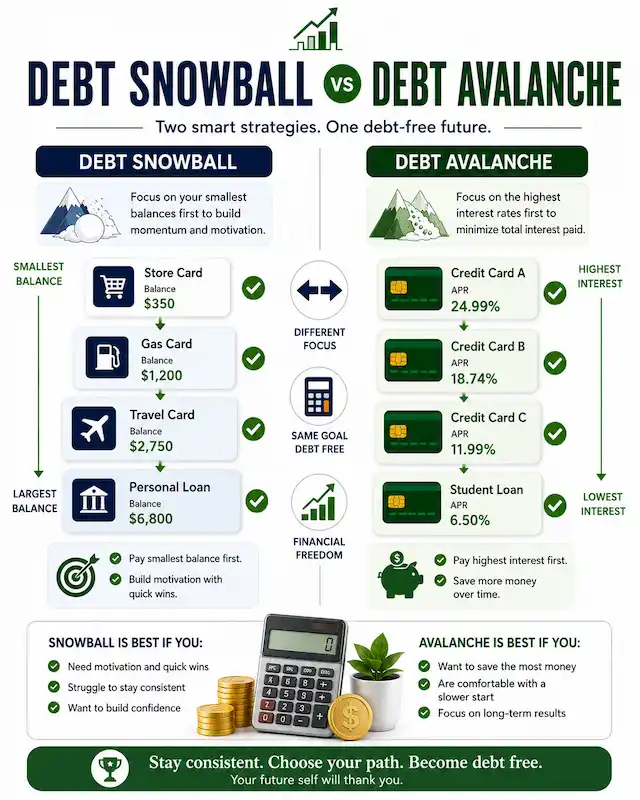
With average credit card rates now above 21%, carrying a balance can quietly cancel out your savings progress. Choose either the avalanche method, paying off the highest-rate debt first, or the snowball method, paying off the smallest balance first for quick wins, and put any extra cash toward that one target while making minimums on everything else.
11. Build a Bill Calendar Around Your Pay Schedule
Mismatched timing between bills and paychecks is a common cause of overdrafts and late fees. Map every recurring bill onto a calendar next to your pay dates. If a due date consistently falls in an awkward spot, call the company and ask to shift it. Most billers will accommodate this.
12. Ask About Hardship or Assistance Programs Before You Fall Behind
Utility companies, hospitals, and even some landlords have hardship programs, payment plans, or reduced-rate options for people who ask before they’re delinquent. Waiting until a bill is overdue usually limits your options. Asking early usually expands them.
13. Sell What You’re Not Using
A closet clear-out can turn into real cash. Electronics, clothing in good condition, and unused household items all have resale value through local marketplace apps. Send that money straight to your emergency fund instead of letting it blend into everyday spending.
14. Add One Small Income Stream and Send It Straight to Savings
You don’t need a second job, just one small, flexible income source, like occasional freelance work, tutoring, or selling a skill you already have. The key is deciding in advance that 100% of this new income goes to savings or debt, not to the regular budget. Because it’s separate from your baseline income, you won’t miss it.
15. Treat Windfalls as Savings, Not Spending Money
Tax refunds, work bonuses, and cash gifts are the fastest way to jump-start a savings account, but only if they don’t get absorbed into regular spending first. Decide in advance, before the money arrives, exactly what percentage goes to savings.
Quick takeaway: Strategies 5 through 15 work best once your foundation (tracking, budgeting, automatic transfers) is already running. Layer them in gradually rather than trying all 15 at once.

Where to Actually Keep Your Savings
Where you park your money matters more than most people realize.
| Account Type | Typical APY (2026) | Best For |
| Traditional savings account | About 0.61% national average | Not recommended for emergency funds |
| High-yield savings account | Around 4% at top online banks | Emergency fund, sinking funds |
| Checking account | Near 0% | Daily spending only |
The national average savings account yield sits far below what competitive online banks pay, according to Bankrate’s weekly rate survey. Moving your emergency fund to a high-yield account costs nothing and can meaningfully speed up how fast it grows.
Paycheck to Paycheck Savings Starter Checklist
- [ ] Track spending for 30 days
- [ ] Set up a bare-bones budget (adjusted 50/30/20 or similar)
- [ ] Open a separate high-yield savings account
- [ ] Automate a small transfer for every payday
- [ ] Cancel at least one unused subscription
- [ ] Call one biller to ask for a lower rate
- [ ] Plan next week’s meals around what you already have
- [ ] List one item to sell
- [ ] Decide in advance where your next windfall will go
Common Questions About Saving on a Tight Budget
Can you actually save money if you live paycheck to paycheck?
Yes, though it usually starts small. The goal in the beginning isn’t a large savings balance, it’s building the habit of automatically setting something aside, even $10 a paycheck, before expenses have a chance to absorb it.
How much should I save each paycheck if money is tight?
There’s no universal number. Many people start with a fixed small amount, like $10 to $25 per paycheck, and increase it as bills get paid off or income grows. Consistency matters more than the size of each deposit.
Should I pay off debt or build savings first?
Most financial educators recommend a hybrid approach: build a small starter emergency fund of $500 to $1,000 first, so an unexpected expense doesn’t force you back onto a credit card, then shift focus to aggressively paying down high-interest debt.
Is $500 enough of an emergency fund?
It’s not a full emergency fund, but it’s a meaningful starter goal. It covers many common surprise expenses, like a car repair or a smaller medical bill, without derailing your budget or adding to debt.
Next Steps
Living paycheck to paycheck isn’t a personal failing, it’s a math problem, and math problems respond to a plan. Start with one or two strategies from this list, ideally tracking your spending and automating a small transfer, and layer in more once those become habit. For the broader roadmap that ties budgeting, saving, and debt payoff together, head to our complete guide on how to save money fast on a low income.