Getting started with a zero waste kitchen does not mean gutting your cupboards in a single afternoon or buying an entire set of bamboo everything. It means looking at where your kitchen waste actually comes from and making changes that will still be working six months from now.
Most people expect this to be a list of products to buy. The real starting point is what you are already throwing away and why.
Key Takeaways
- A zero waste kitchen is built on practical habits that reduce waste, minimize single-use plastics, and compost unavoidable food scraps rather than striving for perfection.
- Start with a one-week kitchen waste audit to identify your biggest sources of waste before making changes or buying new products.
- Prioritize meal planning, proper food storage, and understanding food date labels to prevent food waste and save money.
- Replace disposable items gradually with durable reusable alternatives as existing supplies wear out.
- Shop intentionally by checking your pantry first, buying only what you need, and choosing seasonal or minimally packaged foods whenever possible.
- Compost unavoidable kitchen scraps using a method that fits your home, whether it’s a backyard bin, Bokashi system, countertop composter, or community program.
- Focus on steady progress instead of perfection. Small, consistent habits create lasting environmental and financial benefits over time.
What Is a Zero Waste Kitchen?
A zero waste kitchen is one built around minimizing the food, packaging, and single-use materials that end up in the trash. It is not a destination or a certification. It is a collection of habits organized around five core principles: Refuse, Reduce, Reuse, Recycle, and Rot (compost).
The goal is not to produce literally zero waste, which is nearly impossible for most households. The goal is to generate meaningfully less waste with every grocery trip and every meal you cook.
Why Your Kitchen Is the Best Place to Start
Of all the rooms in your home, the kitchen generates the most waste by a significant margin. It is where the most food, the most packaging, and the most single-use materials are consumed and discarded.
The numbers are difficult to ignore. According to the ReFED 2026 U.S. Food Waste Report, U.S. surplus food fell to 70 million tons in 2024, a 2.2% year-over-year reduction largely driven by a nearly 950,000-ton drop in residential food waste. That improvement was not a policy outcome. It came from households making smarter daily decisions.
But the scale of what remains is still substantial. Consumer food waste currently accounts for almost half of all surplus food in the country. Per ReFED’s consumer food waste data, the average American spent over $760 on food that went uneaten in 2024.
The environmental cost is equally significant. According to EPA research, food waste makes up roughly 24% of the material entering U.S. municipal solid waste landfills and is responsible for an estimated 58% of the fugitive methane those facilities release. Municipal solid waste landfills are already the third-largest source of human-caused methane emissions in the United States. What happens in your kitchen is a direct input into that number.
The reason the kitchen is the right place to start is not because it is the easiest. It is because it has the most leverage.
Step 1: Do a One-Week Kitchen Waste Audit
Before you swap a single thing, spend one week paying attention to what you actually discard. Most people are genuinely surprised by what they find.
Keep a simple note on your phone or a sheet of paper on the fridge and record what goes in the trash each day. Group items into four categories:
- Food that spoiled before you used it
- Unavoidable food scraps from cooking (peels, stems, cores)
- Packaging (plastic wrap, cardboard, bags, containers)
- Single-use items (paper towels, disposable bags, plastic wrap)
At the end of the week, the audit tells you exactly where to focus first. Someone whose trash is mostly wilted produce and forgotten leftovers has a food storage and meal planning problem to solve. Someone whose bin is primarily packaging needs to rethink how they shop.
This audit prevents the single most common beginner mistake: purchasing zero waste products before understanding what is actually generating the waste.
Step 2: Tackle Food Waste First
Food waste is the highest-impact category to address in any kitchen. It costs real money, drives methane emissions, and wastes all the energy, water, and labor that went into growing and transporting the food in the first place.
It is also the most fixable.
Understand What Your Date Labels Actually Mean
One of the least visible drivers of household food waste sits printed on the package. The USDA and FDA jointly reported that confusion over date labeling terms is estimated to account for roughly 20% of food waste in American homes. Tens of millions of dollars’ worth of perfectly safe food gets thrown away each year because people misread what those dates mean.
Here is a simple breakdown:
| Label | What It Actually Means | Is It Safe After? |
| Best If Used By | Quality peak date, not a safety cutoff | Usually yes, if stored properly |
| Sell By | A retailer inventory management tool | Yes, still safe for days after purchase |
| Use By | Manufacturer’s recommended last-use date | Use your judgment: check smell, look, texture |
| Freeze By | Indicates when to freeze for best quality | Yes, freeze before this date |
Both the USDA and FDA currently recommend the food industry adopt “Best If Used By” as a standard quality-based label, precisely because research shows it reduces consumer confusion. Until that standardization happens across all products, the practical rule is this: if food looks right, smells right, and was stored properly, a printed date is a quality indicator, not a safety expiration.
Plan Meals Before You Shop
Meal planning ranks among the most effective and lowest-cost tools for reducing food waste. ReFED’s 2026 food waste analysis found that 72% of households that reduced food waste in 2024 used meal planning as a key strategy. Checking pantry inventory before shopping was even more common, at 87%.
Rutgers University Extension research estimates that the average U.S. household discards roughly one in every four grocery bags purchased. Planning meals in advance is one of the most direct ways to change that ratio.
You do not need a rigid system. Planning two or three dinners per week is a workable starting point. As the habit gets comfortable, add more meals. The immediate benefit is fewer impulse purchases and less produce bought without a specific use in mind.
Store Food the Right Way
Improper storage is one of the most common reasons food spoils before it gets eaten. Getting this right extends the life of your groceries and reduces how often you have to throw things away.
In the refrigerator:
Keep your fridge at 40°F (4°C) or below. Use separate crisper drawers for fruits and vegetables and adjust the humidity settings: higher humidity works better for most vegetables, lower humidity is better for most fruits. Fruits like apples, bananas, and avocados release ethylene gas as they ripen, which accelerates spoilage in surrounding produce. Keep these separated from other fruits and vegetables, particularly leafy greens.
Practice the first-in, first-out (FIFO) method: when you unpack groceries, move older items to the front of the shelf so they get used before newer ones.
At room temperature:
Potatoes, onions, garlic, and winter squash store best in a cool, dry, dark pantry. Storing onions and potatoes together causes the potatoes to sprout faster. Tomatoes retain their texture and flavor better at room temperature than in the fridge.
In the freezer:
Freeze produce that is approaching its peak before it crosses into spoilage. Portion food before freezing so you only thaw what you actually need. Stale bread is excellent for freezing and works well later as French toast, breadcrumbs, or croutons.
Set Up an “Eat First” Shelf
Designate a visible spot in your fridge for items that need to be used soon. A small shelf, a specific bin, or a labeled basket all work. The principle is the same: what you cannot see, you will forget. An eat-first shelf converts forgotten leftovers and aging produce into planned meals rather than trash.
Takeaway: Food waste is the highest-return area to fix first. Meal planning, proper storage, and understanding date labels cost nothing and deliver immediate results.
Step 3: Make the Reusable Swaps That Will Actually Stick
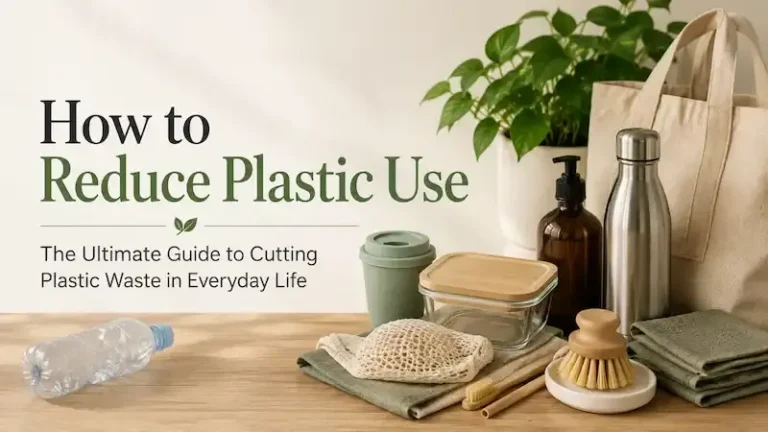
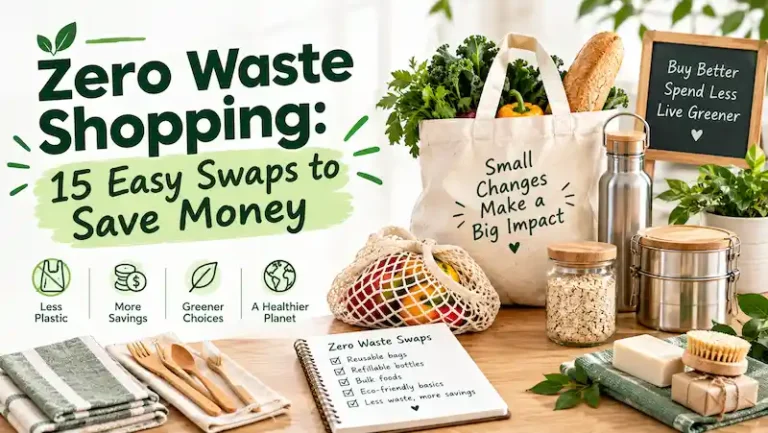
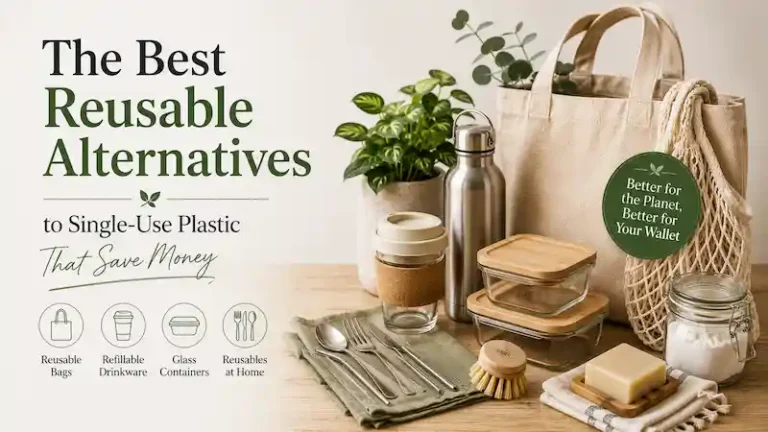
Once you have a better handle on food waste, the next category is single-use disposables. The kitchen relies on them heavily plastic wrap, zip-lock bags, paper towels, produce bags, plastic sponges, disposable filters. Every one of these has a durable, effective alternative.
The practical approach is to replace items as they run out rather than discarding them before they are empty. This avoids unnecessary waste from the transition itself and spreads out the upfront cost.
The Most Impactful Reusable Swaps:
| Single-Use Item | Reusable Alternative | Practical Notes |
| Plastic cling wrap | Beeswax wraps or silicone stretch lids | Beeswax wraps last months; not suitable for raw meat |
| Disposable zip-lock bags | Silicone or glass storage bags | Turn inside out when washing to clean corners |
| Paper towels | Washable cloth kitchen towels | Keep them where you would normally reach for paper |
| Plastic sponges | Compostable cellulose sponge or natural loofah | Plastic sponges are petroleum-based and do not biodegrade |
| Single-use produce bags | Reusable mesh or cotton bags | Also work well at bulk bins |
| Bottled liquid dish soap | Solid dish soap bar | Plastic-free packaging; typically lasts longer per wash |
| Disposable paper coffee filters | Stainless steel or organic cotton filter | Works with most standard drip machines |
| Plastic sandwich bags (lunch) | Reusable fabric snack pouches | Many are dishwasher-safe |
A note on paper towels specifically: the EPA has documented that paper and paperboard products represent a substantial share of municipal solid waste. Cloth kitchen towels are among the cheapest reusable swaps available and pay for themselves within a few months of regular use.
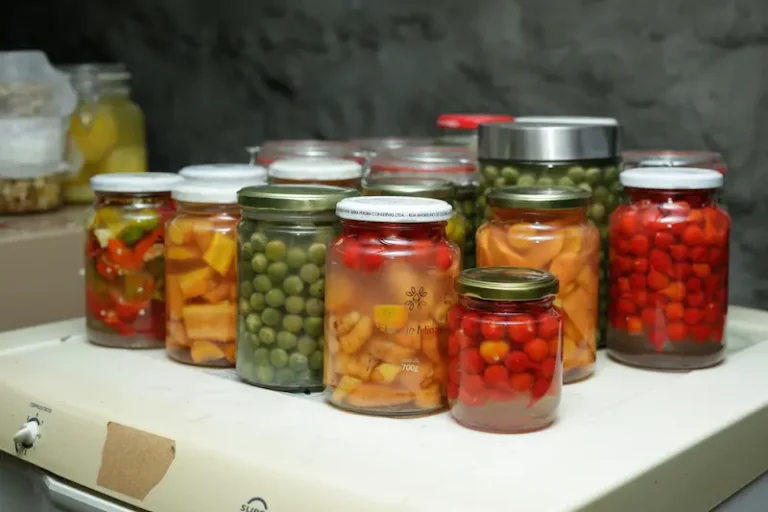
You also do not need to buy everything new. Glass jars saved from store-bought pasta sauce, pickles, or jam make excellent food storage containers. Rinsed and relabeled, they function just as well as anything sold specifically as “zero waste storage.”
Takeaway: Focus your first reusable swaps on the highest-frequency disposables: plastic wrap, bags, and paper towels. These three changes alone remove a meaningful volume of single-use waste from your weekly trash.
Step 4: Rethink How You Shop
Your shopping habits determine what enters your kitchen and, by extension, what eventually gets wasted. A few practical shifts here reinforce everything else you have built.
Shop with a List Built from What You Already Have
Before writing your grocery list, check your fridge, freezer, and pantry. Build the list around what you need to complete meals using what is already there, not around what sounds appealing at the store. This single habit is one of the most effective at reducing overbuying, which is the root cause of most food spoilage at home.
Use Bulk Bins for Dry Goods
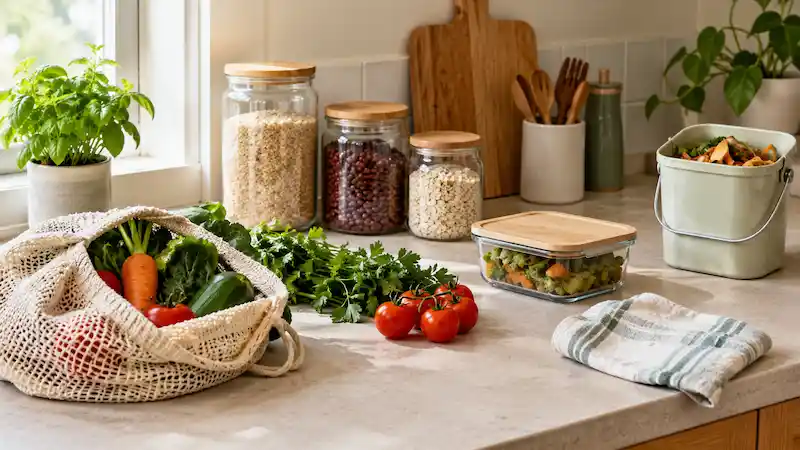
Bulk buying from store bins reduces packaging substantially for items that store well: grains, legumes, nuts, seeds, flour, coffee, dried fruit, and spices. Bring your own bags or clean glass jars and fill only what you will actually use within a reasonable timeframe.
Bulk buying perishables without a specific plan tends to backfire. Buy only the quantity of fresh produce, dairy, or meat that you have a concrete plan to use.
Shop Seasonally When Possible
Seasonal produce tends to be fresher at purchase, meaning it starts with more shelf life ahead of it. It also tends to cost less. Produce bought out of season often travels longer distances and arrives in your kitchen closer to the end of its usable life, which makes it harder to avoid waste.
Farmers markets and local CSA boxes are worth exploring if they are accessible. They often come with less packaging and sometimes with specific storage tips from the growers themselves.
Build a Transparent Pantry
Keep dry goods in clear airtight containers or glass jars so you can see exactly what you have. A pantry where you cannot see what is inside is a pantry where duplicate purchases and forgotten items are almost inevitable.
Step 5: Set Up Composting
Even in the most organized zero waste kitchen, food scraps are unavoidable. Coffee grounds, eggshells, vegetable peels, and fruit cores are simply part of cooking.
The question is not whether to generate them. It is what happens to them next.
Food scraps that go to landfill decompose without oxygen, producing methane in the process. The EPA’s research shows that food waste’s rapid decay rate makes it the leading contributor to methane from U.S. municipal landfills, generating an estimated 58% of the fugitive methane those facilities emit. Composting keeps those same scraps out of the landfill entirely. Instead of generating methane, organic matter breaks down with oxygen present, returning nutrients to soil.
What to Compost from Your Kitchen
Include:
- Fruit and vegetable scraps, peels, cores, and rinds
- Coffee grounds (including paper filters if unbleached)
- Tea bags (remove staples)
- Eggshells
- Stale bread and crackers in small quantities
- Unbleached paper napkins and torn cardboard
Leave Out:
- Meat, fish, and bones (attract pests and create odors in most home systems)
- Dairy products
- Oily or greasy foods
- Pet waste (contains pathogens)
- Diseased plant material
Composting Options for Every Living Situation
You do not need a backyard to compost. Several practical methods work well in small spaces.
Countertop bin with drop-off: Keep a covered container on the counter while cooking. Freeze scraps between drop-offs to prevent odors, then bring them to a farmers market compost collection point, community garden, or municipal drop-off site.
Bokashi composting: A fermentation method that operates in a sealed bucket and can process meat and dairy, which most outdoor compost cannot handle. Compact enough for apartments. The fermented output gets buried in soil or donated to a gardener.
Electric composters: Countertop electric units like the Lomi or Reencle process scraps in hours and produce a dry soil amendment. They require electricity but require no outdoor space and generate no noticeable odor.
Municipal curbside compost: Many cities and counties now offer curbside compost collection alongside regular trash pickup. Check your municipality’s waste management website before investing in any home equipment.
Backyard composting: If you have outdoor space, a traditional compost bin or pile remains the most cost-effective long-term option. Aim for a balance of nitrogen-rich “greens” (food scraps, coffee grounds) and carbon-rich “browns” (dried leaves, cardboard, straw). Turn the pile regularly to speed decomposition.
Takeaway: Composting closes the loop on kitchen scraps that cannot be avoided. Every setup has a workable option, including apartments. Getting scraps out of the landfill is what matters most.
Zero Waste Kitchen Starter Checklist
Use this to track your progress. Start with what fits your current situation and build from there.
Food Waste Basics
- [ ] Completed a one-week kitchen waste audit
- [ ] Started meal planning (even 2-3 meals per week)
- [ ] Created an “eat first” shelf or designated area in the fridge
- [ ] Using FIFO: older items moved to the front before unpacking new groceries
- [ ] Fruits and vegetables stored with appropriate humidity and temperature
- [ ] Ethylene-producing fruits kept separate from other produce
- [ ] Learned the difference between “Best If Used By,” “Sell By,” and “Use By”
Reusable Swaps
- [ ] Switched to cloth kitchen towels in place of paper towels
- [ ] Replaced plastic wrap with beeswax wraps or silicone lids
- [ ] Using reusable silicone or glass bags for food storage
- [ ] Reusable produce and bulk bags on hand for shopping
- [ ] Switched to a solid dish soap bar or refillable liquid soap
- [ ] Using a compostable or natural fiber dish sponge
Shopping Habits
- [ ] Checking pantry, fridge, and freezer before writing the grocery list
- [ ] Shopping with a written list and sticking to it
- [ ] Trying bulk bins for at least one dry good category
- [ ] Choosing seasonal produce when accessible
Composting
- [ ] Identified a composting method that works for your living situation
- [ ] Set up a kitchen scrap collection container
- [ ] Composting food scraps consistently rather than sending them to landfill
Mistakes to Avoid When Starting a Zero Waste Kitchen
Buying your way to zero waste. Product purchases have their place, but they are not the starting point. Use what you already own first. Repurpose glass jars, convert old T-shirts into cleaning cloths, and hold off on specialty purchases until you know what you actually need.
Trying to do everything at once. Transforming your kitchen in a single weekend usually leads to burnout. The most durable zero waste kitchens are built one habit at a time over several months.
Skipping food waste to focus on packaging. Packaging gets most of the attention, but food waste has a larger environmental and financial footprint for most households. Meal planning and proper storage deliver more impact than any product swap.
Adding the wrong things to the compost. Meat, dairy, and oily foods create odors and attract pests in most home composting systems. Stick to fruit and vegetable scraps, coffee grounds, eggshells, and paper products when getting started.
Treating perfection as the standard. A kitchen that diverts 60% of what it used to send to landfill is dramatically better than the baseline. Progress beats perfection in this context every time.
What Comes Next
The habits you build in a zero waste kitchen carry naturally into the rest of your household. The instinct to check what you have before buying, to choose durable over disposable, and to think about where things go when you are done with them these do not stay contained to the kitchen.
Final Thought
Your kitchen generates more waste than almost any other room in your home. It is also the room where you make the most daily decisions. Every grocery trip, every meal, every time you reach for a bag or a towel is an opportunity to make a slightly different choice.
The zero waste kitchen is not about doing all of it perfectly. It is about doing more of it better over time. Start with the waste audit. Find out what you are actually throwing away. Fix that first. Everything else follows from there.
Answers to Common Zero Waste Kitchen Questions
There is no fixed timeline. If you start with food waste and storage, you can see measurable improvement within the first two to three weeks. Reusable swaps happen naturally as disposable items run out, typically over one to three months. Composting can start the same week you decide to try it. The kitchen you want does not require a specific endpoint it is a direction you move in continuously.