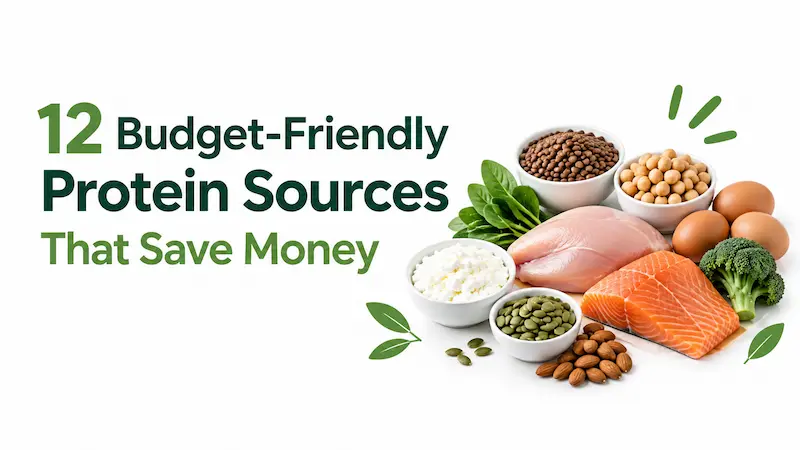
Getting enough protein does not have to drain your grocery budget. Some of the most nutritious protein sources available are also among the most affordable foods in any grocery store. The challenge is knowing which ones offer real nutritional value and which buying strategies make the biggest difference. These frugal living tips can also help you reduce grocery costs without sacrificing nutrition.
This article covers 12 budget-friendly protein foods, including verified protein content per serving, practical buying tips, and key nutritional context. Protein values throughout are drawn from the USDA FoodData Central database and are approximate. Amounts can vary by brand and preparation method, so checking the nutrition label on specific products is always a good habit.
A quick note on daily protein needs: the National Academy of Medicine sets the Recommended Dietary Allowance at 0.8 grams of protein per kilogram of body weight per day for sedentary adults. Active individuals, older adults, and those trying to build or maintain muscle often benefit from higher intakes. A registered dietitian can help you find the right target for your specific situation.
Animal-Based Budget Proteins
1. Eggs
Eggs are one of the most reliable budget proteins available. Each large egg provides roughly 6 grams of protein at a cost that typically works out to less per gram than almost any other protein food in the store.
They contain all nine essential amino acids, which makes them a complete protein. Protein quality is also high: eggs are frequently used as a reference standard when researchers compare the quality of other protein sources.
Hard-boil a batch on Sunday for the week, scramble them for a fast breakfast, fold them into grain bowls, or use them to stretch a stir-fry. Buying store-brand cartons or larger flat trays almost always saves money per egg compared to smaller packs.
2. Canned Light Tuna (in Water)
A 5-ounce can of light tuna packed in water delivers roughly 25 grams of protein at a cost that makes it one of the best protein-per-dollar options in any grocery store. It is shelf-stable, requires no cooking, and fits easily into salads, sandwiches, pasta dishes, rice bowls, and casseroles.
Light tuna (typically skipjack or yellowfin) contains lower mercury levels than albacore (“white”) tuna. The FDA identifies canned light tuna as one of the lower-mercury seafood choices. Those with specific health concerns, including pregnant women and young children, should review current FDA guidance for their situation.
Water-packed cans yield slightly more protein per calorie than oil-packed versions, so that distinction matters if you’re watching total calorie intake.
3. Canned Sardines
Sardines are underrated as a budget protein. A 3.75-ounce can typically provides 17 to 22 grams of protein, along with omega-3 fatty acids and calcium from the soft, edible bones. They often cost less per can than tuna while offering a comparable or stronger nutritional profile.
The flavor can be an acquired taste. Sardines packed in water or tomato sauce tend to be milder than those packed in oil. Adding them to pasta, toast with mustard, or grain bowls balances the taste well. Sardines are also considered a low-mercury option, which makes them a safe choice for regular use.
4. Chicken Thighs
Boneless, skinless chicken breasts are popular, but bone-in, skin-on chicken thighs consistently cost less per pound while delivering comparable protein. A 3-ounce cooked serving of boneless chicken thigh provides roughly 20 grams of protein.
Chicken thighs are more forgiving to cook than breasts. Their slightly higher fat content keeps them moist even when the cooking time runs a little long, which reduces the risk of a dry or rubbery result. They work well roasted, braised, grilled, or slow-cooked.
If you’re comfortable working with bone-in cuts, the savings can be meaningful. Pulling the meat from the bone after cooking requires no special technique. Buying in bulk or on sale and freezing in portions is one of the most effective ways to lower the average per-serving cost over time.
5. Cottage Cheese
Cottage cheese is a dairy protein that often gets overlooked. A half-cup serving of low-fat cottage cheese provides approximately 13 to 14 grams of protein. It is high in casein, a slow-digesting protein that provides a more gradual release of amino acids compared to faster-digesting sources. This can help with satiety between meals.
Plain cottage cheese works in both savory and sweet contexts. It pairs well with fruit, crackers, or sliced vegetables. It also blends smoothly into pasta sauces, dips, and smoothies when a creamier texture is needed. Buying the largest available tub is almost always significantly more cost-efficient per gram of protein than buying individual single-serve cups.
6. Plain Greek Yogurt
Full-fat and flavored Greek yogurts can carry a premium price. Plain, store-brand Greek yogurt, especially in 32-ounce tubs, is a different proposition. A 6-ounce serving of plain, low-fat Greek yogurt typically provides 15 to 17 grams of protein.
The key buying tip: go plain and add your own toppings. Pre-sweetened or fruit-on-the-bottom varieties cost more, contain added sugar, and provide no additional protein benefit. Adding your own fruit, a drizzle of honey, or a handful of granola at home keeps the cost and added sugar in check.
Greek yogurt also provides probiotics, calcium, and B vitamins. Like cottage cheese, its casein content makes it a slower-digesting protein that supports lasting fullness.
Plant-Based Budget Proteins
7. Lentils
Dried lentils are among the cheapest protein-rich foods by cost per serving. They provide approximately 9 grams of protein per half-cup cooked, per USDA FoodData Central data. A single pound of dried lentils can cost well under three dollars and expands significantly during cooking, yielding many servings.
Unlike most dried beans, lentils do not require soaking before cooking. They are generally ready in 20 to 30 minutes, which makes them one of the more convenient legume options. They work well in soups, stews, curries, grain bowls, and salads.
One important note: lentils are not a complete protein on their own. They are relatively low in the amino acid methionine. Eating them alongside grains (rice, bread, pasta, or oats) throughout the day helps cover the full range of essential amino acids. You do not need to eat lentils and grains in the same meal to benefit from this, just across the course of the day.
8. Black Beans
Black beans, whether canned or dried, are a staple budget protein that earns their place in any pantry alongside other essential pantry staples. A half-cup of cooked black beans provides roughly 7 to 8 grams of protein, along with meaningful fiber that supports digestive health and contributes to fullness.
Canned black beans are extremely convenient and cost-effective, especially when bought in multipacks. Dried black beans are even cheaper per serving but require soaking overnight and a longer cooking time. Cooking a large batch and freezing the extra in cup-sized portions removes the time barrier.
Like lentils, black beans complement grains well. Rice and beans together provide a complete amino acid profile and are a foundational dietary combination across many cultures worldwide.
9. Chickpeas
Chickpeas (also sold as garbanzo beans) offer similar protein content to black beans, with approximately 7 to 8 grams per half-cup cooked, plus a strong fiber content and complex carbohydrates that digest slowly.
Their versatility is one of their biggest advantages. Roast them in the oven for a crunchy snack, blend them into hummus, add them to grain bowls and salads, or simmer them in curries and soups. Dried chickpeas are inexpensive per serving, and canned chickpeas remain affordable and far more convenient. Cooking a large batch from dried and freezing portions is a practical way to cut costs further without losing the convenience of having them ready to use.
10. Firm Tofu
Firm tofu is one of the few plant-based proteins that qualifies as complete, meaning it contains all nine essential amino acids. It comes from soybeans, which are nutritionally one of the most valuable legumes available. A 3-ounce serving of firm tofu provides approximately 8 to 9 grams of protein.
Tofu absorbs the flavors of whatever it is cooked with, which makes it adaptable across many cooking styles. Pan-fried cubes develop a satisfying exterior texture. Crumbled tofu works well in stir-fries and scrambles as a swap for ground meat. Baked firm tofu takes on a chewier consistency that holds up well in grain bowls and sandwiches.
A standard 14-ounce block of firm tofu typically costs between two and four dollars and yields several servings, making it a solid plant-based protein option for vegetarians, vegans, and budget-conscious omnivores.
11. Peanut Butter
Peanut butter provides approximately 7 to 8 grams of protein per two-tablespoon serving, along with heart-healthy monounsaturated fats, vitamin E, and magnesium. A large jar offers many servings at a low cost per serving, which puts it among the most cost-efficient protein foods available.
One important context: peanut butter is calorie-dense. The fat content means the calorie cost per gram of protein is higher than leaner sources like canned tuna or chicken. That is not a problem for most people, but it is worth knowing if you are managing total calorie intake.
For the best nutritional value, look for peanut butter with just peanuts (and optionally salt) on the ingredient list. Varieties with added sugar or partially hydrogenated oils offer less nutritional benefit and often cost more. Peanuts complement grains and other plant proteins well when eaten as part of a varied diet.
12. Frozen Edamame
Frozen shelled edamame (immature soybeans) is one of the most convenient and nutritionally complete plant-based proteins available. A half-cup of shelled edamame provides roughly 8 to 9 grams of protein and cooks in just a few minutes in boiling water or the microwave.
Like tofu, edamame comes from soybeans and is therefore a complete protein. Bags of frozen shelled edamame are widely available in most grocery stores. They work well as a standalone snack with a pinch of sea salt, as an addition to salads and grain bowls, or stirred into stir-fries. The quick prep time and no-thaw-required cooking make them one of the most practical options on this list when you need protein in a hurry.
At-a-Glance Protein Comparison
| Protein Source | Serving Size | Approx. Protein | Key Notes |
| Eggs | 1 large | ~6g | Complete protein |
| Canned light tuna (water) | 5 oz can | ~25g | Low mercury; shelf-stable |
| Canned sardines | 3.75 oz can | ~17–22g | Omega-3s, calcium from bones |
| Chicken thighs (cooked, boneless) | 3 oz | ~20g | More affordable than breast |
| Cottage cheese (low-fat) | 1/2 cup | ~13–14g | High in slow-digesting casein |
| Plain Greek yogurt (low-fat) | 6 oz | ~15–17g | Buy plain; large tubs save money |
| Lentils (cooked) | 1/2 cup | ~9g | Pair with grains for complete amino acids |
| Black beans (cooked) | 1/2 cup | ~7–8g | Rice + beans = complete protein |
| Chickpeas (cooked) | 1/2 cup | ~7–8g | Highly versatile; freeze well |
| Firm tofu | 3 oz | ~8–9g | Complete plant protein |
| Peanut butter (natural) | 2 tablespoons | ~7–8g | Calorie-dense; complement with grains |
| Frozen edamame (shelled) | 1/2 cup | ~8–9g | Complete plant protein; cooks in minutes |
Approximate protein values sourced from USDA FoodData Central. Values vary by brand and preparation.
Tips to Maximize Protein on a Tight Budget
Buy dried legumes when time allows. Dried lentils, black beans, and chickpeas cost significantly less per serving than canned versions. Cooking a large pot and freezing the extras in one-cup portions takes about an hour of mostly hands-off time and sets you up with protein for weeks.
Choose store brands for dairy and canned goods. For cottage cheese, Greek yogurt, peanut butter, and canned fish, store-brand versions are nutritionally comparable to name brands and consistently cheaper. The goal is to find good value rather than simply choosing the lowest price, which is an important distinction when considering frugal vs. cheap.
Keep canned fish stocked. Canned tuna, sardines, and salmon are among the most protein-dense, shelf-stable, and affordable foods available. Having several cans on hand means you always have a fast, no-cook protein option ready when time is short or the fridge is empty.
Focus on whole, minimally processed options. Processed deli meats, flavored protein drinks, and pre-marinated meat products typically cost more per gram of protein than whole, minimally processed foods like eggs, chicken, or tofu.
Vary plant proteins throughout the day rather than stressing about combinations at each meal. If you rely heavily on plant-based proteins, eating a variety of them across the day, such as lentils at lunch and peanut butter in the afternoon, naturally covers your full amino acid needs without requiring precise meal planning.
Freeze in usable portions. Buying chicken thighs, tofu, or edamame in bulk and freezing in meal-sized portions reduces waste and allows you to take advantage of sales without worrying about spoilage. For more practical ways to reduce recurring household expenses, see these frugal living tips that save money every month.
Eating well on a tighter grocery budget is achievable, and protein is one category where thoughtful shopping makes a meaningful difference. The 12 foods on this list cover a wide range of preferences, cooking styles, and dietary approaches. Start with two or three you do not currently buy regularly, fit them into meals you already make, and build from there. Consistent small changes in what you add to your cart can add up to real savings over a month. Combining these affordable proteins with frugal meal planning can make it easier to control grocery spending without giving up nutritional quality.
Frequently Asked Questions
Dried lentils and dried beans are typically the cheapest by cost per gram of protein. Eggs are also consistently excellent value and carry the added benefit of being a complete protein with high digestibility. The best answer for any individual depends on dietary preferences, cooking habits, and local store prices.