Why trust this guide: Every statistic below is sourced directly from the EPA, ENERGY STAR, USDA, or the U.S. Department of Energy (links throughout), not aggregated from other blogs. This guide is based on extensive research of authoritative government and industry sources and is designed to help readers prioritise practical, evidence-based home improvements.
Going green doesn’t require an expensive renovation or a total lifestyle overhaul. The most effective sustainable home ideas are often the cheapest ones: a light bulb swap, a faucet fix, a habit change. While researching this guide, one thing became clear: the biggest savings often come from small, low-cost changes rather than expensive upgrades. Below are 25 practical sustainable home ideas grouped into three categories, energy, water, and waste, each backed by real data so you know what you’re gaining before you spend a dime.
For a full walkthrough of building an eco-friendly home from the ground up, see our Sustainable Home: The Complete Guide to Creating an Eco-Friendly and Budget-Friendly Home.
Why These Ideas Actually Pay Off
A few of these projects, like solar panels, need real investment. Most don’t. Fixing a leak, washing in cold water, or composting scraps costs nothing but a habit change, and the ones that do cost money usually pay for themselves within a year.
Energy-Saving Sustainable Home Ideas
1. Swap to LED Light Bulbs
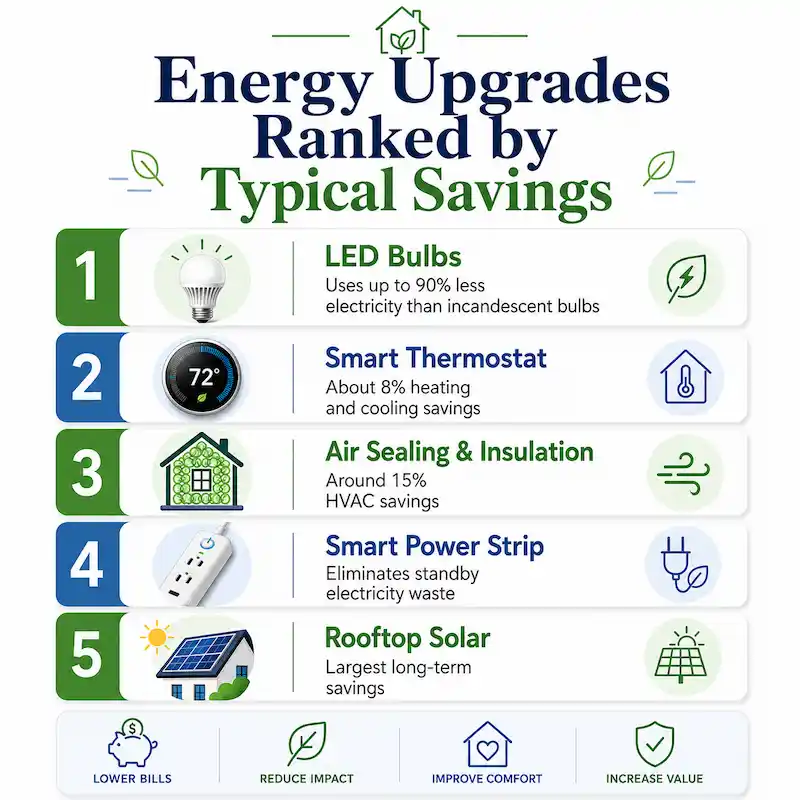
This is the cheapest upgrade on the list. Certified ENERGY STAR LEDs use up to 90% less electricity than incandescent bulbs and last more than 15 times longer, saving over $100 in energy costs per bulb over its lifetime. Start with your most-used fixtures for the fastest payback.
2. Install a Smart or Programmable Thermostat
An ENERGY STAR certified smart thermostat saves the average household about 8% on heating and cooling costs, or roughly $50 a year, by learning your schedule instead of relying on you to remember one.
How to actually get the savings, not just the gadget:
- Confirm your HVAC system has a “C-wire” before buying (most post-2010 systems do); this avoids a return trip to the store.
- Set the schedule during install week, don’t rely on the “learning” mode alone for the first month.
- Enable geofencing so the setback happens automatically when nobody’s home.
3. Seal Air Leaks and Add Insulation
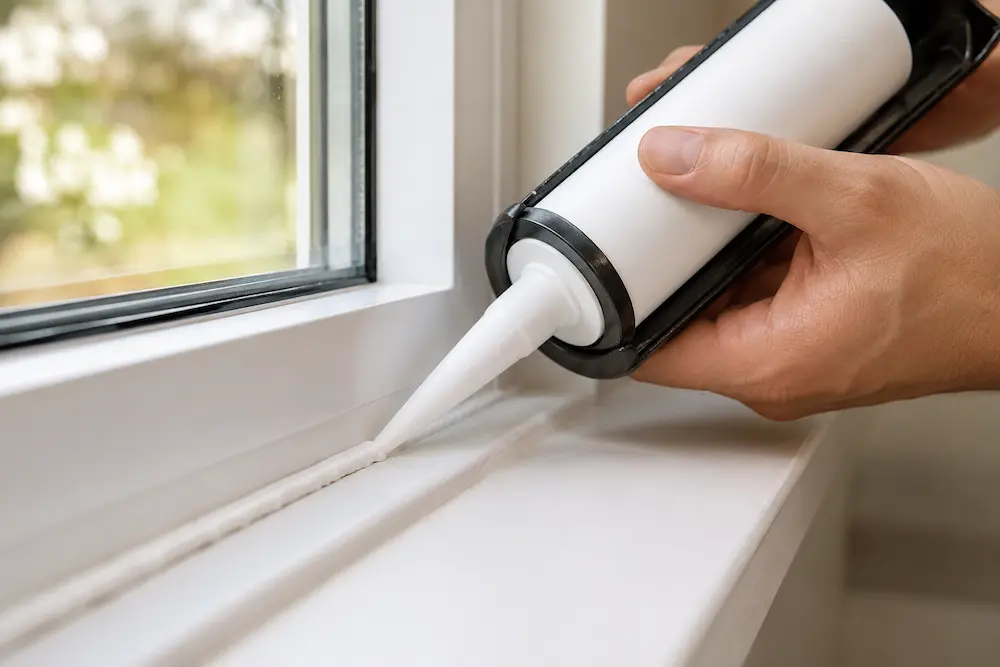
Before touching your HVAC system, check your envelope. ENERGY STAR estimates that air sealing and adding insulation in attics, floors, and basements saves homeowners an average of 15% on heating and cooling costs, and about 9 in 10 U.S. homes are under-insulated.
Where to check first (in order of most common leak points):
- Around window and door frames
- Attic hatch or pull-down stairs
- Where plumbing and electrical lines enter the wall
- Recessed lighting fixtures in the ceiling below an attic
A $10 tube of caulk and a weekend afternoon covers most of these.
4. Unplug Energy Vampires with Smart Power Strips
Devices left plugged in but “off” still draw power. The Department of Energy notes that this standby power accounts for 5 to 10% of residential electricity use and can cost a household up to $100 a year. A power strip with a physical switch fixes this without unplugging each item individually.
5. Wash Laundry in Cold Water
Most of a washing machine’s energy use isn’t the spinning, it’s the heating. ENERGY STAR reports that heating water accounts for about 90% of the energy used to run a clothes washer, so switching to cold cuts that cost almost entirely. Modern cold-water detergents handle regular loads fine; save hot water for genuinely oily or stained items.
6. Air-Dry Laundry When You Can
Dryers are one of the biggest energy users in most homes. The Department of Energy notes that ENERGY STAR clothes dryers use 20% less energy than standard models, and heat pump dryers can use 20 to 60% less. A drying rack for a few loads a week adds up without any equipment cost at all.
7. Schedule a Home Energy Audit
A professional (or DIY) energy audit shows exactly where your home is leaking money, drafty windows, an aging furnace, poor attic insulation, so you can prioritize upgrades by actual payback speed instead of guessing.
8. Consider Rooftop Solar
This is a bigger investment, but the math has improved. EnergySage’s 2026 analysis found that most solar shoppers save between $37,000 and $154,000 over 25 years, depending on location and electricity rates.
Before you get quotes:
- Pull your last 12 months of utility bills, installers price off your actual usage, not a guess.
- Get at least three quotes; installer overhead varies more than panel cost does.
- Ask each installer directly what happens to your production estimate in a below-average sun year.
If you’re considering solar, compare equipment warranties, financing options, and local incentives in addition to the quoted price. These factors can have a significant impact on the system’s long-term value.
9. Use Fans, Blinds, and a Lower Water Heater Setting
Ceiling fans let you raise your summer thermostat setting without losing comfort, and closing blinds during peak sun cuts cooling load. Pair this with turning your water heater down to 120°F, a common efficiency recommendation that reduces both energy use and scalding risk, for a free combo that works year-round.
Quick takeaway: The energy category has the widest range here, from $0 habit changes to a five-figure solar install. Start with the free ones before spending on anything.
Water-Saving Sustainable Home Ideas
10. Install WaterSense Low-Flow Showerheads
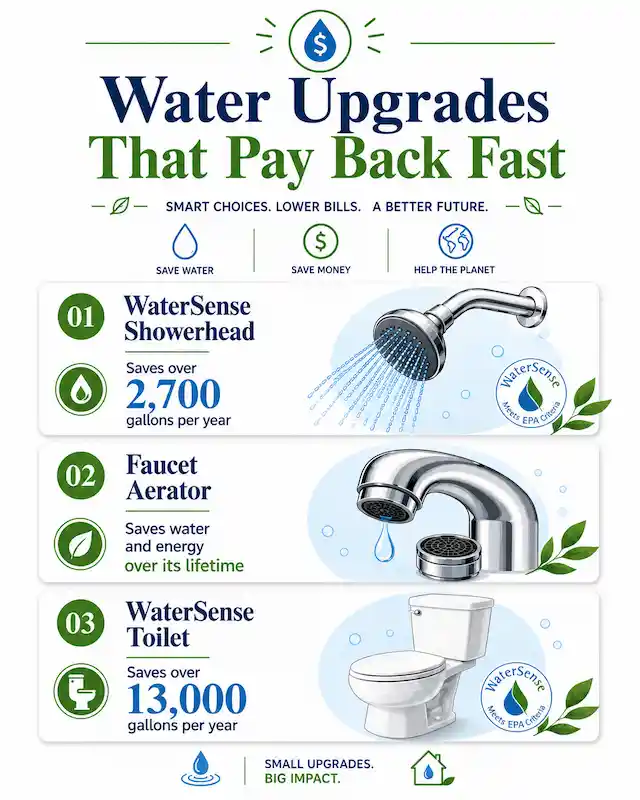
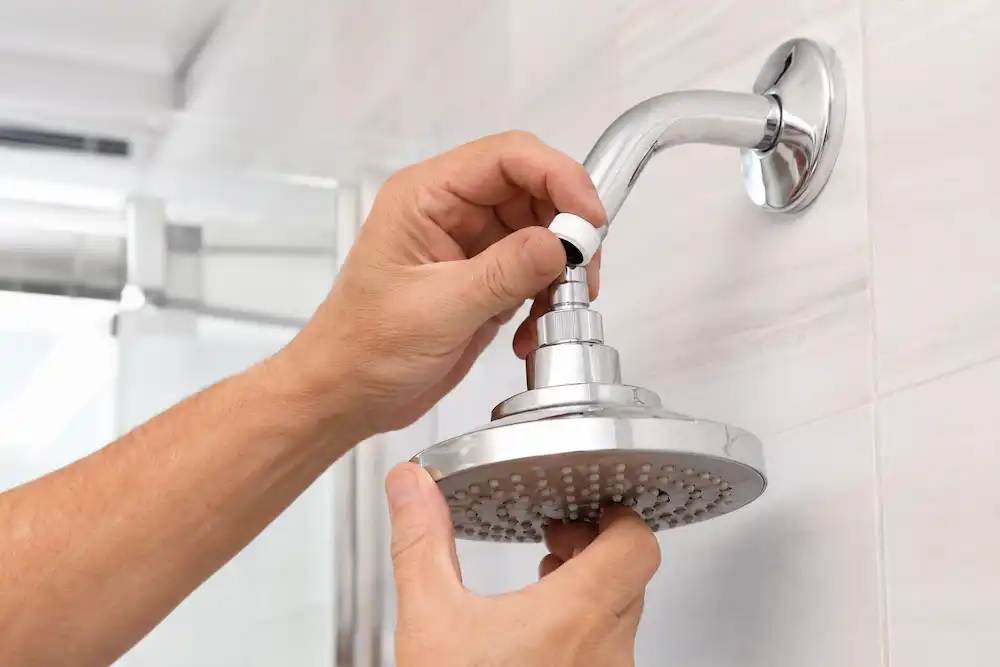
EPA data shows that replacing an old showerhead with a WaterSense-labeled model saves the average family more than 2,700 gallons of water a year and about $70 in combined water and energy costs.
The 15-minute install:
- Wrap the shower arm threads with plumber’s tape.
- Hand-thread the new showerhead, then snug it with a wrench, don’t overtighten.
- Run it for 30 seconds to check for drips at the connection.
11. Add Faucet Aerators to Sinks
One of the smallest, cheapest fixes on the list. The same EPA data shows WaterSense-labeled faucets and aerators can save a family $250 in water and energy costs over the fixture’s lifetime.
12. Upgrade to a WaterSense Toilet
Toilets are typically a household’s single biggest water user. EPA estimates that replacing old, inefficient toilets with WaterSense-labeled models saves a family more than 13,000 gallons of water and about $130 a year.
13. Fix Drips and Running Toilets Fast
A worn toilet flapper or dripping faucet feels minor, but it isn’t. EPA’s WaterSense program estimates the average household loses more than 9,300 gallons a year to easily fixable leaks, and about 9% of homes waste 50 gallons or more per day.
Quick leak test: Check your water meter before and after a two-hour stretch with no water use in the house. If it moved at all, you have a leak.
14. Install a Rain Barrel
A rain barrel captures roof runoff for watering plants and gardens. The EPA’s rain barrel program notes that many cities distribute or subsidize them directly, so check your municipality before buying one at full price.
15. Landscape with Native, Drought-Tolerant Plants
Outdoor watering is a bigger drain than most people realize. On average, EPA data shows single-family homes use 30% of their water outdoors, and up to 70% in hotter, drier regions. Swapping thirsty ornamentals for native species can reduce that outdoor water use by 20 to 50%.
16. Add a Smart Irrigation Controller
If you already have a sprinkler system, a weather-based or soil-moisture controller stops it from watering during rain. EPA WaterSense estimates these controllers save an average home up to 15,000 gallons of water annually compared to a standard clock-based timer.
17. Time Your Showers
Showering is a bigger share of indoor water use than most people guess. EPA notes it accounts for nearly 17% of residential indoor water use, adding up to about 40 gallons a day per household. A cheap shower timer or a simple habit of shaving a few minutes off makes a real dent.
Quick takeaway: Most water fixes here cost under $50 and pay back within a year or two, the best category to knock out first if budget is your main constraint.
Waste-Reducing Sustainable Home Ideas
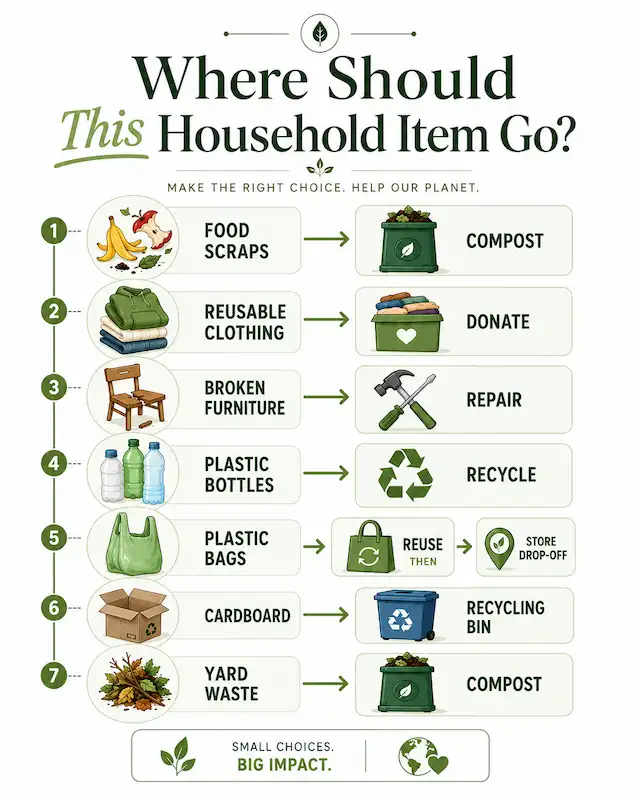
18. Start Composting Food Scraps
Food is the single largest category in U.S. landfills. EPA data shows that of the 66.2 million tons of food wasted annually, only 5% is composted, even though food makes up 24.1% of landfilled municipal waste.
Getting started without it becoming a chore:
- No yard? A $30 countertop electric composter or a local drop-off bin works fine.
- Keep a small lidded container by the sink for scraps; empty it every 1–2 days to avoid smell.
- Skip meat, dairy, and oily foods in a basic backyard pile, they attract pests and slow decomposition.
19. Buy Secondhand or Vintage Furniture
Furniture is one of the least-recycled categories of household waste. EPA figures put furniture and furnishings at 12.1 million tons generated in a single recent year, roughly 4.1% of all municipal solid waste. Buying secondhand keeps usable pieces out of that stream and is almost always cheaper than new.
20. Swap Single-Use Plastic Bags for Reusables
EPA’s own figures show only about 10% of plastic bags, sacks, and wraps generated each year get recycled. A handful of reusable totes by the door solves this permanently.
21. Learn Your Local Recycling Rules and Recycle Right
EPA’s national data shows the U.S. recycling and composting rate sits around 32%. A five-minute check of your city’s actual accepted-items list, not a generic national one, improves your odds of your recycling actually getting processed instead of landfilled as contamination.
22. Donate or Thrift Clothing and Textiles
EPA data indicates that textiles make up about 17 million tons of waste a year, with a recycling rate of only 14.7%. Donating wearable items keeps them in circulation longer.
23. Repair Instead of Replace
Before tossing a broken appliance, lamp, or piece of furniture, check if it’s fixable. Many communities now have repair cafés, and manufacturer parts are more available thanks to right-to-repair momentum.
24. Plan Meals and Shop Your Fridge First
Wasted groceries are wasted money. USDA estimates that the average American family of four loses about $1,500 a year to uneaten food. Checking what you already have before shopping is one of the few sustainable habits that saves real money immediately.
25. Go Paperless and Swap to Cloth Over Paper Products
Paper and paperboard remain a major share of household waste. Switching bills and statements to paperless, and swapping paper towels for cloth rags in high-use spots, cuts both paper waste and a recurring grocery cost.
Quick takeaway: Nearly everything in this category is free. If you’re not ready to spend anything, start here.
25 Sustainable Home Ideas at a Glance
| Idea | Category | Typical Cost | Typical Payback |
| LED bulbs | Energy | $2–$5/bulb | Under 1 year |
| Smart thermostat | Energy | $100–$250 | 2–4 years |
| Air sealing & insulation | Energy | $0–$1,000+ | 1–5 years |
| Smart power strips | Energy | $15–$30 | Under 1 year |
| Cold water laundry | Energy | Free | Immediate |
| Air-drying laundry | Energy | Free–$30 | Immediate |
| Home energy audit | Energy | Free–$400 | Varies |
| Rooftop solar | Energy | $13,000+ (after credits) | 6–10 years |
| Fans + lower water heater temp | Energy | Free–$50 | Immediate |
| WaterSense showerhead | Water | $15–$40 | Under 1 year |
| Faucet aerators | Water | $5–$15 | Under 1 year |
| WaterSense toilet | Water | $150–$400 | 1–3 years |
| Fixing leaks | Water | $5–$30 | Immediate |
| Rain barrel | Water | $0–$100 | 1–3 years |
| Native/drought-tolerant plants | Water | Varies | 1–3 seasons |
| Smart irrigation controller | Water | $100–$250 | 1–2 years |
| Shorter showers | Water | Free | Immediate |
| Home composting | Waste | Free–$50 | N/A |
| Secondhand furniture | Waste | Often cheaper than new | Immediate |
| Reusable bags | Waste | $5–$20 total | Under 1 year |
| Correct recycling habits | Waste | Free | N/A |
| Thrifting/donating textiles | Waste | Free–low cost | Immediate |
| Repair over replace | Waste | Usually less than new | Immediate |
| Meal planning | Waste | Free | Immediate |
| Paperless & cloth swaps | Waste | Free–$20 | Immediate |
Frequently Asked Questions
What is the easiest way to make your home more sustainable?
Start with habits that cost nothing: washing laundry in cold water, unplugging idle electronics, fixing a dripping faucet, and planning meals before you shop.
Do sustainable home upgrades really save money?
Many do. WaterSense fixtures, LED bulbs, and cold-water laundry typically pay for themselves within a year. Bigger projects like solar or new insulation take longer but still deliver real long-term savings according to the EPA and DOE figures cited throughout this guide.
How can I reduce waste at home for free?
Composting scraps, donating instead of tossing furniture or clothing, using reusable bags, and correcting your recycling habits all cost nothing beyond a routine change.
What’s the most cost-effective sustainable home improvement?
Dollar-for-dollar, LED bulbs and WaterSense fixtures tend to have the fastest payback of anything on this list, often under a year.
Final Thoughts: Where to Start
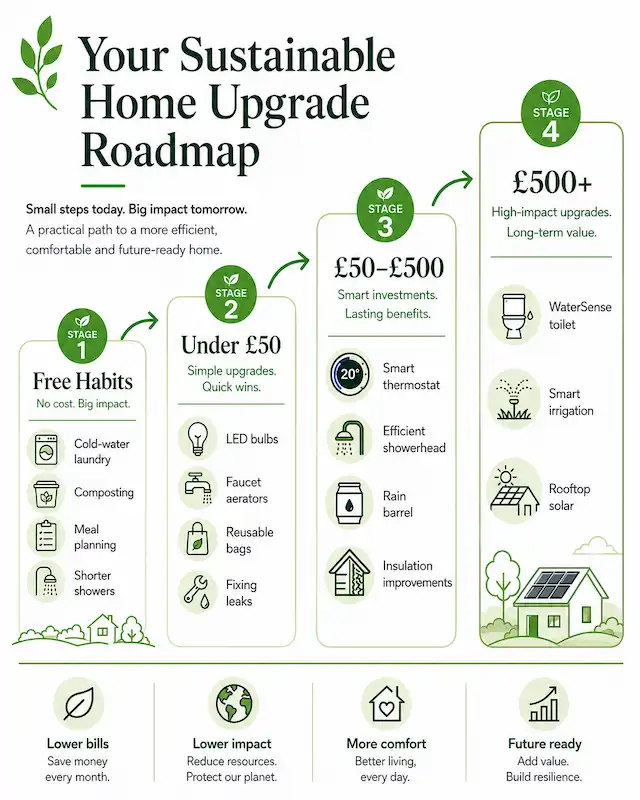
You don’t need to tackle all 25 sustainable home ideas at once. Pick two or three from the waste category first, since most cost nothing, then move to the quick water wins. Save the bigger energy projects for when you’ve got budget set aside, and use the table above to prioritize by payback speed. The first changes I made were switching to LED bulbs and washing clothes in cold water because they were inexpensive, easy to adopt, and didn’t require any home renovations.