Quick answer: Zero waste habits are small, repeatable choices, like composting food scraps, bringing reusable bags, and buying secondhand, that cut down the trash a household sends to landfill. The ones that actually last are the ones attached to a routine you already have, not a full lifestyle overhaul.
Most people who try to go zero waste quit within a few weeks. Not from lack of willpower, but because they try to overhaul their kitchen, bathroom, and closet all at once, in the same week they also decided to start running and reading more.
Real zero waste living looks less dramatic than that. It’s a compost bin that just lives on the counter now. A tote bag by the door you stopped thinking about. A drawer of cloth napkins instead of a fresh roll of paper towels every week. This guide is built around that reality: 25 specific, beginner-friendly zero waste habits, organized by area of daily life, so you can start with what actually fits your routine.
If you want the full philosophy and mindset first, start with our Zero Waste Lifestyle: The Complete Beginner’s Guide. This article is the practical follow-up, the specific habits that make the lifestyle stick past the first month.
Why Small Habits Matter More Than Perfection
The scale of the problem is real. The average American generates close to five pounds of trash a day, and EPA’s national waste data puts the country’s annual municipal solid waste at close to 300 million tons, with only about a third recycled or composted.
Food is the biggest single piece of that. Wasted food is the largest material sent to landfills and the source of most landfill methane, according to EPA research on food waste emissions. Meanwhile, National Geographic reports that roughly half of all plastic ever manufactured was designed for one use, and about eight million tons of plastic waste enters the ocean every year.
None of that gets solved by one household’s perfect habits. It gets solved by a lot of imperfect households doing a few consistent things, which is a much lower bar than most people assume when they first hear “zero waste.”
The 5 R’s Framework
Most modern zero waste habits trace back to a framework popularized by author Bea Johnson: Refuse, Reduce, Reuse, Recycle, Rot (compost), in that priority order. Refusing what you don’t need matters more than recycling what you do. Keep this order in mind as you go through the list.
How to Make These Habits Actually Stick
Here’s something worth knowing before you pick your first habit: the “21 days to form a habit” idea that gets repeated everywhere isn’t backed by evidence. A landmark University College London study tracking people building a new daily behavior found it took an average of 66 days for the behavior to feel automatic, with a range of 18 to 254 days depending on the person and the habit. A more recent systematic review of over 2,600 participants, covered by ScienceDaily, found most health-related habits take two to five months to lock in, and some take nearly a year.
That’s genuinely good news if you’ve “failed” at zero waste before. You didn’t lack discipline. You were probably judging a 66-day process by a 2-week result.
Three things that actually help, based on that research and what tends to hold up in practice:
- Attach new habits to something you already do. A reusable mug habit sticks when it lives next to your keys, not in a cabinet you only open twice a month.
- Pick two or three habits to start, not all 25. The studies above found consistency mattered more than intensity. Fewer habits, done consistently, beat a full overhaul abandoned by week three.
- Expect the awkward middle. Early motivation fades before automaticity kicks in. That gap is normal, not a sign it isn’t working.
Quick-Reference: All 25 Habits
| # | Habit | Effort | Impact |
| 1 | Start a small kitchen compost bin | Medium | High |
| 2 | Plan meals around what you already own | Easy | High |
| 3 | Swap paper towels for reusable cloths | Easy | Medium |
| 4 | Bring your own containers for bulk bins and leftovers | Easy | Medium |
| 5 | Learn proper produce storage | Easy | Medium |
| 6 | Say no to single-use cutlery and straws | Easy | Medium |
| 7 | Switch to bar soap and shampoo | Easy | Medium |
| 8 | Choose a sustainable toothbrush | Easy | Low-Medium |
| 9 | Try reusable cotton rounds | Easy | Low-Medium |
| 10 | Refill instead of rebuy | Medium | Medium |
| 11 | Wash clothes cold and in full loads | Easy | Medium |
| 12 | Air-dry clothing when possible | Easy | Medium |
| 13 | Use a microfiber-catching laundry bag | Easy | Medium |
| 14 | Mend instead of toss | Medium | Medium |
| 15 | Follow the “one in, one out” rule | Medium | High |
| 16 | Buy secondhand first | Easy | High |
| 17 | Build a portable zero waste kit | Easy | High |
| 18 | Choose quality over quantity | Medium | High |
| 19 | Unsubscribe from catalogs and junk mail | Easy | Low |
| 20 | Do a simple household waste audit | Easy | High |
| 21 | Make your own cleaning concentrates | Medium | Medium |
| 22 | Borrow or rent rarely used items | Medium | Medium |
| 23 | Go paperless with bills and receipts | Easy | Low-Medium |
| 24 | Track tiny wins, not perfection | Easy | High |
| 25 | Find a local sustainability community | Medium | High |
Kitchen and Food Waste Habits
Food waste is the highest-impact place to start, so it gets the largest section.
- Start a small kitchen compost bin.
Effort: Medium · Impact: High.
You don’t need a yard. A countertop bin, a community compost drop-off, or a bokashi bucket all work for apartments. This single habit keeps food scraps out of landfills, where they’d otherwise generate methane instead of soil.
- Plan meals around what you already own.
Effort: Easy · Impact: High.
Before writing a grocery list, do a five-minute scan of the fridge and pantry first. It’s the single easiest food-waste habit on this list because it costs nothing and takes less time than the shopping trip itself.
- Swap paper towels for reusable cloths.
Effort: Easy · Impact: Medium.
Keep a stack of cloth rags near the sink. This is the kind of habit that disappears into the background within a week, no adjustment period at all.
- Bring your own containers for bulk bins and leftovers.
Effort: Easy · Impact: Medium.
Many grocery stores allow jars or cloth bags for bulk grains, nuts, and spices, and the same containers double as leftover storage.
- Learn proper produce storage.
Effort: Easy · Impact: Medium.
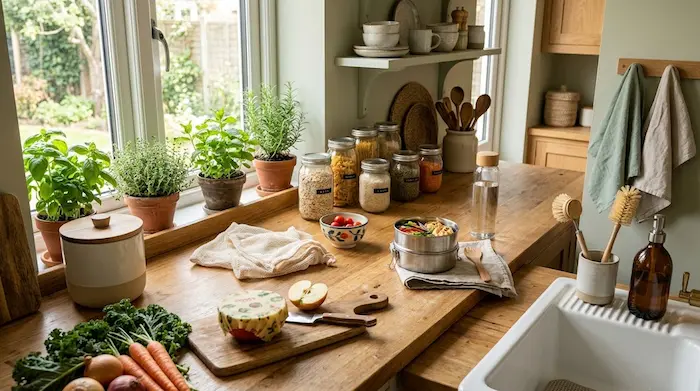
Herbs last longer standing in a glass of water, greens keep better wrapped loosely in cloth, and root vegetables prefer cool, dark storage. Small fixes here noticeably extend how long food actually lasts.
- Say no to single-use cutlery and straws.
Effort: Easy · Impact: Medium.
A compact travel utensil set in your bag or car means you’re never stuck accepting plastic ones with takeout.
Bathroom and Personal Care Habits
The bathroom is often the most plastic-heavy room in the house, and one of the easiest to fix.
- Switch to bar soap and shampoo.
Effort: Easy · Impact: Medium.
Bar versions skip the plastic bottle entirely and typically outlast liquid versions per use.
- Choose a sustainable toothbrush.
Effort: Easy · Impact: Low-Medium.
A bamboo handle or a head-replaceable toothbrush cuts down on the plastic tossed every few months.
- Try reusable cotton rounds.
Effort: Easy · Impact: Low-Medium.
Washable rounds for makeup removal or toner replace an entire disposable category with something you launder for years.
- Refill instead of rebuy.
Effort: Medium · Impact: Medium.
Local refill stores or brands offering pouches for soap, lotion, and cleaning products skip the new bottle every time.
Laundry and Closet Care Habits
What you already own creates less impact the longer it lasts, and laundry habits affect that more than people expect.
- Wash clothes cold and in full loads.
Effort: Easy · Impact: Medium.
Cold water preserves fabric longer and uses meaningfully less energy per load.
- Air-dry clothing when possible.
Effort: Easy · Impact: Medium.
A drying rack extends the life of elastic and synthetic fabrics while cutting dryer energy use.
- Use a microfiber-catching laundry bag.
Effort: Easy · Impact: Medium.
Synthetic fabrics shed microplastic fibers every wash. A mesh filter bag or in-drum filter catches a meaningful share before it reaches wastewater.
- Mend instead of toss.
Effort: Medium · Impact: Medium.
Sewing a button or patching a small tear keeps a garment in rotation. EPA textile data shows only a small share of discarded clothing gets recycled each year, so keeping what you own wearable matters more than it seems.
Shopping and Consumption Habits
Reducing what comes into your home matters more long-term than finding better ways to dispose of what’s already there.
- Follow the “one in, one out” rule.
Effort: Medium · Impact: High.
Before buying something new and non-consumable, choose one similar item to donate or repurpose. This alone slows down accumulation without requiring any willpower at the point of purchase.
- Buy secondhand first.
Effort: Easy · Impact: High.
Thrift stores, marketplace apps, and consignment shops often have exactly what you need at a fraction of the cost, with no new manufacturing demand.
- Build a portable zero waste kit.
Effort: Easy · Impact: High.
A small bag with a water bottle, coffee cup, utensils, and a foldable tote turns “I forgot” into a rare exception.
- Choose quality over quantity.
Effort: Medium · Impact: High.
A well-made item that lasts years beats several cheap replacements. Applies to clothing, kitchenware, and electronics alike.
- Unsubscribe from catalogs and junk mail.
Effort: Easy · Impact: Low.
A few minutes opting out of mailing lists stops a steady, invisible stream of paper waste.
Home and Everyday Life Habits
- Do a simple household waste audit.
Effort: Easy · Impact: High.
For one week, note what fills your trash most often. This single observation usually reveals your household’s biggest, easiest opportunity.
- Make your own cleaning concentrates.
Effort: Medium · Impact: Medium.
A basic vinegar-and-water solution or a refillable concentrate tablet replaces multiple plastic spray bottles under the sink.
- Borrow or rent rarely used items.
Effort: Medium · Impact: Medium.
Power tools and formal wear are often needed once a year. Borrowing avoids a purchase that mostly sits unused.
- Go paperless with bills and receipts.
Effort: Easy · Impact: Low-Medium.
Digital statements and declining paper receipts cut a surprising amount of low-value paper waste over a year.
Mindset and Community Habits
- Track tiny wins, not perfection.
Effort: Easy · Impact: High.
Keep a simple note of habits you’ve kept up, not just ones you’ve slipped on. This reinforces the behavior far more effectively than guilt does, and it matches what the habit-formation research above actually recommends.
- Find a local sustainability community.
Effort: Medium · Impact: High.
A neighborhood swap group, local zero waste shop, or online community gives you accountability. Having people to check in with is one of the strongest predictors of whether a new habit survives past month two.
FAQ
What are some easy zero waste habits to start with?
Start with habits that need no new purchases: meal planning around what you already have, bringing reusable bags, and declining single-use cutlery. They cost nothing and build momentum fast.
How do I start a zero waste lifestyle?
Run a one-week waste audit to see what fills your trash most, then pick two or three habits from that category instead of overhauling everything at once.
Is zero waste living expensive?
Not inherently. Cooking from what you own, air-drying laundry, and buying secondhand tend to save money. Upfront costs for reusable products are usually recovered within months.
What are the 5 R’s of zero waste?
Refuse, Reduce, Reuse, Recycle, and Rot (compost), in that priority order. Refusing unnecessary items has more impact than recycling items you didn’t need in the first place.
Can you be zero waste and still use plastic sometimes?
Yes. It’s a direction, not a strict rule. Meaningfully reducing plastic use still matters even without eliminating it completely.
How long does it take to build a sustainable habit?
Research points to an average of about 66 days, with a realistic range of roughly 18 days to several months depending on the habit and the person. The often-repeated 21-day figure isn’t evidence-based.
What’s the easiest zero waste swap to start with?
A reusable water bottle or shopping bag, since it requires no lifestyle change beyond remembering to bring it, and it immediately eliminates a recurring single-use item.
Final Thoughts
Zero waste habits that stick aren’t the ones that demand the most effort. They’re the ones that quietly attach themselves to a routine you already have. Start with two or three from this list, give them the two to five months the research says they actually need, and layer in more from there.