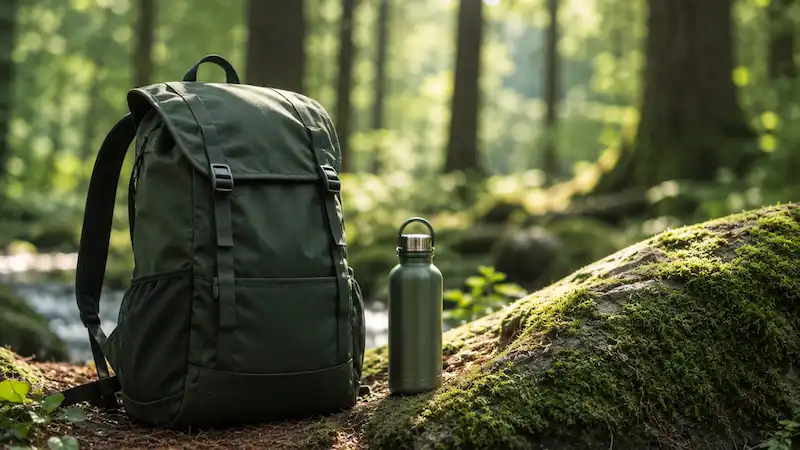
Fifteen practical, budget-conscious ways to cut plastic, avoid disposable products, and prevent food waste on your next trip, without buying a full kit of new gear.
Quick answer: The highest-impact zero waste travel tips are reusing what you already own, confirming safe water refills before you go, packing your own snacks, and declining single-use extras by default, choices that cut both waste and cost without buying new gear.
If you’ve ever stood at airport security peeling plastic wrap off three different travel-size bottles, or watched a hotel breakfast buffet scrape untouched food into the trash, you’ve seen how much waste gets built into the way most people travel. Almost none of it is necessary, and solving it doesn’t mean buying a full kit of “sustainable” travel gear before your next trip.
These zero waste travel tips make sustainable travel on a budget realistic by focusing on what actually works: using what you already own, planning ahead for water and food instead of guessing once you land, and making a few deliberate choices at the exact points where waste tends to pile up, security lines, hotel bathrooms, restaurant tables, and gift shops. None of it requires perfect discipline or a bigger travel budget. Some choices save you money. Others mainly reduce what ends up in a landfill, and knowing which is which matters more than a pile of unused reusable gadgets.
What Is Zero-Waste Travel?
The Zero Waste International Alliance frames zero waste as a resource-management goal: use materials responsibly from production through disposal, favor reuse and recovery over discarding, and avoid burning or releasing substances that could harm the environment or human health (Zero Waste International Alliance). Applied to a trip, that becomes a rough order of preference: prevent waste first, reuse what you can, and dispose of whatever’s left as responsibly as the destination allows.
In practice, that means packing and shopping choices that skip single-use items where it’s practical, refilling and reusing the reusable travel items you already have instead of buying new “eco” products, and following local disposal rules for anything you can’t avoid. It doesn’t mean refusing every packaged item, skipping needed medication, or taking chances with food or water safety to dodge a piece of plastic. Local infrastructure varies enormously. Some destinations have reliable recycling and water refill stations on every corner; others have neither, and treating every destination as if it had the same options you have at home is where zero-waste advice tends to fall apart.
15 Zero Waste Travel Tips to Reduce Waste and Spend Less
The tips below are roughly in the order you’d use them, from packing to the trip itself. Not all of them fit every trip. A weekend drive to a nearby city and a three-week trip overseas call for different priorities, so treat this as a menu to pull from rather than a checklist you need to complete in full.
1. Start With What You Already Own
Bottom line: Check what’s already in your closets and kitchen drawers before buying anything new for the trip.
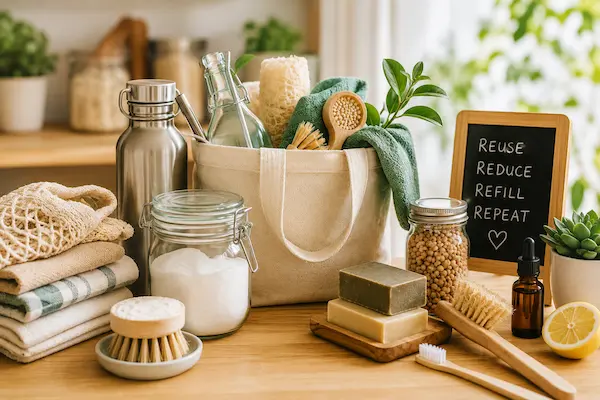
Before buying anything marketed as “travel-friendly” or “zero waste,” look through what’s already in your house. A water bottle you use at your desk, a tote folded in a kitchen drawer, a travel bottle saved from a hotel last year: these work as well as a matching set bought specifically for the trip. A new bamboo cutlery kit or a dedicated set of silicone travel bottles isn’t wasteful on its own, but it defeats the purpose if you already own something that does the job. When you do need an upgrade, choose reusable products that are actually worth buying. If you do need to buy something, let an actual gap in what you own decide what it is, not a packing list from a blog.
2. Plan Safe Drinking-Water Refills Before You Leave
Bottom line: A reusable water bottle only reduces waste if the local tap water is actually safe to refill from.
A reusable water bottle only cuts waste if you can refill it safely, and that depends entirely on where you’re going. In many countries, tap water isn’t reliably safe to drink, and in those places bottled water is sometimes the more practical choice despite the packaging. CDC travel health guidance notes that international travelers generally have no reliable way to judge local water quality on their own, and recommends disinfection methods such as boiling, filtration, or chemical treatment where safety is uncertain (CDC Yellow Book). Before you go, check current guidance for your destination, look into whether your accommodation or airport has refill stations, and consider a bottle with a built-in filter if you expect to rely on tap or well water. Where safety is genuinely uncertain, don’t treat avoiding plastic as worth the health risk.
3. Carry a Reusable Food Container and Utensils When Useful
Bottom line: Worth packing when your trip involves takeout or market food you can carry in your own container, not otherwise.
A container and utensils earn their place if your trip involves takeout meals, airport food, or markets where vendors will put food straight into your own container instead of a disposable one. They’re less useful on a trip built around sit-down restaurants or all-inclusive dining, where there’s little packaging to avoid in the first place. Use something you already own, a lunch container from your kitchen works fine, rather than buying a dedicated travel version. If you’re flying, an empty container also doubles as packing space for snacks or souvenirs on the way home.
4. Pack Snacks to Avoid Unnecessary Packaging and Purchases
Bottom line: Bring shelf-stable snacks from home, and check agricultural import rules before crossing any border with them.
Bringing snacks from home cuts down on individually wrapped airport and convenience-store purchases, and it’s usually cheaper than buying food once you’re past security. Stick to shelf-stable items, nuts, dried fruit, crackers, granola bars, since anything perishable raises food-safety concerns on a long travel day without refrigeration. If you’re crossing an international border, check the rules first: the United States, like many countries, restricts or prohibits bringing in fresh fruit, vegetables, and other agricultural products, and not declaring them can mean confiscation and penalties even when a simple declaration would have been fine (USDA APHIS). Pack everything in one reusable bag or container rather than individually bagging each item.
5. Refill Toiletries Instead of Buying Travel-Size Products
Bottom line: Refillable travel bottles beat buying new mini toiletries every trip, as long as they meet the 3.4-ounce carry-on limit.
Buying a new set of miniature toiletries for every trip adds up in both cost and packaging. Reusable silicone or plastic travel bottles, filled from your regular full-size products, avoid both. If you’re flying with carry-on only, the TSA’s liquids rule limits containers to 3.4 ounces (100 milliliters) each, with all of them fitting into a single quart-size bag, so refillable containers need to meet that same limit (TSA). Solid alternatives, such as bar shampoo, solid deodorant, and toothpaste tablets, sidestep the liquid limit entirely and tend to last longer than a single travel-size bottle, though they aren’t necessarily cheaper per use than a large bottle of regular product. These options also work well as part of simple zero-waste bathroom swaps.
6. Pack Versatile Clothes to Avoid Extra Purchases and Baggage
Bottom line: Pack for your actual itinerary and weather, not every possible scenario, to avoid extra bags and last-minute buys.
Overpacking tends to lead to an overweight checked bag or a last-minute purchase of something you forgot, and both carry a cost. Check the weather and your actual itinerary before you pack, rather than planning for every hypothetical scenario, and favor items that mix and match or serve double duty, a layer that works for both daytime and evening, for example. Checked-bag fees vary significantly by airline and route, so it’s worth checking your airline’s current policy before assuming a second bag is cheap; packing lighter is sometimes the difference between a free carry-on and a paid checked bag.
7. Plan Laundry to Reuse Clothes on Longer Trips
Bottom line: One load of laundry partway through a longer trip usually beats packing enough clothes for every single day.
On trips longer than about a week, doing a load of laundry partway through usually beats packing enough clothes for every day. It also means less luggage and less pressure to buy something you forgot. Check whether your accommodation has laundry facilities, or look for a nearby laundromat or service, before you leave, since availability varies a lot by destination and property type. This is a different decision from Tip 6: that one is about what to pack in the first place, this one is about reusing what you packed partway through the trip.
8. Decline Unnecessary Disposables With Food and Drinks
Bottom line: Decline straws, extra cutlery, and bags by default, not only when they are offered as an option.
A lot of single-use waste on a trip isn’t something you choose so much as something you’re handed by default: a straw with a drink you’d have been fine drinking straight from the glass, cutlery with a meal you’re eating at a table, a bag for one small item. Saying “no straw” or “no bag, thanks” at the point of sale is one of the simplest habits available, and it costs nothing. It won’t always be understood or honored everywhere, and that’s fine. The point is to default to declining rather than defaulting to accepting.
9. Buy Appropriate Food Portions and Use What You Purchase
Bottom line: Buy and order only what you will realistically eat, and take smaller portions when you can go back for more.
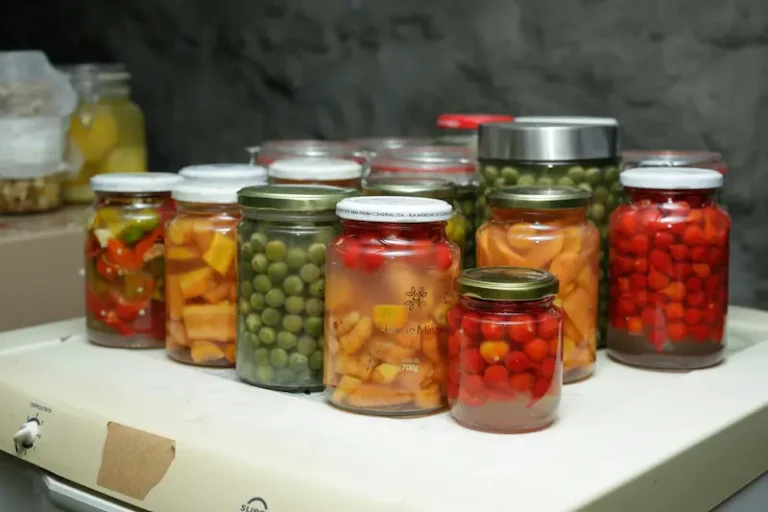
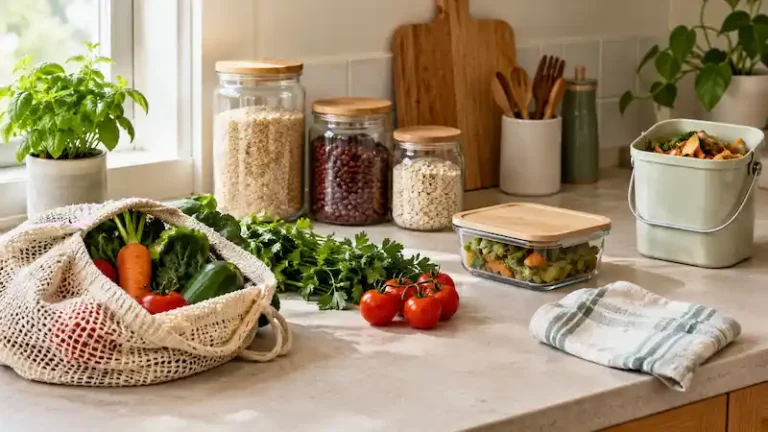
Food waste is easy to overlook as a “zero waste” issue because it doesn’t look like packaging waste, but throwing away spoiled groceries or uneaten takeout is still waste, and it’s money spent for nothing. Food preservation methods can also help keep ingredients usable for longer. If you’re staying somewhere with a kitchen, buy smaller quantities more often rather than stocking up for a week you might not actually spend there, and have a rough plan for what you’ll eat before you shop. At buffets or with large restaurant portions, take less than you think you want. You can usually go back for more, but you can’t undo food that’s already been thrown out.
10. Carry a Reusable Bag for Shopping at Your Destination
Bottom line: A foldable bag in your daypack avoids both store bag fees and avoidable plastic waste at your destination.
A foldable bag that fits in a daypack or purse covers grocery runs, markets, and souvenir shopping without relying on a store’s disposable bags. Plenty of places now charge for single-use shopping bags or don’t offer them at all, so bringing your own avoids both the waste and the small added cost. This is a narrower case than Tip 1’s general advice to check what you already own: it’s specifically about having something on hand the moment you’re buying something, not about your overall packing list.
11. Walk or Use Public Transit When Practical
Bottom line: Walking or public transit cuts cost and packaging-heavy convenience purchases, when it is actually safe and practical.
Choosing to walk or take public transit over a taxi or rental car isn’t primarily a waste-reduction move, it’s more about emissions and cost, but it’s worth including because it’s usually the cheaper option and it cuts down on the packaging-heavy convenience purchases, bottled water, snacks, drive-through food, that tend to come with driving. Practicality still matters: public transit isn’t always safe, accessible, or time-efficient everywhere, especially late at night, with heavy luggage, or in cities with limited coverage. Weigh it against your actual constraints rather than treating it as an obligation.
12. Choose Accommodation With Useful Waste-Reduction Facilities
Bottom line: Check a property’s actual amenities, kitchen, recycling, refill stations, rather than trusting a green or eco-friendly label on its own.
Before booking, it’s worth checking a property’s actual facilities rather than assuming a “green” or “eco-friendly” label means much on its own. The FTC’s guidance on environmental marketing claims specifically warns that vague terms like these are hard for consumers to verify and can be used without much behind them (FTC Green Guides). More useful signals are things you can actually check in a listing: a kitchen or refrigerator, a water refill station, recycling or composting bins, and reusable dishware instead of disposable. A property’s photos and amenities list usually answer this faster than its marketing copy does.
13. Avoid Unnecessary Souvenirs and Impulse Purchases
Bottom line: Decide what you actually want to bring home before you start browsing, not while you are holding something in a shop.
Souvenirs aren’t inherently wasteful, but impulse purchases made because something is cheap, novel, or just in front of you at the right moment often end up unused once you’re home. Deciding in advance what you actually want to bring back, a specific food item, a gift for a specific person, rather than shopping with an open “I’ll know it when I see it” budget tends to cut both spending and clutter. This isn’t a moral case against souvenirs. It’s a practical one about buying things you’ll actually keep or use.
14. Follow Local Waste-Sorting and Disposal Rules
Bottom line: Local recycling and disposal rules vary by city and country, so check them instead of assuming.
Recycling and composting rules differ enormously between cities and countries, and what’s recyclable at home often isn’t accepted the same way elsewhere, or at all. The EPA notes that not every community collects every type of recyclable material, and recommends checking local rules rather than assuming a symbol on packaging guarantees something will actually get recycled (EPA). When you do produce waste you can’t avoid, take a minute to find out how your destination sorts it, many hotels and public bins post guidance, rather than defaulting to a single trash bin out of convenience. Recycling isn’t a substitute for not creating the waste in the first place, but sorting correctly still matters for whatever you can’t avoid.
15. Make a Simple Waste-Reduction Plan for Every Trip
Bottom line: Turn these choices into a short before, during, and after-trip routine instead of relearning them every time.
The tips above work best as a short routine rather than something you reconsider from scratch every time. Before a trip: check what you already own and what needs refilling, water bottle, toiletries. During the trip: default to declining unnecessary disposables and buying food in amounts you’ll actually eat. At the end: note what you didn’t use, or what you wish you’d packed, so next time’s version of this routine gets a little more accurate. A plan that fits on a sticky note is more useful than one you never look at again.
Quick Reference: Where Each Tip Mainly Helps
| Tip | Saves Money | Reduces Waste |
|---|---|---|
| Start with what you already own | Yes | Yes |
| Plan safe water refills | Sometimes | Yes |
| Reusable food container | Sometimes | Yes |
| Pack snacks | Yes | Yes |
| Refill toiletries | Yes | Yes |
| Versatile clothes | Yes | Sometimes |
| Laundry on longer trips | Yes | Sometimes |
| Decline disposables | No | Yes |
| Appropriate food portions | Yes | Yes |
| Reusable shopping bag | Sometimes | Yes |
| Walk or use transit | Often | Sometimes |
| Accommodation with facilities | Sometimes | Yes |
| Avoid impulse souvenirs | Yes | Sometimes |
| Follow local disposal rules | No | Yes |
| Make a waste-reduction plan | Indirectly | Yes |
Use this table to prioritize: tips marked Yes in both columns are the highest-value starting points for a budget-conscious trip.
What a Low-Waste Weekend Trip Can Look Like
This is an illustrative example, not a record of an actual trip, of how a few of these choices might play out together on a two-night weekend trip to a city about three hours away by car.
Before leaving, a traveler packs a water bottle and a set of travel containers already owned from a previous trip, filled with shampoo and lotion from home. Checking ahead, they confirm their destination city has safe tap water, so no filtration is needed. They pack two days of versatile clothing plus one backup layer, skipping a planned third outfit once they check the forecast and realize it isn’t needed. For the drive, they bring a bag of snacks from home instead of relying on gas-station purchases.
At the hotel, they notice the room has no mini-fridge, which changes their food plan. Instead of buying groceries to cook with, as they’d hoped, they decide to eat out for most meals and order portions they’re confident they’ll finish, avoiding the half-eaten entree that would otherwise go to waste. This is the trade-off worth naming: the preferred low-waste option, cooking with purchased groceries, wasn’t available, so the next-best option, ordering smaller and finishable portions and declining extra packaging, filled the gap instead of the effort being abandoned altogether.
On the way home, they decline a bag for a small souvenir purchase, using the tote they packed, and check the hotel’s recycling setup before checkout to dispose of a few items correctly rather than dropping everything into one trash bag.
Zero-Waste Travel Checklist
Use this as a quick reference before you pack, not a replacement for the reasoning above.
- Check what you already own (bottle, containers, bags, toiletries) before buying anything new
- Confirm whether tap water is safe at your destination and plan refills or treatment accordingly
- Pack shelf-stable snacks, and check any border or agricultural restrictions if traveling internationally
- Refill toiletries into reusable containers that meet any applicable liquid limits
- Pack versatile clothing for the actual itinerary, and plan laundry for longer trips
- Review transport options (walking, transit, driving) based on cost, safety, and practicality
- Check your accommodation’s facilities (kitchen, refrigerator, recycling, water refill) before booking
- Buy food in amounts you’ll realistically use, and take smaller portions at buffets
- Look up local waste-sorting and disposal rules for your destination
Conclusion
Reducing travel waste mostly comes down to two habits: using what you already have instead of buying a dedicated kit, and making a handful of decisions ahead of time, about water, food, and packing, instead of improvising at the point of purchase. Not every tip here will fit every trip, and that’s fine. Pick three that match your next trip’s actual constraints, whether that’s a long flight, a car trip with kitchen access, or a weekend with limited luggage space, and start there.
Frequently Asked Questions
Start with the lowest-effort, highest-impact habits: pack a reusable water bottle and check in advance whether you can safely refill it, bring snacks from home instead of buying individually wrapped ones, and get in the habit of declining straws, bags, and extra packaging you don’t need. None of this requires buying anything new, and it works on almost any trip.