If you’ve ever assumed zero waste living means matching glass jars and a $200 starter kit, you’re working with an outdated picture. The core habits behind zero waste on a budget cost nothing, and the data backs that up. This guide covers the money math in full, then gives you 38 concrete swaps ranked from free to worth-buying. For a day-by-day walkthrough of implementing these habits, our Frugal Zero Waste Living guide picks up where the numbers here leave off.
Is Zero Waste Living Actually Expensive? Busting the Myth
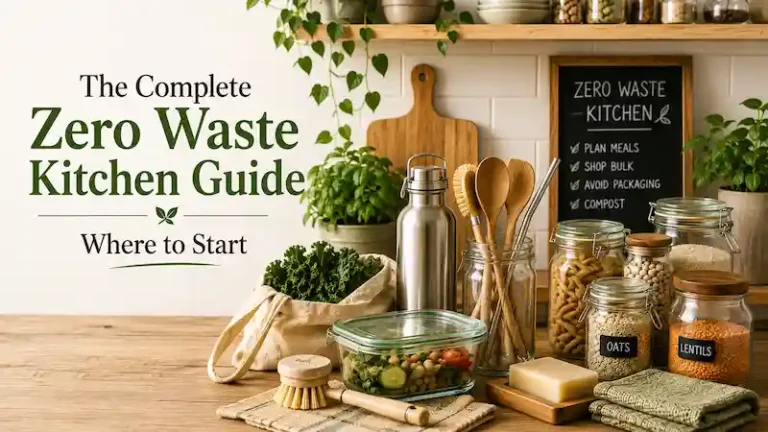
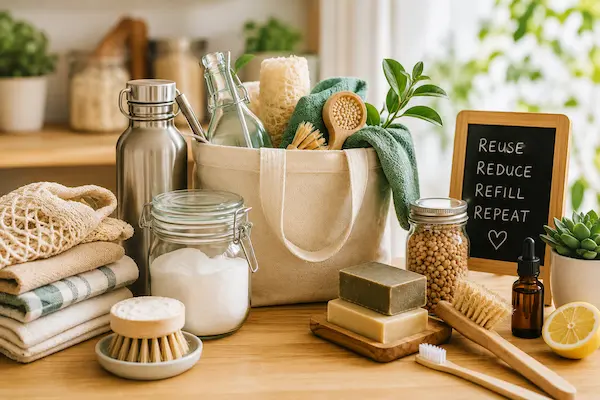
The aesthetic version of zero waste, the one with color-coordinated canisters and a fully stocked eco-store cart, is optional, not required. The actual foundation of the movement is refuse, reduce, reuse, recycle, and rot, in that order. Everything before “recycle” is free.
The financial case holds up under real numbers. Per TheRoundup’s research, households implementing zero-waste swaps can reduce household waste by 70 to 90 percent and save $800 to $2,500 annually, even when only 10 to 15 of the tips are adopted. That’s not a fringe result. It’s what happens when you stop paying for things you were throwing away anyway.
How Much Money Can Zero Waste Living Actually Save You?
Waste costs money twice: once when you buy it, again when someone hauls it away. On the disposal side, the Center for Sustainable Systems at the University of Michigan found that landfill disposal fees averaged $62.28 per ton in 2024, a 10 percent increase from 2023. Less trash at the curb increasingly means a lower bill, especially in pay-as-you-throw municipalities.
Food is the biggest number on this list. The EPA’s 2025 food waste report puts the cost of wasted food at $728 per person annually, or $2,913 a year for a household of four. The USDA has cited a comparable figure for years, noting that the average American family of four loses about $1,500 annually to uneaten food, and prices have only risen since.
Daily habits add up too. Research cited by Pitt Sustainability shows that plastic water bottles can cost a single person roughly $260 a year, against a one-time reusable bottle purchase. And a widely-cited Food and Water Watch report, referenced by One Tree Planted, found approximately 64 percent of bottled water sold in the U.S. is tap water in different packaging, meaning a lot of that $260 is paying a markup on something free from the faucet.
| Habit Change | Upfront Cost | Estimated Annual Savings |
| Reusable water bottle | $10 to $25 | ~$245 per person |
| Meal planning to cut food waste | $0 | Up to $2,913 per household of four |
| DIY cleaning staples | Under $10 | Several hundred dollars per year |
| Thrifted clothing vs. new retail | Varies | 50 to 90% off retail prices |
| Reusable bags and containers | $5 to $15 | Ongoing, avoids repeat purchases |
A Realistic Household Example
To make these numbers concrete: the scenario below isn’t an isolated anecdote, it’s modeled directly from the government data already cited above, so you can see how it compounds for an actual household of four.
Say that household currently wastes about $2,913 a year in uneaten groceries (the EPA average), spends $260 per adult on bottled water (two adults, $520), and covers a share of the $877 national average on cleaning supplies. That’s roughly $4,300 a year before touching clothing or single-use products. Cutting food waste by even half (the USDA and EPA’s own stated 2030 target), switching to reusable bottles, and moving to DIY cleaning staples brings that same household to roughly $1,900 a year, a difference of about $2,400, right in the middle of the $800 to $2,500 range cited earlier. The math isn’t aspirational. It’s just what the cited averages do when you stack them.
38 Zero Waste Swaps That Actually Save You Money
Start Free: 10 Swaps That Cost Nothing
- Do a one-week trash audit before buying anything. You can’t fix what you haven’t measured.
- Cut old t-shirts and towels into cleaning rags instead of buying paper towels.
- Reuse pasta, jam, or sauce jars as food storage instead of buying containers.
- Carry a fork or spoon from your own kitchen instead of buying a travel utensil set.
- Air-dry laundry at least a few loads a week instead of running the dryer every time.
- Repurpose cardboard boxes for organizing instead of buying bins.
- Use both sides of scrap paper before recycling it.
- Freeze produce that’s about to turn instead of tossing it.
- Repair a torn seam or loose button instead of replacing the item.
- Compost fruit and vegetable scraps, even in a simple countertop bin.
Worth Buying: 8 Budget Reusable Products
- A stainless steel or aluminum reusable water bottle ($10 to $25)
- A set of cloth produce bags for grocery shopping ($8 to $15)
- A bamboo or plant-based toothbrush, which costs about the same as a plastic one at checkout
- A bar of solid soap instead of bottled body wash
- Beeswax wrap or reusable silicone lids instead of plastic wrap
- A safety razor instead of disposable cartridges
- A menstrual cup or reusable pads, where applicable
- A canvas or insulated grocery tote you’ll actually reuse
Prioritize by frequency of use, not aesthetics. The daily-use item pays back faster than the one you’ll reach for twice a year. One data point worth knowing before you buy: Americans are expected to throw away roughly a billion toothbrushes this year, most of them plastic, according to National Geographic’s reporting on American Dental Association replacement guidelines. It’s a small swap with an outsized cumulative footprint.
Smart Grocery Shopping: 6 Ways to Cut Food Waste and Cost
- Plan meals around what’s already in your fridge before you shop
- Buy loose produce instead of pre-bagged quantities
- Shop bulk bins for staples like rice, oats, and beans, and bring your own jar
- Freeze anything you won’t use in the next few days
- Store leftovers in reused containers rather than single-use wrap
- Build one “use it up” meal into your week using whatever’s about to expire
Since the EPA’s most recent national data puts food as the largest single category in the U.S. municipal waste stream US EPA , this is the section with the highest dollar-for-dollar payoff on the entire list.
Thrift First: 5 Ways to Build a Frugal Wardrobe
- Check thrift and consignment stores before any new-retail purchase
- Search resale apps (Poshmark, Facebook Marketplace) for specific items before buying new
- Sell or trade what you no longer wear instead of letting it sit
- Buy secondhand for kids’ clothing and gifts, where wear time is short
- Choose quality secondhand basics over trend-driven fast fashion
This isn’t a fringe habit anymore. Per Retail Dive’s coverage of ThredUp’s 2026 Resale Report, the U.S. secondhand apparel market is projected to reach $78.8 billion by 2030 , growing faster than new retail. And per Capital One Shopping’s research, 64 percent of Gen Z shoppers now search secondhand before buying new, and saving money is the top reason consumers give for choosing secondhand. For a full framework on evaluating quality and avoiding secondhand impulse buys, see our Sustainable Shopping Habits guide.
DIY Cleaning and Personal Care: 5 Swaps
- White vinegar and water for glass, counters, and general surfaces
- Baking soda for scrubbing, deodorizing, and drain maintenance
- Diluted castile soap for dishes, floors, and body wash
- Reusable cloth napkins and rags instead of paper towels
- A simple all-purpose spray made from vinegar, water, and citrus peels
This section is worth the swap on cost alone. Per government data compiled by Statista from the BLS Consumer Expenditure Survey, the average U.S. consumer unit spent $877 on housekeeping supplies in 2024. A handful of multipurpose staples replaces most of that spending for under $20 a year.
Circular Economy: 4 Community Moves
- Join a local Buy Nothing group for items you’d otherwise buy new
- Borrow from a tool library instead of buying single-use equipment
- Visit a repair cafe before replacing electronics or clothing
- Sell what you don’t use instead of storing or discarding it
According to ZeroWaste.org, buying in bulk, reusing, repairing, and buying used all carry the added benefit of saving money on top of reducing waste. These habits work best as a community practice, not a solo one.
Where Should You Start? A 4-Week Plan
- Week 1: Run the trash audit. Identify your top three waste categories.
- Week 2: Make the free swaps (1 through 10). No purchases yet.
- Week 3: Buy one or two items from the reusable list based on your actual daily habits.
- Week 4: Take one thrift store trip and one bulk-bin grocery run before your next full shop.
Why Isn’t Your Zero Waste Effort Saving You Money?
If you’ve made some of these swaps and haven’t seen savings yet, it’s usually one of these:
- You bought everything new and “eco” at once. This front-loads cost instead of letting savings compound.
- You replaced usable items before they wore out. Finish what you have first.
- You overbought in bulk. Bulk only saves money if you use it before it spoils.
- You optimized for aesthetics over function. A mismatched jar works exactly as well as a matching one, and costs nothing.
Frequently Asked Questions
Is zero waste living expensive?
Not inherently. The core habits, reusing what you own, reducing purchases, and repairing instead of replacing, cost nothing. Spending only enters the picture if you choose to buy reusable products, and most of those pay for themselves within months.
Can you go zero waste on a tight budget?
Yes. Several of the highest-impact changes, meal planning, air-drying laundry, and using what you already own, require no spending at all.
What’s the cheapest way to start living zero waste?
Start with a one-week trash audit, then make the swaps that need no purchase: reusing jars, cutting rags from old clothing, and planning meals around what’s already in your fridge.
How much money can zero waste living save you a year?
Realistic estimates land between $800 and $2,500 a year for an average household, based on combined savings from reduced food waste, fewer disposable purchases, and lower landfill fees.
Do you need to buy special products to live zero waste?
No. The waste hierarchy prioritizes refusing and reducing before recycling, which means the most effective actions involve buying less, not buying differently.
Does buying “zero waste” products actually help if I still buy a lot?
Not much. Buying a bamboo version of something you didn’t need in the first place still adds consumption. The savings and the environmental benefit both come from reducing purchases, not from swapping material types.
What’s the difference between this guide and a general frugal living guide?
This guide focuses on the cost data behind zero waste and a full list of swaps ranked by savings.
Final Thoughts
Zero waste on a budget isn’t about matching mason jars, it’s about using what you have, buying less, and layering in a handful of swaps that pay for themselves. Start with the free changes, add low-cost products only where your daily habits justify them, and let the savings compound. For the complete framework this fits into, see our Zero Waste Lifestyle: The Complete Beginner’s Guide.