
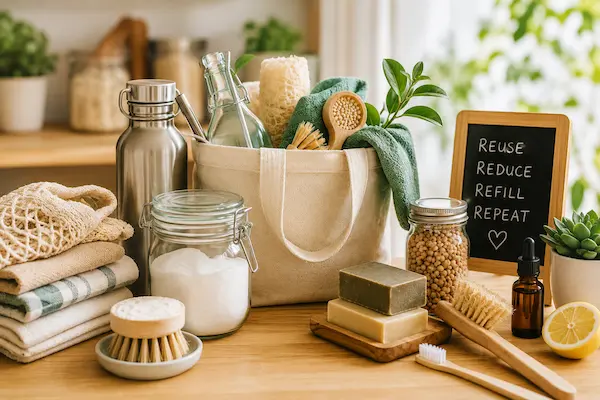
Zero-waste living on a budget starts with using what you already own, reducing unnecessary purchases, and making everyday items last longer. You don’t need an expensive starter kit or a collection of eco-friendly products to begin. This guide covers practical ways to reduce household waste for little or no money, which reusable items may be worth buying, and which purchases you can skip.
From reducing food waste to reusing household items, these simple changes can help you spend more carefully while creating less waste. If you’re new to the lifestyle, start with the free options before considering any new purchases.
Is Zero Waste Living Actually Expensive? Busting the Myth
The aesthetic version of zero waste, the one with color-coordinated canisters and a fully stocked eco-store cart, is optional, not required. The actual foundation of the movement is refuse, reduce, reuse, recycle, and rot, in that order. Everything before “recycle” is free.
The financial case holds up under real numbers. Per TheRoundup’s research, households implementing zero-waste swaps can reduce household waste by 70 to 90 percent and save $800 to $2,500 annually, even when only 10 to 15 of the tips are adopted. That’s not a fringe result. It’s what happens when you stop paying for things you were throwing away anyway.
38 Zero-Waste Changes to Make on a Budget
Start Free: 10 Swaps That Cost Nothing
- Do a one-week trash audit before buying anything. You can’t fix what you haven’t measured.
- Cut old t-shirts and towels into cleaning rags instead of buying paper towels.
- Reuse pasta, jam, or sauce jars as food storage instead of buying containers.
- Carry a fork or spoon from your own kitchen instead of buying a travel utensil set.
- Air-dry laundry at least a few loads a week instead of running the dryer every time.
- Repurpose cardboard boxes for organizing instead of buying bins.
- Use both sides of scrap paper before recycling it.
- Freeze produce that’s about to turn instead of tossing it.
- Repair a torn seam or loose button instead of replacing the item.
- Compost fruit and vegetable scraps, even in a simple countertop bin.
Which Reusable Products Are Worth Buying on a Budget?
Reusable products can help reduce disposable waste, but buying them all at once is unnecessary. Start with items you already own, then replace disposable products gradually when they run out or when a reusable alternative makes practical and financial sense.
Consider these options when you need a replacement:
- A reusable water bottle if you regularly buy bottled water.
- Cloth produce bags if you frequently use disposable bags.
- A toothbrush with a replacement schedule and price that suit your needs.
- Bar soap if it costs less per use than your usual body wash.
- Reusable lids or wraps if you frequently use disposable food wrap.
- A safety razor if the initial cost and replacement blades fit your budget.
- Reusable menstrual products if they suit your personal needs.
- A durable grocery tote if you will use it regularly.
Before buying, compare the upfront price with the disposable products you would otherwise purchase. A reusable alternative is most likely to save money when you use it consistently and avoid unnecessary replacement purchases.
Smart Grocery Shopping: 6 Ways to Cut Food Waste and Cost
- Plan meals around what’s already in your fridge before you shop
- Buy loose produce instead of pre-bagged quantities
- Shop bulk bins for staples like rice, oats, and beans, and bring your own jar
- Freeze anything you won’t use in the next few days
- Store leftovers in reused containers rather than single-use wrap
- Build one “use it up” meal into your week using whatever’s about to expire
Since the EPA’s most recent national data puts food as the largest single category in the U.S. municipal waste stream US EPA , this is the section with the highest dollar-for-dollar payoff on the entire list.
Thrift First: 5 Ways to Build a Frugal Wardrobe
- Check thrift and consignment stores before any new-retail purchase
- Search resale apps (Poshmark, Facebook Marketplace) for specific items before buying new
- Sell or trade what you no longer wear instead of letting it sit
- Buy secondhand for kids’ clothing and gifts, where wear time is short
- Choose quality secondhand basics over trend-driven fast fashion
This isn’t a fringe habit anymore. Per Retail Dive’s coverage of ThredUp’s 2026 Resale Report, the U.S. secondhand apparel market is projected to reach $78.8 billion by 2030 , growing faster than new retail. And per Capital One Shopping’s research, 64 percent of Gen Z shoppers now search secondhand before buying new, and saving money is the top reason consumers give for choosing secondhand.
DIY Cleaning and Personal Care: 5 Swaps
- White vinegar and water for glass, counters, and general surfaces
- Baking soda for scrubbing, deodorizing, and drain maintenance
- Diluted castile soap for dishes, floors, and body wash
- Reusable cloth napkins and rags instead of paper towels
- A simple all-purpose spray made from vinegar, water, and citrus peels
This section is worth the swap on cost alone. Per government data compiled by Statista from the BLS Consumer Expenditure Survey, the average U.S. consumer unit spent $877 on housekeeping supplies in 2024. A handful of multipurpose staples replaces most of that spending for under $20 a year.
Circular Economy: 4 Community Moves
- Join a local Buy Nothing group for items you’d otherwise buy new
- Borrow from a tool library instead of buying single-use equipment
- Visit a repair cafe before replacing electronics or clothing
- Sell what you don’t use instead of storing or discarding it
According to ZeroWaste.org, buying in bulk, reusing, repairing, and buying used all carry the added benefit of saving money on top of reducing waste. These habits work best as a community practice, not a solo one.
Your 30-Day Zero-Waste Plan on a Budget
Week 1: Identify Your Waste
Notice what you throw away most often, including spoiled food, disposable products, and items you replace unnecessarily. Choose two areas to improve.
Week 2: Make Free Changes
Reuse containers, repurpose old clothing as cleaning cloths, plan meals around available ingredients, and repair items instead of replacing them.
Week 3: Build Better Shopping Habits
Check your cupboards before shopping, compare prices, buy only what you can use, and consider secondhand options when you need something.
Week 4: Review Before Spending
Identify which changes worked best. If a reusable product would solve a recurring problem, compare its upfront cost with your existing spending before buying it.
You do not need to complete every step perfectly. Keep the habits that fit your budget, reduce waste, and are easy to maintain.
Why Isn’t Your Zero Waste Effort Saving You Money?
If you’ve made some of these swaps and haven’t seen savings yet, it’s usually one of these:
- You bought everything new and “eco” at once. This front-loads cost instead of letting savings compound.
- You replaced usable items before they wore out. Finish what you have first.
- You overbought in bulk. Bulk only saves money if you use it before it spoils.
- You optimized for aesthetics over function. A mismatched jar works exactly as well as a matching one, and costs nothing.
Final Thoughts
Zero-waste living on a budget is about making thoughtful choices, using what you already own, and avoiding unnecessary purchases. Start with free changes, reduce food waste, and consider reusable products only when they meet a real need. Small, consistent habits can help you reduce household waste without putting extra pressure on your finances.
For a step-by-step introduction to the broader lifestyle, read our guide on how to start a zero-waste lifestyle.
Frequently Asked Questions
Not inherently. The core habits, reusing what you own, reducing purchases, and repairing instead of replacing, cost nothing. Spending only enters the picture if you choose to buy reusable products, and most of those pay for themselves within months.
